

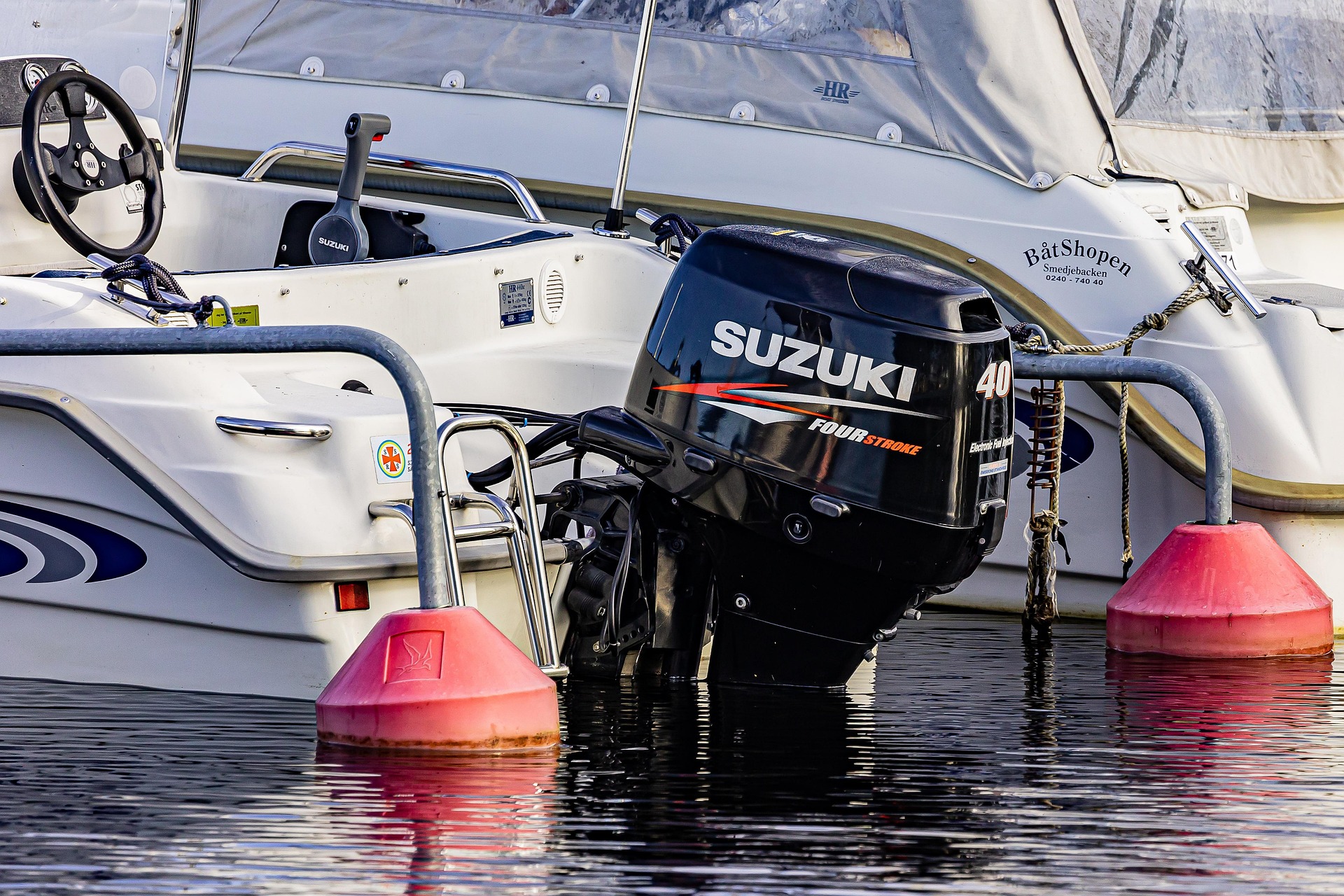
Boat Engine Failure: What to Do and How to Prevent Breakdowns at Sea
Boat engine failure is the most frequent emergency on the water. While rarely life-threatening at first, a dead engine leaves your vessel at the mercy of the wind, current, and nearby obstacles.
This guide covers how to handle a sudden loss of propulsion, from securing your boat and conducting emergency troubleshooting to performing the routine maintenance that prevents boat engine failure before it happens. Whether you are dealing with a stubborn outboard or a complex inboard system, preparation is the difference between a minor delay and a dangerous drift.
Engine Failure at Sea: A Common but Potentially Dangerous Situation
An engine failure is rarely just a mechanical inconvenience; it is a loss of control. In a marine environment, propulsion is your primary means of steering and maintaining a safe position. When the engine cuts out, the silence that follows is often the start of a race against the elements.
Why engine failure can quickly become critical
While the mechanical issue itself might be minor, the environmental consequences of losing power can escalate rapidly:
- Drifting risks: Without propulsion, your boat becomes a passive object moved by the current and wind. In open water, this might mean drifting miles off course; in a shipping lane, it puts you at risk of collision with large vessels that cannot easily maneuver around you.
- Weather exposure: A powered boat can be positioned to take waves at a safe angle (usually the bow or quarter). A dead boat will naturally turn “beam-on” (sideways) to the waves. This position increases the risk of heavy rolling, taking on water, or even capsizing in rough seas.
- Proximity to shore or obstacles: The most immediate danger is often what lies downwind. If your engine fails near a lee shore, a reef, or a breakwater, the wind and tide will steadily push you toward a grounding or a collision with rocks.
Immediate safety priorities
The moments immediately following an engine stall are the most important for ensuring the safety of the crew and the vessel.
- Stay calm: Panic leads to poor decision-making. Take a deep breath and remind your crew that you have a protocol to follow. Clear, calm instructions from the skipper prevent chaos.
- Secure the boat: Your first physical action is to stop the drift. If the water is shallow enough, drop the anchor immediately. This “tethers” the boat to a safe spot, giving you a stable platform to troubleshoot without the fear of hitting obstacles.
- Assess the situation: Determine your exact position and identify any immediate hazards. Check the safety of your crew—ensure everyone has a life jacket on—and evaluate how much time you have before weather or current becomes a critical factor.
The Most Common Causes of Boat Engine Failure
The vast majority of engine breakdowns at sea are not caused by catastrophic mechanical failure, but by simple, preventable issues. By understanding the “Big Three”—fuel, electricity, and cooling—you can identify and often fix the problem before it requires a tow.
Fuel-related issues (the #1 cause)
Fuel problems account for nearly 80% of all marine engine failures. Because boats often sit idle for long periods, the fuel system is the most vulnerable component.
- Empty tank: It sounds obvious, but “fuel gauge error” is a leading cause of rescue calls. Always verify your levels visually or with a dipstick rather than relying solely on a dashboard needle.
- Contaminated fuel: Water is the enemy of marine engines. Condensation in the tank or a leaky deck fill can introduce water, which sinks to the bottom and stalls the engine. Additionally, older fuel can degrade into “gum” or harbor biological growth (algae) that clogs filters.
- Fuel supply problems: A pinched fuel line, a clogged primary filter, or a failed fuel pump will starve the engine of the energy it needs to run.
Battery and electrical failures
Marine environments are incredibly harsh on electrical systems. Salt air and constant vibration work together to loosen and corrode connections.
- Dead battery: Leaving electronics on while the engine is off, or a failed alternator, can leave you without enough cranking power to restart.
- Loose connections: The pounding of waves can wiggle battery terminals loose. A connection that is “finger-tight” is not tight enough for a boat; it will eventually arc or disconnect.
- Kill switch activated: On outboard engines and many modern inboards, the emergency kill-switch lanyard is a frequent culprit. If it is slightly bumped or not seated perfectly, the engine will either die instantly or refuse to start.
Engine overheating
If your engine suddenly loses power or an alarm sounds, overheating is a likely cause. Without a constant flow of cooling water, a marine engine can suffer permanent damage in minutes.
- Cooling system failure: A split hose or a leaking heat exchanger can quickly drain the system of coolant.
- Water pump issues: The rubber impeller inside the water pump is a wear item. If it loses a “fin,” the flow of raw water stops.
- Blocked intake: Plastic bags, seaweed, or even small fish can be sucked into the raw-water intake (the “thruhull”), cutting off the engine’s ability to cool itself.
Mechanical problems
These issues often involve the “drive train” that translates engine power into movement.
- Damaged propeller: Hitting a submerged object or “spinning a hub” (where the rubber center of the prop breaks free) will leave you with an engine that revs but a boat that doesn’t move.
- Transmission issues: A broken shift cable or a failed gearbox can leave you stuck in neutral or, worse, stuck in gear while approaching a dock.
- General wear and tear: Snapped belts or worn-out gaskets are common on engines that haven’t been properly winterized or maintained.
Starting system problems
Sometimes the engine is healthy, but the system required to “wake it up” has failed.
- Starter motor failure: Solenoids can fail due to corrosion, or the starter motor itself can “freeze” if it has been exposed to bilge water.
- Spark plugs (outboard engines): Fouled or wet spark plugs are a common reason why two-stroke or older four-stroke outboards refuse to fire up.
- Fuel injection or carburetor issues: A clogged injector or a gummed-up carburetor jet can prevent the precise air-fuel mixture required for ignition.
Boat Engine Won’t Start: Quick Troubleshooting Checklist
When the engine dies, the first few minutes should be spent on a systematic search for “the obvious.” Before diving into deep mechanical repairs, run through this rapid-response checklist to see if the fix is simpler than it seems.
Check the basics first
Most “failures” are actually oversight issues. Start with these three culprits, as they require no tools to fix.
- Fuel: Check your tank levels visually. If you have multiple tanks, ensure the selector valve is pointed toward the one containing fuel. If you are using an outboard, check that the vent screw on the portable tank is open and that the primer bulb is firm.
- Battery: Look at your voltmeter. If it reads below 12V, you may not have enough power to turn the starter. Ensure the battery selector switch is set to “Both” or a fresh “Start” battery, and give the terminals a quick wiggle to check for loose connections.
- Kill switch: This is the most common “ghost” problem. Ensure the emergency lanyard is snapped firmly into place. Even if it looks correct, pull it out and re-seat it to be certain.
Test key components
If the basics are covered, move to the primary systems required for combustion.
- Starter: Listen to the sound when you turn the key. A “clicking” sound usually points to a low battery or a bad solenoid. If there is total silence, the engine may still be in gear; ensure the shifter is clicked firmly into the Neutral
- Fuel system: For outboards, squeeze the primer bulb. If it stays flat, there is a blockage in the line; if it won’t get hard, there may be a leak or a faulty check valve. For inboards, check the glass bowl of your primary fuel filter (like a Racor) for signs of water or dark sediment.
- Air intake: Ensure nothing is obstructing the air intake or flame arrestor. In a marine environment, soundproofing foam inside the engine box can sometimes crumble and get sucked into the intake, starving the engine of oxygen.
Identify warning signs
Your senses are your best diagnostic tools. Use your ears, eyes, and nose to narrow down the search.
- Noise vs. silence: A “grinding” noise suggests a mechanical issue with the starter gear or flywheel. A “hissing” sound might indicate a blown gasket or a vacuum leak.
- Smoke: * White smoke: Usually indicates water vapor or steam (overheating).
- Black smoke: Suggests a “rich” mixture (too much fuel, not enough air).
- Blue smoke: Indicates the engine is burning oil.
- Smell: A strong smell of raw gasoline suggests a leak or a flooded engine. A “rotten egg” smell points to an overcharged, gassing battery, while a burnt “acrid” smell usually indicates an electrical short or a slipping drive belt.
What to Do If Your Boat Engine Fails at Sea (Step-by-Step Guide)
When the engine stops, the boat immediately transitions from a controlled vessel to a drifting object. To manage this emergency effectively, you must prioritize the safety of the crew and the position of the boat before attempting mechanical repairs.
Step 1: Secure the boat
Before opening the engine hatch, you must ensure you are not drifting into danger.
- Drop anchor if needed: If you are in shallow enough water and drifting toward the shore, rocks, or a busy channel, drop the anchor immediately. This “parks” the boat, buying you time to think and work without the pressure of an impending grounding.
- Wear life jackets: In a breakdown, the risk of the boat being hit by another vessel or swamped by waves increases. Ensure every person on board is wearing a life jacket.
- Position relative to wind: If you cannot anchor, try to use the rudder to keep the bow pointed toward the waves. This prevents the boat from rolling heavily “beam-on” to the sea, which is more comfortable for the crew and safer for the vessel.
Step 2: Diagnose the issue
Once the boat is stationary or drifting safely, perform a systematic check.
- Quick inspection: Check the “Big Three” basics: Is the kill switch attached? Is the shifter in neutral? Is there fuel in the tank? Many “breakdowns” are solved in under sixty seconds by checking these three things.
- Attempt restart safely: If the basics are fine, try to start the engine. Limit cranking to 5–10 seconds at a time to avoid overheating the starter motor or draining the battery completely. If you smell strong fuel or see smoke, stop immediately.
Step 3: Activate backup options
If a quick restart fails, you must look for alternative ways to move or seek help.
- Use sails (if applicable): If you are on a sailboat, hoist the mainsail or unfurl the jib. Even a small amount of sail area can give you enough “steerage way” to move away from obstacles or head toward a safe harbor.
- Call for assistance: If you are in a high-traffic area or have a towing membership, now is the time to make a non-emergency call. Inform a shore contact or a nearby marina of your situation and position.
Step 4: Send a distress call if needed
If the situation escalates—for example, if your anchor isn’t holding and you are drifting toward a reef—you must use your VHF radio.
- VHF Channel 16: This is the international hailing and distress frequency. Turn your radio to high power and listen for a gap in traffic.
- Mayday vs. Pan-Pan: * Pan-Pan: Use this for urgency calls where there is no immediate danger to life or the vessel (e.g., “We are broken down and need a tow”).
- Mayday: Use this only for distress when there is “grave and imminent danger” (e.g., “We are drifting onto rocks in heavy surf”).
Engine Failure by Boat Type
While all engines require the same basic elements to run, the way you troubleshoot and manage a breakdown depends heavily on whether your power source is hanging off the transom or buried deep in the bilge.
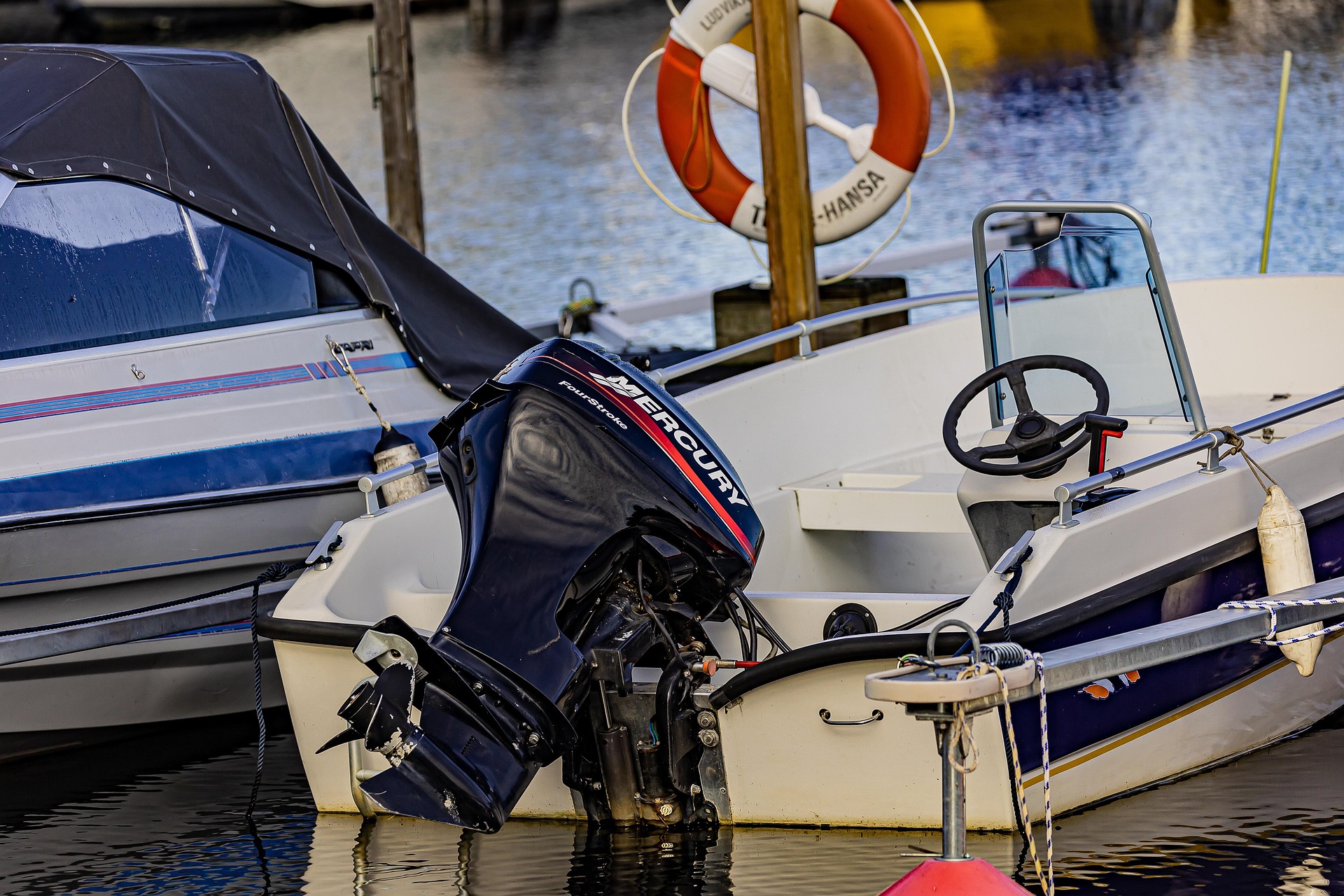
Outboard engine problems
Outboards are exposed to the elements, making them susceptible to external environmental factors but generally easier to access for quick repairs.
- Common issues: The most frequent culprit is the fuel primer bulb losing pressure or the fuel tank vent being closed, which creates a vacuum that starves the engine. Additionally, the emergency kill-switch lanyard is easily bumped out of place on small tiller-steered boats.
- Quick fixes: * The Primer Squeeze: If the engine stutters, a few firm pumps of the primer bulb can often force fuel through a stubborn line.
- Spark Plug Swap: On many outboards, you can pop the cowling and swap a fouled spark plug in minutes with a simple wrench.
- Propeller Shear Pin: If the engine revs but you aren’t moving, you may have sheared a pin or spun a hub; carrying a spare prop and cotter pin is essential.
Inboard engine problems
Inboards—whether diesel or gasoline—are part of a more complex, integrated system involving cooling through-hulls, heat exchangers, and underwater running gear.
- More complex systems: Troubleshooting an inboard often involves checking the raw-water strainer for debris or inspecting a heat exchanger. Unlike outboards, inboards rely on a complex exhaust system that can “back-fill” with water if the engine is cranked excessively without starting.
- Specific risks: Because inboards sit low in the boat, they are vulnerable to bilge water. A leaking packing gland or a burst hose can submerge the starter motor or alternator, leading to a total electrical failure.
Key differences in handling failures
Managing these failures requires a different tactical approach:
| Feature | Outboard Handling | Inboard Handling |
| Accessibility | Easy to tilt up to clear a fouled prop or change a plug. | Often requires working in a hot, cramped engine room. |
| Steering | Losing the engine often means losing your primary rudder (on smaller boats). | Most inboards have a separate rudder, allowing for better “steerage way” while drifting. |
| Ventilation | Fuel vapors dissipate into the air. | Fumes can collect in the bilge, requiring blowers to be run before any restart attempt. |
| Emergency Fixes | “Pull-start” cords can be used if the battery dies. | Usually impossible to start manually; requires a backup battery or jump-start. |
Critical Mistakes to Avoid During an Engine Failure
In the heat of a mechanical crisis, the urge to “do something” can often lead to actions that turn a simple repair into a total engine loss or a safety disaster. Avoiding these common pitfalls is just as important as knowing how to fix the problem.
Forcing the engine
When an engine stalls or refuses to start, the natural instinct is to keep turning the key. This is one of the most expensive mistakes a boater can make.
- Starter Burnout: Marine starters are not designed for continuous use. Cranking for more than 10 seconds at a time generates intense heat that can melt internal components.
- Hydrostatic Lock: On inboard engines, excessive cranking without the engine firing can cause the raw-water pump to fill the exhaust system and eventually back-fill into the cylinders. This can permanently “lock” and ruin the engine.
Ignoring warning signs
Modern engines are equipped with alarms and gauges for a reason.
- The “Limp Mode” Trap: If your engine automatically drops RPMs (Limp Mode), it is trying to protect itself from catastrophic damage like oil pressure loss or overheating. Overriding these sensors or continuing to run at low speed despite an alarm can result in a seized engine block.
- The “Wait and See” Approach: If you hear an unusual rhythmic knocking or a high-pitched squeal from a belt, do not wait for the engine to fail completely. Shut it down immediately to investigate while you still have a chance at a minor repair.
Misusing onboard electronics
A dead engine means your alternator is no longer charging your batteries. Every amp you use is now a finite resource.
- Draining the House Bank: If you leave high-draw items like refrigerators, heavy lighting, or stereo systems running while troubleshooting, you may drain the battery so low that the VHF radio fails when you finally need to call for help.
- Communication Priority: Turn off all non-essential electronics. Conserve your battery power for the starter, your GPS, and your radio.
Delaying a distress call
Many skippers wait too long to alert others because of pride or a desire to avoid a towing fee.
- The Drift Factor: If you wait two hours to call for help while trying to fix the engine, you may have drifted miles away from your last known position or into much more dangerous waters.
- Early Notification: It is always better to cancel a “Pan-Pan” call because you fixed the issue than to wait until you are hitting the rocks to call a “Mayday.” Alert the Coast Guard or a tow service the moment you realize the situation is beyond your immediate control.
How to Prevent Boat Engine Failure
Reliability at sea is not a matter of luck; it is a direct result of disciplined maintenance. A well-kept engine rarely fails without warning. By establishing a routine, you can catch minor wear before it transforms into a mid-voyage crisis.
Routine maintenance essentials
Think of these tasks as the “life support” systems for your engine. Neglecting them is the fastest way to ensure a breakdown.
- Oil changes: Marine engines work much harder than car engines, often running at high RPMs for hours. Fresh oil reduces friction and carries away heat and contaminants. Check your oil level before every trip and change it according to the manufacturer’s hourly schedule.
- Filters: Fuel filters are your primary defense against the “Big Three” of fuel failure: water, dirt, and microbial growth. Replace your primary and secondary filters annually, and always carry spares. If you see water in the separator bowl, drain it immediately.
- Cooling system: The rubber impeller in your water pump is a critical wear item that should be replaced every season. Additionally, inspect your heat exchangers for salt buildup and ensure all hose clamps are tight and free of “bleeding” rust.
Pre-departure checklist
Before you cast off, perform a “dry run” inspection. This three-minute habit can prevent hours of drifting.
- Fuel level: Never rely on a gauge alone. Use the “rule of thirds”: one-third to get there, one-third to get back, and one-third in reserve. Ensure your fuel is fresh and the tank vents are unobstructed.
- Battery charge: Check your battery voltage at the helm. A healthy battery should read at least 12.6V at rest. Ensure the terminals are clean, tight, and sprayed with a corrosion inhibitor.
- Propeller condition: Give the prop a quick look. Check for fishing line wrapped around the shaft (which can ruin seals) and look for “dings” or bent blades that cause vibration and damage the transmission.
Smart habits while underway
Safety continues after you leave the dock. Being “in tune” with your vessel allows you to sense a problem before an alarm sounds.
- Monitor engine performance: Keep an eye on your temperature and oil pressure gauges. If you see the temperature creeping up even a few degrees above normal, check your raw-water flow immediately.
- Listen for unusual sounds: You should know the “song” of your engine. A new whistle, a metallic rattle, or a change in exhaust tone are all early warning signs of belt slippage, mechanical wear, or a restricted exhaust.
- Anticipate problems: If you see a patch of heavy seaweed or floating debris, throttle back or steer clear to avoid clogging your intakes. If the sea state picks up, be aware that the motion of the boat can stir up sediment at the bottom of an old fuel tank, which can quickly clog your filters.
Essential Equipment in Case of Engine Failure
When the engine stops, your reliance shifts from mechanical power to your onboard emergency kit. Having the right tools and gear ready can mean the difference between a self-repaired minor issue and a full-scale rescue operation.
Safety gear
These items are non-negotiable for maintaining communication and ensuring the survival of your crew while adrift.
- VHF radio: A fixed-mount VHF with a high-gain antenna is your lifeline to the Coast Guard and nearby vessels. Supplement this with a waterproof handheld VHF in case of electrical failure.
- GPS: Knowing your exact coordinates is critical when calling for assistance. A battery-powered handheld GPS or a reliable maritime app on a smartphone serves as a vital backup if the boat’s primary chartplotter loses power.
- Life jackets: In an engine failure, the boat’s motion becomes unpredictable. Ensure high-quality life jackets are accessible and worn by everyone on board, especially if the vessel begins to drift toward hazardous areas.
Basic repair tools
You don’t need a full workshop, but you do need the specific tools required to address the “Big Three” causes of failure (fuel, electrical, and cooling).
- Tool kit: At a minimum, carry adjustable wrenches, a set of screwdrivers, pliers (including needle-nose), and a spark plug wrench. Include a flashlight or headlamp for working in dark engine compartments.
- Spare parts: Always carry the “essentials pack”: spare fuel filters, a new water pump impeller, an extra drive belt, and spare spark plugs. A roll of self-fusing silicone tape (Rescue Tape) is also invaluable for temporary hose repairs.
- Backup battery: A portable jump-start pack can be a lifesaver if you accidentally drain your house batteries. Alternatively, a dedicated, isolated starter battery ensures you always have the cranking power needed to get underway.
Backup solutions
When mechanical repairs are impossible, these secondary systems provide the control you need to protect the vessel.
- Anchor: Your anchor is your “emergency brake.” It is the most important piece of safety equipment during an engine failure, as it stops the drift and prevents grounding on a lee shore.
- Sails: For sailors, the rigging is the ultimate backup. Even for powerboats, a small “steadying sail” or a makeshift kite can sometimes provide enough steerage to keep the bow into the wind.
- Dinghy: If you are close to shore, a dinghy with its own small outboard can act as a “tugboat,” helping to pull the larger vessel’s bow around or even towing it slowly into a protected cove.
When to Call for Assistance at Sea
Knowing when to ask for help is a sign of good seamanship, not a lack of skill. The sea is an unforgiving environment, and a situation that feels under control in a calm bay can quickly become life-threatening if the wind shifts or the tide turns.
Emergency vs. non-emergency situations
The type of help you request depends entirely on the level of risk to your crew and your vessel.
- Non-Emergency: If your engine fails in calm water, you are well clear of shipping lanes, and your anchor is holding firmly, you are in a “non-emergency” state. In this case, you have time to troubleshoot or arrange a commercial tow.
- Emergency: If you are drifting toward rocks, if the sea state is worsening, if someone is injured, or if you are in a high-traffic zone where you risk being hit, the situation is an emergency. Do not wait for things to get worse before alerting authorities.
Available rescue services
Depending on your location and the severity of the problem, different organizations will respond.
- Coast Guard / Maritime Authorities: These services are for life-safety and distress If you are in immediate danger, contact them on VHF Channel 16. They are not a “free towing service” for minor mechanical issues, but they will coordinate a rescue if lives are at stake.
- Tow Services: Commercial towing companies function like roadside assistance for the water. If you have a membership, they will come to your position and tow you back to a marina or a boat ramp. For non-emergencies, this should be your first call via phone or a non-emergency VHF channel.
How to communicate your position effectively
When you call for help, your position is the most critical piece of information. Rescuers cannot help you if they cannot find you.
- Coordinates first: Read your Latitude and Longitude directly from your GPS or chartplotter. Use the format “Degrees, Minutes, and Decimals of Minutes” (e.g., 20° 00.5′ S, 057° 30.2′ E).
- Visual Landmarks: Supplement your coordinates with a description of nearby landmarks, such as “Two miles West of the Flat Island lighthouse” or “Near Buoy Number 4.”
- Vessel Description: State the color of your hull, the type of boat (e.g., “White center console”), and the number of people on board.
- The “Pink Smoke” Principle: If rescuers are nearby but cannot spot you, use a signaling device like a handheld flare, a mirror, or a bright cloth to help them “home in” on your exact location.
Conclusion
Most engine failures are preventable through disciplined maintenance and a rigorous pre-departure checklist. When a breakdown does occur, the difference between a minor delay and a maritime emergency lies in your ability to stay calm and act methodically. By securing your vessel, diagnosing the “Big Three” causes, and knowing when to call for help, you ensure that a mechanical setback remains a manageable part of your journey.
