

Fire at sea: how to react?
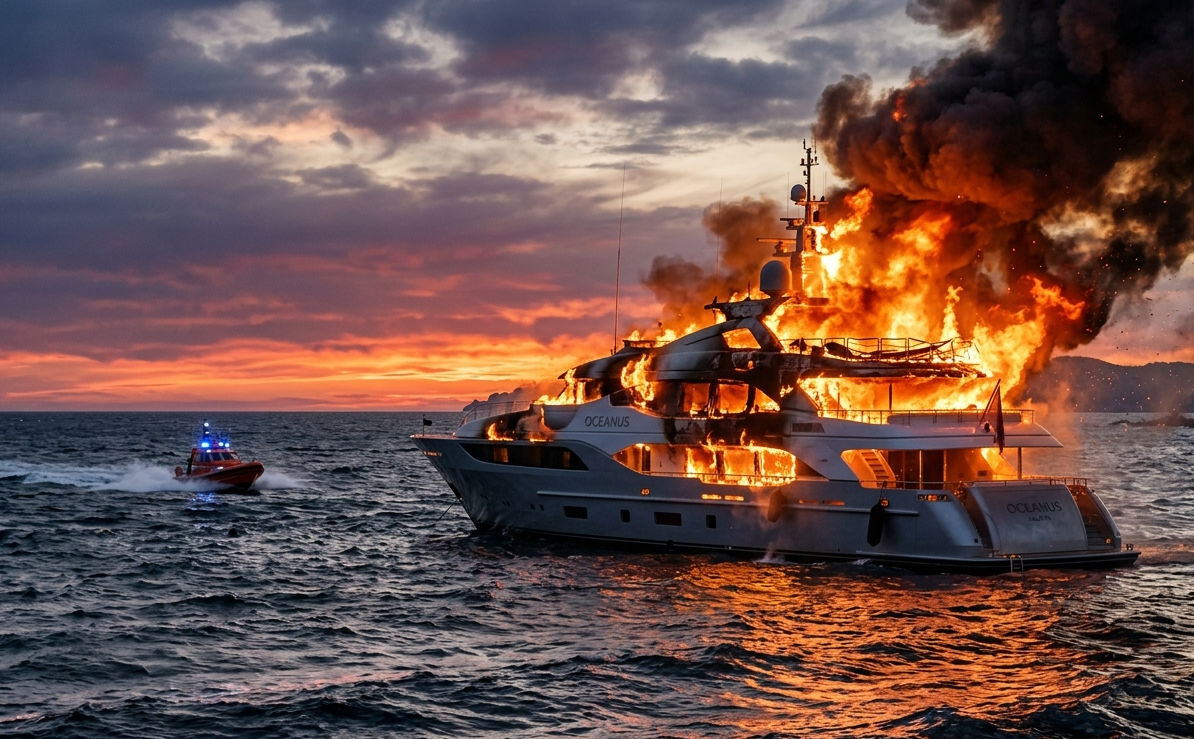
A fire at sea is a unique and harrowing emergency. With no easy escape and help often miles away, your survival depends entirely on immediate, correct action. On a vessel filled with fuel and flammable resins, a small spark can become a catastrophe in seconds.
This guide focuses on the two pillars of maritime survival: prevention and preparedness. You will learn how to identify common fire hazards, maintain essential safety equipment, and follow a decisive step-by-step response plan to protect your crew and your boat when every second counts.
Boat Fires: Rare but Extremely Dangerous
Statistically, you are far more likely to deal with a mechanical failure or a grounding than a blaze. However, while rare, fire is the most unforgiving emergency a sailor can encounter. On land, a fire department is a phone call away; at sea, you are the fire department.
Why fire at sea is a critical emergency
The maritime environment turns a manageable fire into a life-threatening crisis within seconds due to three primary factors:
- Isolation from help: When an alarm sounds offshore, professional assistance is usually too far away to intervene. You must rely entirely on your onboard equipment and training to contain the situation before it becomes catastrophic.
- Rapid fire spread: Boats are designed with interconnected voids, lockers, and ventilation ducts. These “chimneys” allow heat and flames to move through the hull with terrifying speed, often trapping crew members in cabins or the cockpit.
- Toxic smoke risks: In the confined spaces of a cabin or engine room, oxygen is consumed rapidly. The burning of modern marine materials produces thick, black, highly toxic smoke that can disorient and incapacitate a person in just a few breaths.
Why boats are highly vulnerable to fire
A boat is essentially a high-density collection of fuel sources packed into a small, vibrating, and corrosive environment.
- Flammable materials: Most modern hulls are constructed from Glass Reinforced Plastic (GRP). While durable, the resins used in fiberglass are petroleum-based and highly flammable once ignited. Combined with interior wood, upholstery, and sound-insulation foam, a boat provides an abundance of fuel for a fire.
- Limited fire protection standards: Unlike commercial buildings, private recreational vessels often lack automatic sprinkler systems or fire-rated structural barriers. This lack of “passive” protection means the fire has no internal obstacles to prevent it from consuming the entire vessel.
How Does a Fire Start on a Boat?
To effectively fight or prevent a fire, you must first understand its chemistry. A fire is not a random event; it is a chemical reaction that requires three specific components to exist simultaneously.
The fire triangle explained simply
Fire safety professionals refer to the “Fire Triangle.” If you remove any one of these three elements, the fire will be extinguished:
- Heat: This is the initial energy required for ignition. On a boat, this often comes from an overheating engine component, a short-circuited wire, or a hot stove burner.
- Fuel: This is any material that can burn. Boats are densely packed with fuel, including diesel, gasoline, cooking gas (LPG), engine oil, and the fiberglass resins of the hull itself.
- Oxygen: Fire requires air to breathe. In the open air of a cockpit, oxygen is unlimited. In an enclosed engine space, controlling the oxygen supply (by keeping hatches closed) is often the only way to “smother” a fire.
Why fires spread faster at sea
The unique environment of a vessel accelerates the growth of a fire far more than in a typical home.
- Drafts and Ventilation: Boats are designed to be well-ventilated to prevent moisture and fumes. However, these same vents act as bellows, feeding fresh oxygen directly into the seat of a fire.
- Conductivity: Metal components and aluminum masts can conduct heat rapidly, igniting materials in adjacent compartments that haven’t even been touched by a direct flame.
- The “Chimney Effect”: Because boats are compact, heat rises through companionways and hatches, quickly reaching the deck and rigging. The upward movement of hot gases creates a suction effect that draws in more fresh air from below, creating a self-sustaining cycle of rapid combustion.
The Most Common Causes of Boat Fires
Understanding where a fire is likely to start is the first step toward prevention. On a vessel, most fires originate from high-energy areas: the engine room, the galley, and the electrical panel.
Engine-related fires
The engine room is a high-risk zone because it combines extreme heat with volatile fluids.
- Fuel or oil leaks: A pinhole leak in a pressurized fuel line can create a fine mist of diesel or gasoline. If this mist touches a hot exhaust manifold, it ignites instantly.
- Overheating: A blocked raw-water intake or a broken impeller can cause engine temperatures to skyrocket. This heat can eventually scorch nearby soundproofing foam or plastic components.
- Poor ventilation: Without adequate airflow, heat builds up to dangerous levels, and explosive fumes can accumulate, waiting for a single spark to ignite.
Galley (kitchen) fires
The galley is the most common site for “human-element” fires, often occurring during meal preparation.
- Grease and oil: Cooking at sea involves a moving platform. A sudden lurch from a wave can splash hot grease onto a burner, leading to a flash fire.
- Gas systems: Leaks in Liquid Petroleum Gas (LPG) or butane lines are extremely dangerous. Because these gases are heavier than air, they settle in the bilge, creating an invisible “bomb” that can be triggered by a simple light switch.
Electrical fires
Electrical failures are the leading cause of boat fires, often starting behind bulkheads where they remain invisible until they break into a full blaze.
- Short circuits: Vibration from the engine and the pounding of waves can chafe wire insulation, leading to direct metal-to-metal contact.
- Faulty wiring: Saltwater is highly corrosive. It eats away at connections, creating high resistance that generates intense heat—often enough to melt surrounding materials.
- Incorrect fuses: Using a fuse with too high an amperage rating allows a circuit to pull more power than the wires can handle, causing the wires themselves to glow white-hot.
Flammable substances onboard
Boats are mobile storage units for hazardous materials.
- Gas and Fuel: Improperly stored gasoline for outboards or leaking diesel tanks provide a constant source of high-energy fuel.
- Chemicals: Cleaning agents, resins, paints, and thinners stored in lockers can release flammable vapors, especially in the tropical heat.
Other common causes
- Open flames: Candles and lighters are particularly dangerous on a moving boat where a sudden gust of wind or a tilt can knock them onto upholstery.
- Human error: Simple mistakes, such as leaving a rag near a hot engine or forgetting to turn off the battery charger, remain primary contributors to maritime disasters.
Fire Prevention on a Boat: Essential Safety Rules
The most effective way to fight a fire at sea is to ensure it never starts. Rigorous prevention through regular maintenance and disciplined habits is the mark of a professional mariner.
Pre-departure safety checks
Before casting off, a five-minute inspection can identify potential disasters waiting to happen.
- Engine inspection: Check for any signs of fluid pooling in the bilge. Feel fuel lines for “soft spots” or cracks, and ensure all clamps are tight. A dry engine is a safe engine.
- Ventilation: Ensure engine room blowers are functioning correctly. Run the blower for at least four minutes before starting a gasoline engine to clear any trapped explosive vapors.
- Electrical system: Look for “green” corrosion on terminals or frayed wires. Ensure the battery terminals are covered with boots to prevent a dropped tool from causing a massive short circuit.
- Gas system: Smell for gas in the galley and bilge. Visually check that the solenoid valve or manual shut-off at the tank is operational.
Safe practices onboard
Safety is a continuous process that requires a change in mindset for everyone on the vessel.
- Fuel handling: Never refuel while the engine or any electronic devices are running. Wipe up any spills immediately and ventilate the boat thoroughly before restarting.
- Cooking safety: Never leave a stove unattended. Ensure curtains or paper towels are kept far away from the galley, and always “burn off” the gas left in the lines by closing the tank valve before turning off the stove burner.
- Equipment monitoring: Develop a “scent memory” for your boat. If you smell burning plastic, hot oil, or raw fuel, do not ignore it—investigate the source immediately before it turns into a flame.
Essential fire safety equipment
Having the right tools is useless if they are expired or inaccessible.
- Fire extinguishers: You should have at least one extinguisher per cabin, plus one in the galley and one near the engine. Ensure they are marine-rated and have been serviced within the last year.
- Fire blankets: Stored in the galley, these are the best tools for extinguishing grease fires or wrapping around a person whose clothing has caught fire.
- Smoke and gas detectors: Every boat should be fitted with marine-grade smoke detectors and, crucially, an LPG/CO detector in the bilge or low-lying areas where heavy gases collect.
Types of Boat Fires and How to Handle Them
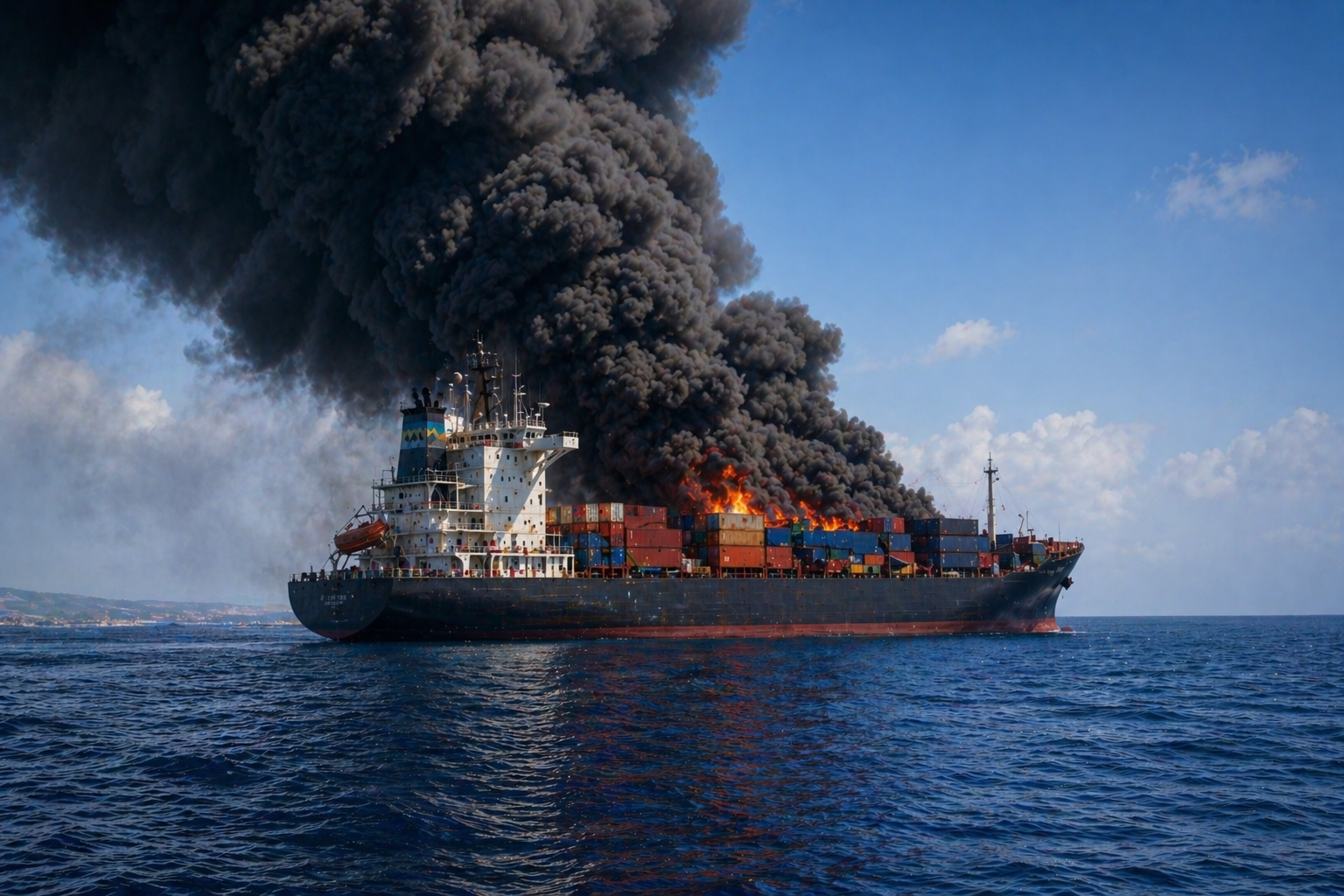
Not all fires are created equal. Using the wrong extinguishing agent—such as throwing water on a grease fire—can catastrophically worsen the situation. You must match your response to the source of the flame.
Class A fires (solid materials)
These involve common combustibles like wood, paper, fiberglass, and upholstery.
- Water or extinguisher: Class A fires can be fought with water or a standard ABC dry powder extinguisher. Water is effective here because it cools the core of the material to prevent re-ignition.
Grease fires (galley fires)
These occur when cooking oils or fats ignite on the stove.
- Never use water: Pouring water on a grease fire causes a violent explosion of steam that sprays burning oil across the cabin.
- Use fire blanket: The most effective method is to “smother” the fire. Carefully place a fire blanket over the pan to cut off the oxygen. Leave it in place until the pan is completely cool.
Engine compartment fires
Fires inside the engine space are particularly dangerous because they involve fuel and high heat in a confined area.
- Never open the compartment: This is a critical rule. Opening the engine hatch provides a massive “gulp” of fresh oxygen, which can turn a small fire into an explosive fireball.
- Use extinguisher through access port: Most modern boats have a small fire port (a hole with a plastic cover). Insert the nozzle of your extinguisher through this port and discharge the entire contents into the closed space to smother the flames.
Electrical fires
These are often signaled by the smell of burning plastic or ozone.
- Cut power immediately: Switch off the main battery isolator and shore power. This removes the “heat” element of the fire triangle.
- Use appropriate extinguisher: Use a CO2 or dry powder extinguisher. Never use water or foam, as these conduct electricity and could lead to a fatal shock.
Fuel or gas fires
These involve liquid fuels like gasoline and diesel or gases like LPG.
- Shut off supply: Your first priority is to stop the flow of fuel. Close the manual gas valves or fuel shut-off levers.
- Act quickly: These fires spread at extreme speeds. Use a dry powder or foam extinguisher to create a barrier between the fuel and the oxygen, aiming at the base of the flames to “sweep” them away.
Choosing the Right Fire Extinguisher for Your Boat
Selecting an extinguisher for a boat is different than choosing one for a home. On the water, you deal with confined spaces, shifting platforms, and a mix of fuel types. You need tools that are multi-purpose and marine-rated to survive the salt and vibration.
Fire classes explained (A, B, C, D, F)
To choose the right tool, you must understand the international classification of fires:
- Class A: Solid combustibles (wood, paper, fiberglass, fabrics).
- Class B: Flammable liquids (diesel, gasoline, oil, paint).
- Class C: Flammable gases (LPG, butane, propane).
- Class D: Combustible metals (rare on recreational boats, but found in some engine components).
- Class F (or K): Cooking oils and fats (galley fires).
- Electrical Fires: While not always a separate “class,” they are noted for requiring non-conductive extinguishing agents.
Types of fire extinguishers
Dry Powder (ABC)
The most common “all-rounder” for marine use. It uses a chemical powder to break the chain reaction of the fire.
- Pros: Highly effective on A, B, and C fires; affordable and widely available.
- Cons: The powder is extremely messy, corrosive to electronics, and can cause breathing difficulties in a small cabin.
Foam
Foam extinguishers work by creating a blanket that cools and smothers the fire.
- Pros: Excellent for liquid fuel spills (Class B) as it prevents re-ignition.
- Cons: Not suitable for electrical fires; can be bulky.
CO2 (Carbon Dioxide)
CO2 works by displacing oxygen, effectively suffocating the fire.
- Pros: Leaves zero residue; completely safe for delicate electronics and engines.
- Cons: Very cold (can cause “cold burns” if handled incorrectly); ineffective in windy conditions on deck as the gas blows away.
Aerosol
A newer technology that releases a fine mist of potassium salts.
- Pros: Extremely compact (fits in a glove box); maintenance-free; leaves minimal residue.
- Cons: Limited discharge time; best suited for small, localized fires.
How many extinguishers do you need onboard?
While local regulations (such as those from the USCG or European CE standards) provide a legal minimum, a safety-first approach usually requires more:
- Small vessels (under 7m): At least one 2kg ABC extinguisher reachable from the helm.
- Mid-sized vessels (7m–12m): One in each sleeping cabin, one in the galley (within reach of the exit), and one in the cockpit.
- Large vessels (over 12m): The above, plus a dedicated automatic or remote-pull system for the engine compartment.
Pro Tip: Every extinguisher on a boat should be shaken once a month. The vibration of the boat can cause the powder in ABC extinguishers to pack down into a solid “cake” at the bottom, rendering it useless when you squeeze the trigger.
What to Do in Case of Fire on a Boat (Step-by-Step Guide)
In a fire emergency at sea, adrenaline can lead to panic. Having a memorized, step-by-step protocol ensures that you and your crew act with the speed and precision necessary to save the vessel.
The first critical seconds
Success is determined by how quickly you transition from observation to action.
- Alert the crew: Immediately shout “Fire! Fire! Fire!” or “Fire onboard!” This ensures everyone is awake, alert, and moving toward their assigned safety stations. If the fire is significant, have someone stand by the VHF radio.
- Identify the source: You cannot fight what you cannot see. Locate the seat of the fire immediately. Is smoke coming from the engine vent, a cabin locker, or the galley stove? Knowing the source determines which extinguishing agent to use.
Immediate actions
Once the fire is located, you must neutralize the elements feeding it.
- Shut down systems: Turn off the engine, close the fuel valves, and flip the main battery isolator switches if the fire is electrical. This removes the “fuel” and “heat” components of the fire triangle.
- Close hatches and doors: If the fire is in a cabin or the engine room, close all openings to the space. This restricts the oxygen supply and slows the spread of flames and toxic smoke to the rest of the boat.
- Attack the fire correctly: Retrieve the appropriate extinguisher. If the fire is too large or you are unsure of the source, focus on preparing the life raft rather than fighting a losing battle.
How to use a fire extinguisher effectively
A fire extinguisher only lasts for 10 to 20 seconds. You must make every second count.
- Approach with the wind behind you: If the fire is on deck or in an open cockpit, always stand upwind. This keeps the smoke and flames blowing away from you and ensures the extinguishing agent is carried into the fire rather than back into your face.
- Aim at the base of the fire: A common mistake is aiming at the top of the flames. To extinguish a fire, you must hit the fuel source at the bottom. Use the A.S.S. method:
- Pull the pin.
- Aim at the base.
- Squeeze the trigger.
- Sweep from side to side.
When and How to Abandon the Boat
The hardest decision a captain makes is deciding when the boat is no longer the safest place to be. While you should fight a fire as long as it is safe, you must recognize the “point of no return” before evacuation becomes impossible.
Signs the fire is out of control
If any of the following occur, you must shift your focus entirely from saving the vessel to saving lives:
- The fire reaches the fuel tanks: If flames are near the main fuel supply or LPG lockers, an explosion is imminent.
- Uncontrollable smoke: If thick, toxic smoke makes it impossible to see or breathe in the cockpit or cabins.
- Structural compromise: If the hull begins to soften or the fire is burning below the waterline, the boat will soon lose buoyancy.
- Failed extinguishing efforts: If you have exhausted your fire extinguishers and the flames are still growing.
Evacuation procedure
When the order to “Abandon Ship” is given, discipline is vital to ensure everyone makes it off the vessel safely.
- Launch the life raft: Deploy the raft on the upwind side if possible, or at the end of the boat furthest from the flames. Ensure it is securely tethered to the boat until everyone is inside, then cut the line once clear.
- Stay upwind: Fire moves with the wind. By staying upwind of the burning vessel, you avoid the heat, toxic smoke, and the risk of floating fuel catching fire on the water surface around you.
- Grab the “Go-Bag”: Ensure someone grabs the emergency ditch bag containing your handheld VHF, EPIRB, flares, and water.
Sending a distress call (Mayday)
Communication should happen the moment a fire is identified as serious. Do not wait until you are jumping overboard to call for help.
- The Mayday Call: Use VHF Channel 16. State “Mayday, Mayday, Mayday,” followed by your boat name, position (GPS coordinates), the nature of the emergency (“Fire onboard”), and the number of people on board.
- Activate the EPIRB: If you have an Emergency Position Indicating Radio Beacon, activate it immediately. It will send your precise location to search and rescue satellites.
- Handheld VHF: Once in the life raft, keep your handheld VHF on and ready to communicate with responding vessels or aircraft.
How to Protect Yourself During a Fire at Sea
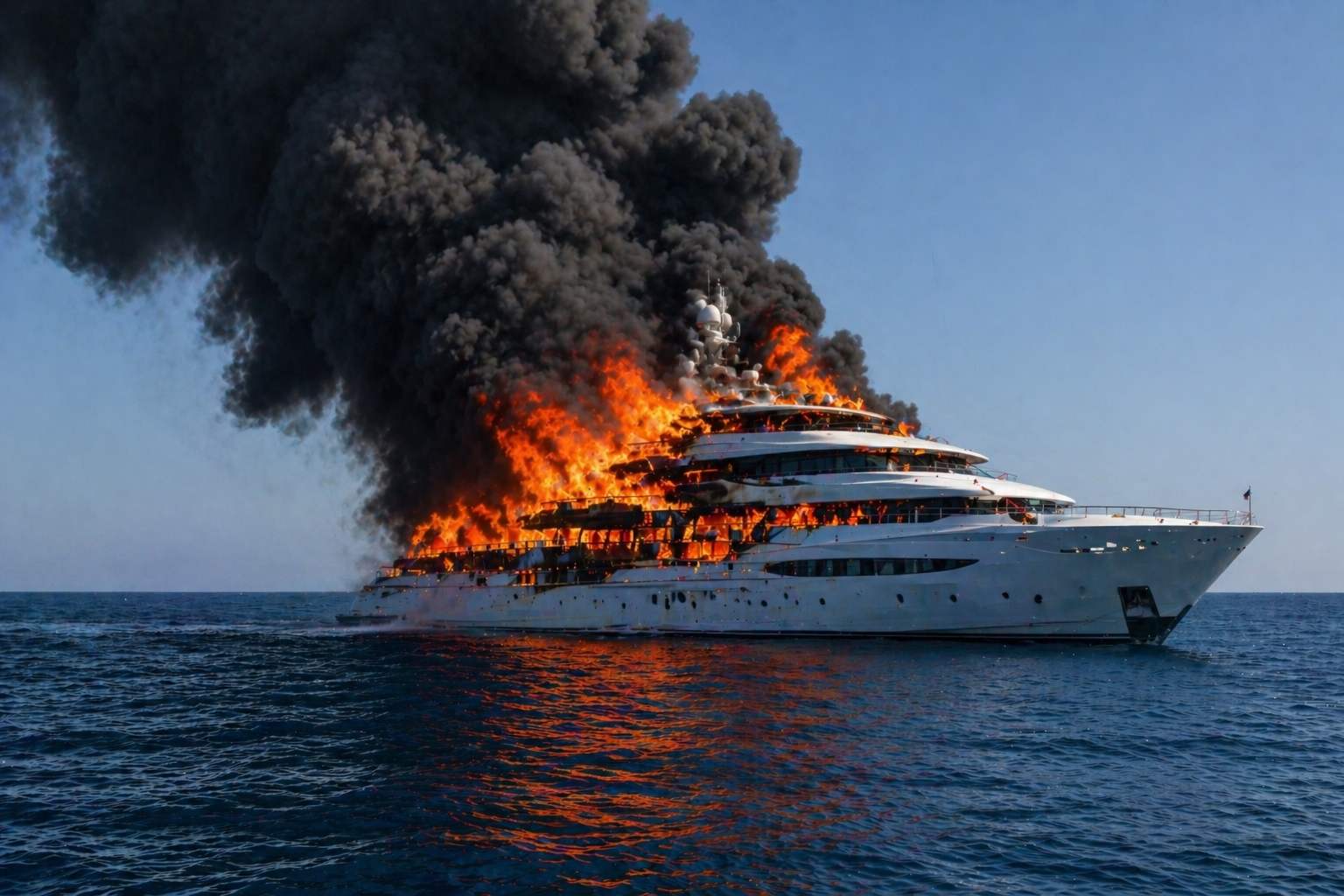
When fighting a fire or preparing to evacuate, your primary goal is to minimize injury from heat and inhalation. In the panic of an emergency, the clothes you are wearing can either become a shield or a significant hazard.
Protective clothing and equipment
The gear you choose in the first few seconds of a fire can determine the severity of burns and your ability to stay mobile.
- Avoid synthetic materials: Most modern technical sailing gear and summer clothing are made of polyester, nylon, or spandex. In a fire, these materials do not just burn—they melt and stick to your skin, causing deep and agonizing “plastic burns.” If you have time, switch to natural fibers like heavy cotton or wool, which are much more flame-resistant.
- Use wet clothing for protection: If you must pass near flames or enter a smoky cabin to retrieve a life jacket, douse your clothes in seawater first. Wet fabric provides a temporary thermal barrier against radiant heat and is significantly harder to ignite. Wrapping a wet towel around your head can also protect your hair and ears from flash burns.
The danger of toxic smoke
While flames are the most visible threat, smoke is the silent killer on a boat. The resins and foams used in boat construction release a cocktail of hydrogen cyanide and carbon monoxide when they burn.
- Stay Low: Smoke and heat rise. If you are moving through a cabin, keep your head as close to the floor as possible, where the air is coolest and clearest.
- Filter your breathing: While not a substitute for a gas mask, breathing through a wet cloth can help filter out larger soot particles and cool the air entering your lungs, preventing thermal damage to your airway.
- Don’t Underestimate Disorientation: Toxic smoke causes confusion and dizziness almost instantly. If you cannot see your exit within two seconds of entering a smoky area, retreat immediately. It is very easy to become lost in a familiar cabin once it is filled with thick, black smoke.
Training and Preparation: The Key to Survival
When a fire breaks out, you do not rise to the occasion; you sink to the level of your training. In the high-stress environment of a burning vessel, muscle memory and clear organization are what prevent a disaster from becoming a tragedy.
Importance of safety briefings
Every time a new guest or crew member steps onto your boat, a safety briefing is mandatory. This shouldn’t be a casual conversation, but a structured walkthrough.
- Location of Equipment: Show exactly where every fire extinguisher and the fire blanket are stored. Ensure everyone knows how to operate the latches or brackets holding them.
- The Fire Port: If your boat has an engine fire port, point it out. Most passengers will not know what that small, capped hole is for unless you tell them.
- Exit Routes: Identify at least two ways out of every cabin. In a fire, the main companionway might be blocked by flames from the galley or engine.
Assigning crew roles
Chaos is the enemy of firefighting. If everyone tries to do the same task, other critical steps are missed. Assign roles based on the number of people on board:
- The Firefighter: The person closest to the extinguisher who initiates the attack on the flames.
- The Communicator: The person responsible for heading to the VHF radio to prepare a Mayday call and activating the EPIRB.
- The Preparer: The person who begins staged evacuation procedures, such as getting life jackets on everyone and preparing the life raft or dinghy for launch.
Why fire training matters
Fire moves faster than you can think. Training replaces hesitation with action.
- Practical Drills: Occasionally run a “cold” drill where you shout “Fire in the galley!” and timing how long it takes for the crew to reach the extinguisher and the fire blanket.
- Extinguisher Familiarity: Many sailors have never actually pulled the pin on an extinguisher. If you have extinguishers that are expiring, don’t just toss them—take them to a safe area on land and let every crew member practice the “P.A.S.S.” technique so they know the feel of the recoil and the duration of the spray.
- Mental Rehearsal: Regularly visualize different fire scenarios (e.g., “What if the engine caught fire right now?”). This mental mapping reduces the “startle response” when a real emergency occurs.
Conclusion
The best-managed fire is the one that never starts. By prioritizing rigorous engine maintenance and regular safety briefings, you turn a potential catastrophe into a manageable risk.
Stay calm and act fast. Success in a maritime emergency depends on anticipation and the confidence to use your equipment without hesitation. Maintain your gear, train your crew, and always keep safety as your primary heading.
