

Marine Corrosion: How to Protect Your Boat from Rust and Long-Term Damage
Marine corrosion is one of the toughest maintenance challenges boat owners face. The destructive combination of saltwater, persistent moisture, and electrical currents aggressively attacks metal components, turning vital hardware into brittle, unsafe rust. If ignored, this breakdown can cause severe mechanical failure and costly shipyard bills.
The good news? Severe corrosion is largely preventable. With routine inspections and a few straightforward protection steps, you can shield your vessel’s metal components, avoid surprise repairs, and significantly extend your boat’s lifespan.
What Is Marine Corrosion?
Marine corrosion is the natural breakdown of metal parts when exposed to a harsh ocean environment. It occurs when metal reacts chemically or electrochemically with its surroundings, turning strong, functional components into weak oxides or rust.
While freshwater causes metal to degrade over time, saltwater speeds up the process exponentially. Salt contains dissolved minerals (primarily sodium and chloride ions) that turn water into an efficient electrolyte—a liquid capable of conducting electrical current. This enables chemical reactions to take place far more rapidly than on land or in fresh water.
Every case of marine corrosion relies on four primary factors working together:
- Salt: Acts as the catalyst by turning water into a highly conductive electrolyte.
- Moisture: Supplies the essential liquid medium necessary for chemical reactions to occur.
- Oxygen: Fuels the oxidation process that transforms solid metal into rust or scale.
- Electrical Currents: Accelerates metal breakdown via tiny galvanic voltage differences or stray shore power leaks.
Which Parts of Your Boat Are Most Vulnerable?
Understanding the theory behind corrosion is useful, but knowing where to look during a physical inspection is what keeps your vessel sea-worthy. Metal components submerged below the waterline or exposed to saltwater spray suffer the most intense galvanic and atmospheric wear.
Use this checklist during your regular maintenance walkthroughs to catch damage before it leads to structural failure:
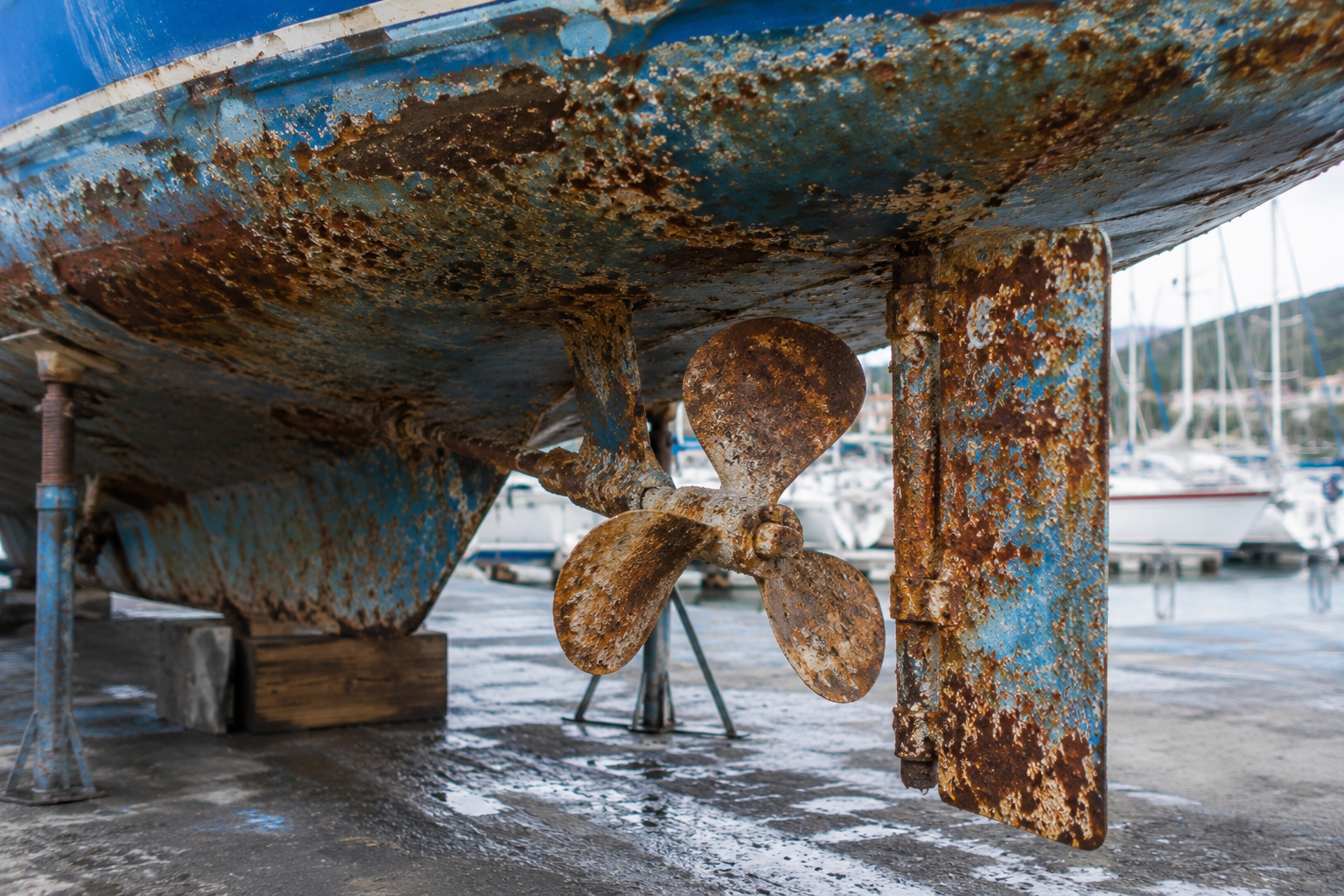
1. Propeller
- Why it’s vulnerable: Bronze or stainless steel propellers sit permanently submerged in an active electrolyte. They are often in direct physical contact with different metals (like a steel shaft), triggering strong galvanic reactions.
- Warning signs to look for: Pinkish or reddish discoloration on bronze blades (a sign of dezincification), pitted surfaces, rough edges, or chipped metal along the blade tips.
2. Propeller Shaft
- Why it’s vulnerable: Stainless steel shafts require oxygen to maintain their protective oxide layer. Sitting in stagnant, oxygen-starved water inside cutless bearings or shaft logs makes them prone to severe crevice corrosion.
- Warning signs to look for: Fine cracks, deep pitting lines around the bearing area, dark discoloration, or rust rings where the shaft passes through the hull.
3. Outdrive or Saildrive
- Why it’s vulnerable: Usually constructed from aluminum alloys, these propulsion units are underwater and mounted near stainless steel shafts and bronze props, making them extremely susceptible to aggressive galvanic deterioration.
- Warning signs to look for: Blistered or peeling paint, white powdery deposits (aluminum oxide), or pitting holes on the drive housing and lower unit.
4. Sacrificial Anodes
- Why it’s vulnerable: Made of zinc, aluminum, or magnesium, anodes are specifically designed to corrode away so your vital drive components don’t.
- Warning signs to look for: Anodes worn down to less than 50% of their original size, loose mounting bolts, or a smooth, chalky crust preventing active dissolution.
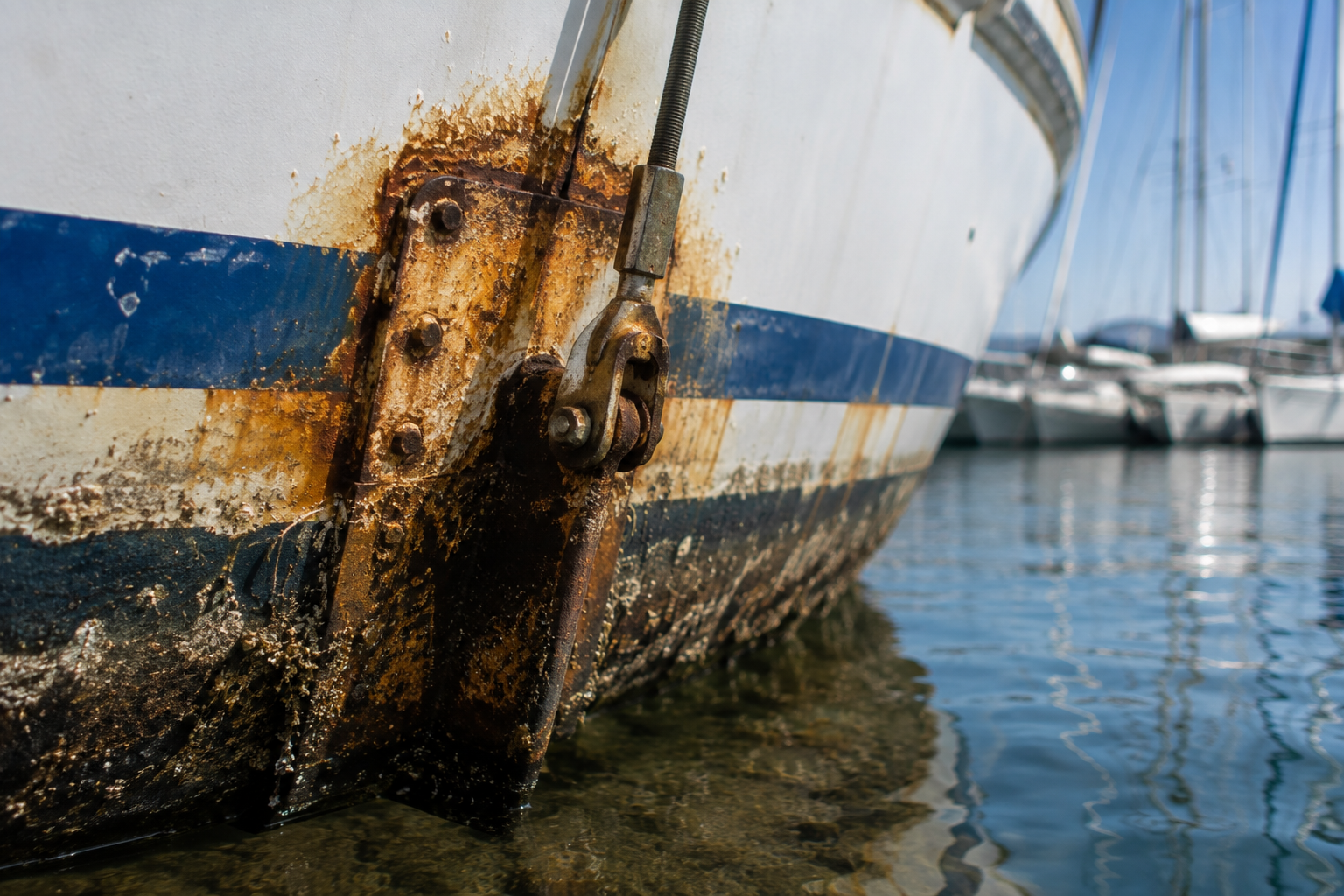
5. Metal Hull Fittings
- Why it’s vulnerable: Trim tabs, rudder stocks, and keel bolts are subjected to high mechanical stress while submerged, increasing their exposure to stray electrical currents in marinas.
- Warning signs to look for: Rust weeping from mounting seams, loose fasteners, or pitting along the edges of the metal plates.
6. Through-Hull Fittings
- Why it’s vulnerable: Seacocks and skin fittings connect the ocean to your bilge. If brass or low-grade bronze is used instead of marine-grade DZR bronze or stainless steel, electrolysis can weaken them from the inside out.
- Warning signs to look for: Green or pinkish corrosion crusts around valve bodies, stiff or frozen seacock handles, or structural cracking when light pressure is applied.
7. Deck Hardware (Cleats, Rails, Hinges)
- Why it’s vulnerable: Constant exposure to salt spray, humidity, and UV light causes atmospheric corrosion, particularly in crevices where saltwater collects and dries.
- Warning signs to look for: Brown rust streaks bleeding onto the fiberglass gelcoat, pitting around screw holes, or dull, rough metal finishes.
8. Electrical Connections and Battery Terminals
- Why it’s vulnerable: High humidity and salty air combined with direct current (DC) power lead to rapid electrochemical oxidation on exposed wiring and terminals.
- Warning signs to look for: Blue-green powder forming on copper wire, white crust on lead battery posts, frayed wire insulation, or voltage drops across switches.
The Most Common Types of Marine Corrosion
While chemical breakdown takes many forms, boaters primarily encounter three distinct types of corrosion. Recognizing how each operates makes it far easier to spot trouble early and apply the right protection.
1. Galvanic Corrosion
Galvanic corrosion occurs whenever two different metals are physically connected (or grounded together) and submerged in an electrolyte like saltwater.
Every metal has an natural electrical potential. When two dissimilar metals—such as a bronze propeller mounted on a stainless steel shaft—share the same saltwater bath, a tiny natural battery is created. Electrical current flows naturally from the more “active” metal (the anode) to the more “noble” metal (the cathode). As this current flows, the weaker, active metal sacrifices itself and dissolves, while the noble metal remains unharmed.
2. Pitting Corrosion
Pitting is a localized, highly destructive form of corrosion that causes tiny, deep holes (or “pits”) to form on an otherwise smooth metal surface. It is especially common on metals like stainless steel and aluminum.
Metals like stainless steel rely on a microscopic oxide film formed by exposure to oxygen to stay corrosion-resistant. When saltwater sits stagnant in oxygen-deprived areas—such as under tight hose clamps, beneath wet gaskets, or inside underwater shaft bearings—this protective oxide layer breaks down. Salt penetrates the exposed spot, carving deep, narrow cavities into the metal that can lead to sudden structural failure while leaving the outer surface looking deceptively intact.
3. Electrolytic (Stray Current) Corrosion
Often confused with galvanic corrosion, electrolytic corrosion (or stray current corrosion) is caused by an outside source of electrical current leaking into the water.
Instead of relying on the natural battery effect between two metals, stray current forces electricity through your boat’s underwater hardware. Common culprits include faulty bilge pump wiring, improper grounding, or electrical leaks from neighboring boats connected to shore power. Because external electrical power drives this reaction, stray current corrosion is extremely aggressive—it can destroy an outdrive, propeller, or through-hull fitting in just a few days or weeks rather than months.
How to Prevent Marine Corrosion
Preventing corrosion is far easier and less expensive than replacing ruined hardware. By prioritizing these preventive steps in order of importance, you can build a straightforward maintenance routine that keeps rust and metal degradation at bay:
- Inspect and Replace Sacrificial Anodes Regularly: Your boat’s anodes (zinc, aluminum, or magnesium block) are your primary defense against galvanic damage. Inspect them every few months and replace them as soon as they have worn down by 50%. Never paint over anodes, as coatings prevent them from dissolving correctly.
- Rinse Your Boat with Fresh Water After Every Trip: Salt residue actively attracts air moisture and accelerates oxidation even when your boat is docked. Thoroughly flush underwater drives, outboards, metal cleats, and stainless steel rails with fresh water after every outing to strip away corrosive salt deposits.
- Inspect Metal Components Frequently: Make visual checks a standard habit during routine cleanings. Look for pinkish discoloration on bronze, white powdery buildup on aluminum, or brown rust bleeding onto gelcoat so you can catch localized pitting or galvanic action early.
- Use Corrosion-Resistant Marine Materials: When replacing hardware, fastens, or seacocks, choose high-grade marine materials such as 316 stainless steel, bronze, or non-conductive composite polymers (like Marelon). Avoid using brass fittings below the waterline or low-grade hardware from standard hardware stores.
- Apply Protective Coatings Where Appropriate: Shield exposed metals with appropriate barriers. Use antifouling paints formulated for outdrives, apply dielectric grease to electrical terminals, and seal metal fasteners with marine-grade sealants to keep moisture and oxygen from seeping into tight crevices.
- Keep the Boat Dry and Well Ventilated: Atmospheric corrosion thrives in humid, trapped air. Ensure your bilge remains dry by maintaining automatic bilge pumps, fixing internal plumbing leaks, and using dehumidifiers or solar ventilation fans when the boat is stored or moored for long periods.
5 Common Mistakes That Accelerate Corrosion
Even with good intentions, well-maintained vessels can fall victim to rapid metal degradation due to subtle maintenance errors. Avoiding these five common mistakes will keep your protective systems operating at peak performance:
- Ignoring Worn Sacrificial Anodes: Leaving degraded anodes on your hull or drive unit once they have worn past the halfway mark strips your vessel of its primary galvanic shield, leaving critical underwater metals exposed to destructive chemical currents.
- Mixing Incompatible Metals: Joining dissimilar metals together—such as mounting a stainless steel fitting directly onto an aluminum deck without a non-conductive barrier or gasket—creates an immediate galvanic reaction that eats away at the weaker metal.
- Skipping Freshwater Rinses: Leaving salt spray and mineral crusts to dry on your deck hardware, outdrives, and rigging traps moisture against the metal surfaces, accelerating atmospheric pitting and surface rust between every outing.
- Leaving Small Rust Spots Untreated: Ignoring minor brown rust weeping from a screw head or deck fitting allows crevice corrosion and oxygen to dig deeper into the core structure, turning a simple cosmetic fix into a major hardware failure.
- Using Non-Marine Cleaning or Maintenance Products: Applying harsh chemical cleaners, household degreasers, or unapproved lubricants can strip protective oxide layers from stainless steel, dissolve sealants, or leave conductive residues that spark rapid corrosion.
What Should You Do If You Find Corrosion?
Finding rust or metal deterioration during a walkthrough doesn’t mean your boat is ruined, but it does require immediate action. Follow this simple guide to determine whether you can handle the fix yourself or if it’s time to call in an expert:
Dealing with Surface Corrosion (DIY-Friendly)
If the damage is limited to light discoloration, minor surface rust stains, or a thin layer of oxidation without structural metal loss, you can address it with standard maintenance:
- Clean the Affected Area: Wash away all salt residue, grease, and marine grime using fresh water and a mild marine detergent.
- Remove Oxidation: Scrub away light surface rust or powdery aluminum oxide using a non-metallic scrub pad, brass wire brush, or a specialized marine metal restorer. Avoid carbon steel brushes, as they leave microscopic iron particles behind that will rust later.
- Apply a Protective Coating: Thoroughly dry the metal and seal it. Apply a metal wax, dielectric grease (for electrical terminals), or a dedicated anti-corrosion barrier spray to block moisture and oxygen.
Dealing with Advanced Corrosion (Requires Professional Care)
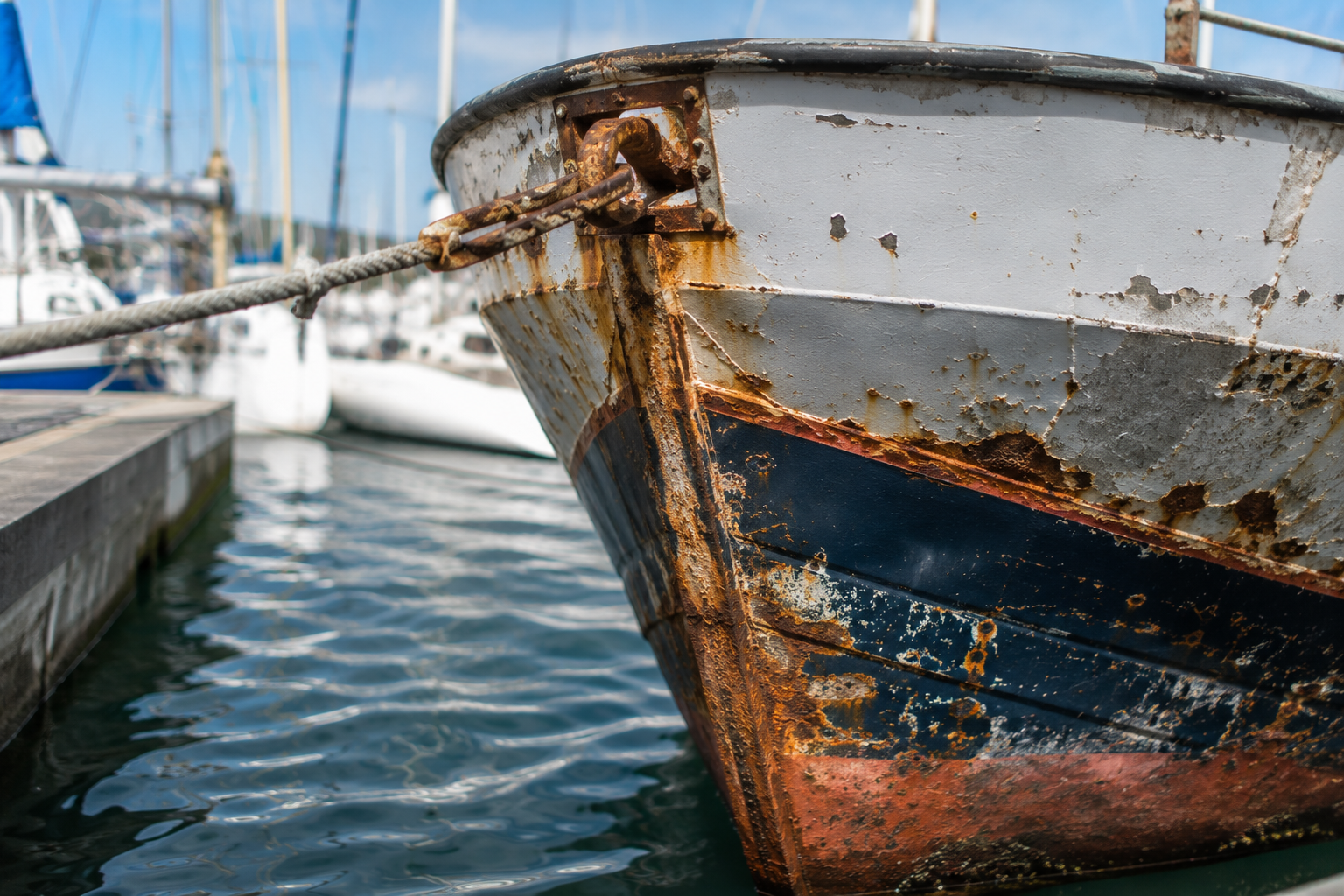
If you discover deep pitting, crumbling metal, severe pink/red discoloration on bronze, or structural flaking, the metal’s integrity has been compromised:
- Inspect the Surrounding Structure: Check adjacent components and fiberglass for signs of stress, water intrusion, or secondary galvanic damage.
- Replace Severely Damaged Components: If through-hull fittings, seacocks, keel bolts, or propeller blades have lost material or structural strength, do not attempt to patch them—replace them with new marine-grade parts immediately.
- Consult a Marine Professional: When structural hardware, outdrives, saildrives, or major hull fittings suffer deep corrosion, hire a certified marine surveyor or technician. They can run stray-current testing in your marina and ensure the safety of your vessel before you head back out to sea.
Conclusion
While marine corrosion is an inevitable reality of spending time on the water, severe metal damage is completely manageable. By conducting regular visual inspections, rinsing your boat with fresh water after every outing, and replacing sacrificial anodes before they fully wear down, you build a powerful line of defense for your vessel.
Catching corrosion early stops minor surface rust from turning into catastrophic structural failure. Taking proactive care of your metal hardware today prevents costly shipyard repairs tomorrow—keeping your boat safe, reliable, and ready for your next adventure.
