

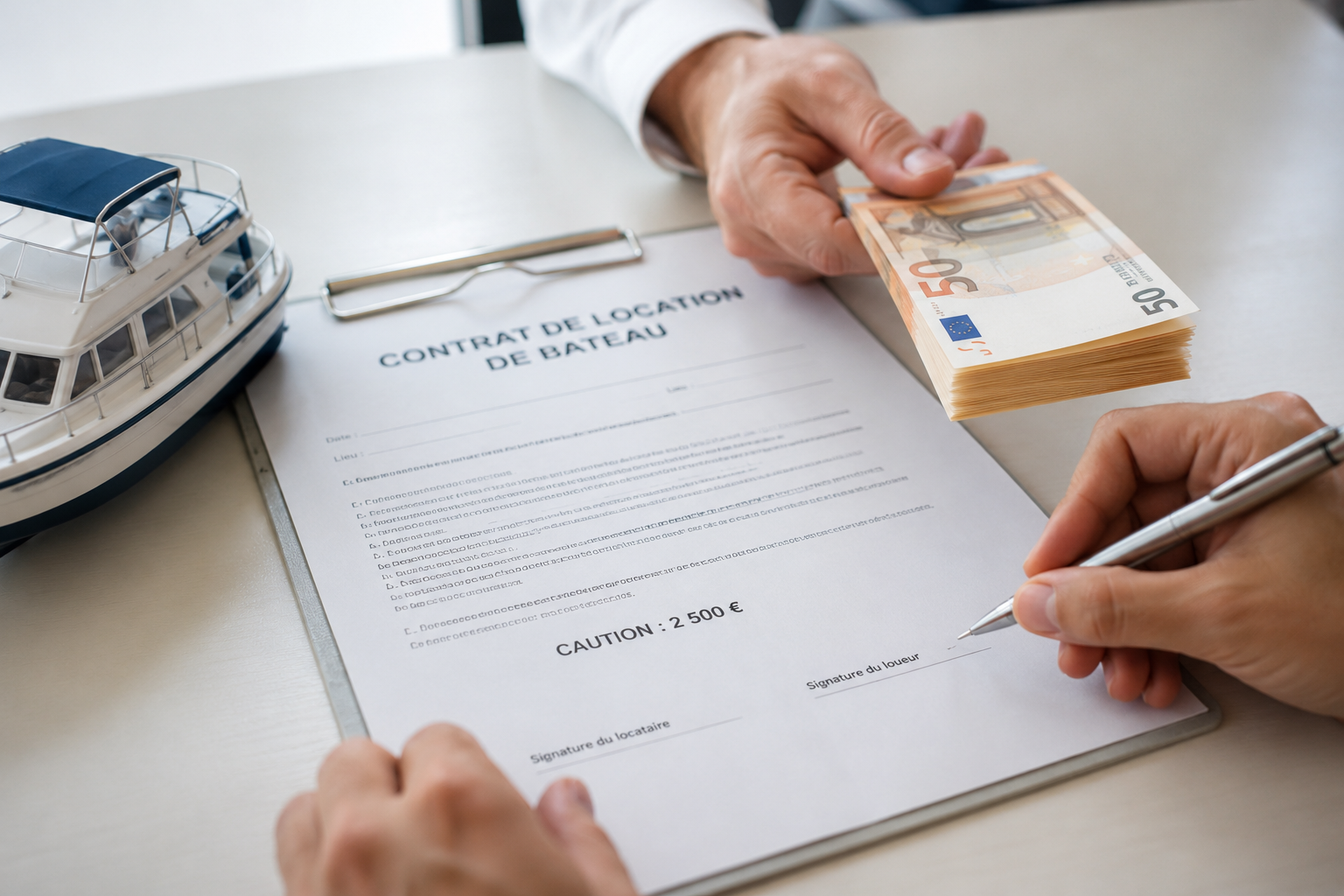
Boat Rental Security Deposit Waiver: How Does It Work and Is It Worth It?
Chartering a boat is exciting, but security deposits can run into thousands of dollars or euros if accidental damage occurs. A security deposit waiver acts as a safety net, protecting your bank account from unexpected docking scratches or hull damage.
Here is a quick look at how deposit waivers work, what they cover, their limitations, and whether buying one makes financial sense for your trip.
What Is a Boat Rental Security Deposit Waiver?
A security deposit waiver (often called damage waiver insurance or deposit buyout coverage) is an optional insurance product designed to protect charterers from losing their cash deposit if the vessel suffers accidental damage.
Understanding the distinction between the deposit and the waiver is straightforward:
- Security Deposit: A temporary financial hold or upfront payment held by the charter company to cover potential damages, lost gear, or late returns. If the vessel returns unscathed, you get this money back in full.
- Security Deposit Waiver: A non-refundable fee paid upfront to an insurer or rental agency. Instead of taking on total financial risk yourself, the waiver policy steps in to reimburse or absorb the costs if the charter company retains your deposit due to covered accidents.
The waiver applies specifically throughout your active rental period—from the moment you complete the pre-departure check-in at the dock until the keys and vessel are handed back during final inspection.
| Term | Definition |
| Security Deposit | A refundable amount held by the rental company during the rental period. |
| Security Deposit Waiver | An optional insurance product that may reimburse all or part of the retained security deposit, depending on the policy terms. |
How Does a Security Deposit Waiver Work?
Navigating the mechanics of a security deposit waiver is straightforward. When accidental damage occurs, the waiver shifts the financial burden away from your personal bank account through a clear four-step process:
- Authorization or Payment: Before setting sail, you pay or authorize the required security deposit with the rental company, alongside purchasing your non-refundable waiver policy.
- Accidental Damage Occurs: An unforeseen incident takes place during your voyage, such as a minor docking collision or an underwater propeller strike.
- Deposit Retention: Upon inspection at check-out, the charter company identifies the damage and retains the necessary portion—or the entirety—of your security deposit to cover repairs.
- Claim Submission and Reimbursement: You submit an official claim form to the waiver provider along with the repair invoice and check-out report to receive reimbursement for the withheld funds according to your policy terms.

What Does It Cover… and What Are the Limitations?
While a security deposit waiver offers significant peace of mind on the water, it is not an all-inclusive blank check. Deposit waivers are designed specifically to shield you from unexpected, acute operational accidents during navigation—not every expense incurred during a charter.
Understanding where coverage begins and ends ensures you avoid costly surprises during the check-out inspection:
| Typically Covered | Common Exclusions |
| Collision damage with other vessels or fixed structures | Normal wear and tear from standard operational use |
| Docking accidents causing hull, gelcoat, or rub-rail damage | Cosmetic damage (minor scratches or scuffs that do not impact structural integrity) |
| Grounding incidents affecting the keel, rudder, or propeller | Lost equipment or accessories (e.g., lost fenders, missing boat hooks, dropped anchors, or misplaced life jackets) |
| Accidental damage during navigation to the drive system or hull | Certain sails or onboard equipment such as spinnakers, outboard dinghy motors, or interior upholstery (depending on the policy) |
Important Reminder: Coverage scope, policy exclusions, deductibles, and total reimbursement limits vary significantly between insurance providers and charter agencies. Always read the fine print of your specific policy terms before purchasing.
Is a Security Deposit Waiver Worth It?
Deciding whether to buy a deposit waiver comes down to balancing your risk tolerance against the length and nature of your trip. Rather than viewing it as an automatic add-on, evaluate how your specific scenario aligns with the financial trade-off:
- For a One-Day Rental: On a short day-trip, the waiver fee can sometimes equal 15% to 20% of the total rental price. If you are operating in familiar, calm waters and holding a modest deposit, taking on the risk yourself may make financial sense. However, if the held deposit is €2,000+ and a €50 waiver eliminates that exposure, the safety net is often well worth the minor cost.
- For a Multi-Day Charter: On a week-long cruise, exposure to hazards increases exponentially—every night anchored out, every tight marina docking maneuver, and every changing weather window raises the odds of a minor mishap. In this setting, the waiver fee represents a tiny fraction of your overall holiday budget while protecting a substantial multi-thousand-euro deposit.
- For First-Time Boaters: Inexperience breeds stress, and stress leads to handling mistakes. If you are unfamiliar with twin-engine maneuvering, local tidal currents, or tight Mediterranean mooring, purchasing a waiver removes the constant anxiety of a costly mistake, allowing you to focus on developing your seamanship.
5 Tips to Avoid Losing Your Security Deposit
Even with a security deposit waiver in place, avoiding damage disputes entirely saves time, stress, and potential out-of-pocket delays. Implementing these five practical practices ensures a seamless rental experience from dock to dock:
- Document the Vessel Before Departure: Take clear, timestamped photos and high-resolution videos of the entire boat during check-in. Pay close attention to existing hull scratches, propeller condition, gelcoat chips, and interior wear so you aren’t held responsible for pre-existing damage.
- Report Incidents Immediately: If you strike an underwater object, scrape a piling, or suffer a mechanical failure, inform the charter base right away. Prompt notification establishes transparency and fulfills insurance requirements for potential waiver claims.
- Adhere to Operating Guidelines: Strictly follow all charter restrictions, speed limits, designated navigation zones, and engine RPM guidelines. Negligent operation or navigating outside permitted waters can instantly invalidate your waiver policy.
- Perform Detailed Inventory Checks: Carefully cross-reference every item on the boat’s inventory list during both check-in and check-out. Verify the presence and condition of expensive loose items like fenders, winch handles, life jackets, and GPS plotters.
- Maintain Complete Documentation: Keep physical or digital copies of your signed rental agreement, check-in condition report, waiver policy receipts, and all written communications with the rental company until your deposit is fully released.
Conclusion
A boat rental security deposit waiver provides a valuable safety net, turning potential multi-thousand-euro repair bills into manageable, predictable trip costs. While it does not cover reckless behavior or lost gear, pairing a solid waiver policy with thorough check-in inspections and prudent seamanship ensures you can head out onto the water with complete peace of mind.
Frequently Asked Questions
Is a security deposit waiver mandatory?
No, deposit waivers are usually optional. Charterers can choose to pay the full refundable deposit instead. However, some charter agencies may require a waiver for higher-value vessels or less experienced skippers.
Can I purchase a waiver after booking my boat?
Yes, in most cases. You can typically add a waiver through third-party insurers or directly with the rental company up until the moment you sign the check-out paperwork and take command of the vessel.
Will a waiver reimburse my entire security deposit?
It depends on the policy. Some waivers provide 100% coverage with zero deductible, while others cover the deposit minus a small non-refundable excess or exclude specific high-risk gear like sails or dinghy outboard engines.
What is the difference between a deductible and a security deposit?
A security deposit is the total sum held upfront by the rental company to cover potential damages. A deductible (or excess) is the fixed maximum amount you remain financially responsible for paying out-of-pocket before insurance coverage pays the rest.
What should I do if I disagree with a retained security deposit?
Compare the claimed damage against your pre-departure photos and written check-in inventory. Request an itemized repair estimate from the charter company, document all communication in writing, and present your evidence to the insurer or rental base management immediately.
Does a waiver cover damage caused by gross negligence or alcohol?
No. Insurance policies strictly exclude incidents resulting from reckless operation, intoxication, navigation in forbidden waters, or deliberate disregard for safety rules. In these scenarios, you remain fully liable for all repairs.
