

What Is the Average Speed of a Boat?
Ask ten boaters this question and you’ll get ten different answers — and all of them will be right. A sailboat crossing a bay at 6 knots and a center console tearing across open water at 40 knots are both operating at a perfectly normal speed for their type. There’s no single number that defines “average boat speed.” What matters is the boat’s design, its purpose, and the conditions on the day.
This guide breaks down real speed ranges by boat type, explains what actually determines how fast a boat can go, and shows how this translates into practical decisions — especially if you’re planning a charter or rental.
What Determines a Boat’s Speed?
Four factors set the ceiling on how fast a boat can realistically travel.
Hull design
Displacement hulls push through the water and are limited by their waterline length. Planing hulls rise up and skim across the surface once enough power is applied, which is why speedboats and center consoles can vastly outpace a traditional yacht of similar size.
Waterline length
For displacement boats, there’s a hard physical ceiling known as hull speed, roughly calculated as 1.34 × the square root of the waterline length in feet (result in knots). A 30-foot sailboat tops out near 7.3 knots in displacement mode, no matter how much sail you add.
Power-to-weight ratio
More horsepower per ton of boat means faster acceleration and a higher top end — this is why a lightweight speedboat can outrun a heavier yacht with a similar engine.
Conditions
Wind, current, and sea state all shift real-world speed. Running with a current or tailwind adds speed for free; running against either can cost you several knots even at full throttle.
Average Speed by Boat Type
Sailboats
Cruising sailboats typically move at 5 to 8 knots under normal conditions, governed largely by hull speed. Modern performance cruisers can push past that limit and exceed 15 knots in strong wind, but for a standard day sail, 6 to 7 knots is a realistic average.
Motor Yachts and Cruisers
Most motor yachts cruise at 15 to 20 knots, even when their engines are capable of more. Owners rarely run yachts at top speed — fuel economy and comfort favor a moderate cruising pace. High-performance models can reach 30 knots or more, and select luxury superyachts push past 40 knots, though that’s the exception rather than the rule.
Speedboats and Center Console Boats
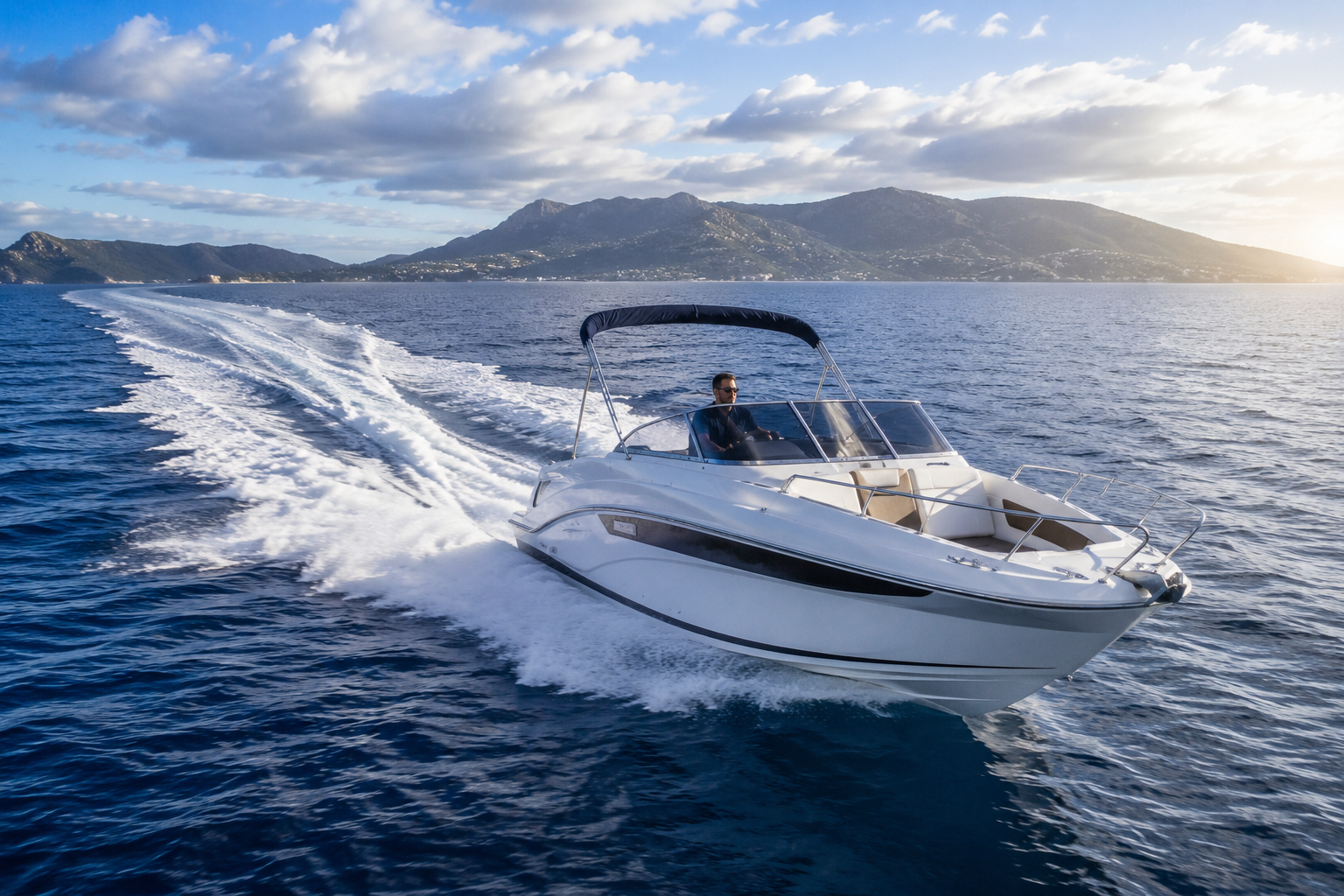
This category covers the widest range. Recreational speedboats cruise comfortably at 30 to 40 knots and can reach 50 knots or beyond with the right setup. Purpose-built go-fast boats and record-chasing hulls have hit triple digits — the outright water speed record stands at 317 mph, set in 1978 by a jet-powered hull, not a propeller-driven boat. That’s an extreme outlier, not a benchmark for everyday boating.
Catamarans
Thanks to their twin-hull design and reduced drag, catamarans routinely cruise at 15 to 20 knots and comfortably exceed that in good conditions. This efficiency is a major reason catamarans have become the preferred choice for day charters and multi-day cruises — more distance covered, less fuel burned.
Pontoon Boats
Once considered strictly leisurely, modern pontoon boats cruise at 15 to 25 mph (roughly 13 to 22 knots), with higher-horsepower models reaching 35 mph or more. They won’t win any races, but they’re no longer the slowest option on the water either.
Cruise Ships
For scale: large cruise ships average around 20 knots (23 mph), a fraction of what a small recreational boat can achieve — size and comfort come at the cost of speed.
Knots vs. MPH vs. KM/H: Quick Conversion
Boat speed is measured in knots (nautical miles per hour) almost everywhere in the world, which causes confusion for anyone used to road speeds.
| Knots | MPH | KM/H |
| 5 | 5.8 | 9.3 |
| 10 | 11.5 | 18.5 |
| 15 | 17.3 | 27.8 |
| 20 | 23 | 37 |
| 30 | 34.5 | 55.6 |
| 40 | 46 | 74 |
One knot equals 1.15 mph, or 1.85 km/h. Keep this conversion handy — most charter operators and marine equipment quote speed in knots, but GPS apps on your phone often default to mph or km/h.
How Boat Speed Affects Your Rental Experience
This is where average speed stops being trivia and starts being useful. If you’re booking a boat rental, the cruising speed directly determines how much you’ll actually see.
- A half-day charter (4 hours) on a motor yacht cruising at 18 knots covers roughly 70 nautical miles round trip — enough for two or three stops along a coastline.
- A catamaran at 15 knots on the same charter window covers less distance but offers a smoother, more stable ride, which matters if snorkeling stops or onboard meals are part of the plan.
- A speedboat at 30+ knots can reach a distant island or reef in a fraction of the time, opening up destinations that would be impractical on a slower vessel.
Before booking, ask the operator for the boat’s typical cruising speed — not its maximum. Cruising speed tells you what to expect on the day; top speed is rarely used and rarely relevant to your itinerary.
Choosing the Right Boat Speed for Your Trip
Match the boat to the goal, not the number on the spec sheet.
- Scenic, relaxed exploring: a sailboat or catamaran at 6–15 knots suits slow, immersive trips where the journey is part of the experience.
- Covering distance efficiently: a motor yacht or cruiser at 18–25 knots balances speed with comfort for full-day excursions.
- Reaching a specific destination fast: a speedboat or center console at 30+ knots gets you there quickly, ideal for time-limited outings or reaching remote spots.
Speed isn’t the only factor — sea conditions, group size, and what you want to do once you arrive matter just as much. But knowing realistic speed ranges helps set expectations before you step on board.
FAQ
What is considered a fast boat speed?
Anything above 40 knots (46 mph) is considered fast for a recreational boat. Most everyday boating happens well below that, in the 10–25 knot range.
Is boat speed the same as cruising speed?
No. Top speed is the maximum a boat can reach under ideal conditions; cruising speed is the comfortable, fuel-efficient pace used for most of a trip — and it’s the number that actually matters for planning.
Why do sailboats seem so much slower than motorboats?
Sailboats rely on wind and are governed by hull speed limits tied to their waterline length. Motorboats use engine power to overcome that limit, especially planing hulls, which is why the speed gap is so pronounced.
Does boat size affect speed?
Not directly. A larger boat displaces more water and needs more power to move fast, but size alone doesn’t determine speed — hull design and power-to-weight ratio matter more.
