

Boat Propeller Maintenance: The Complete Guide to Improve Performance
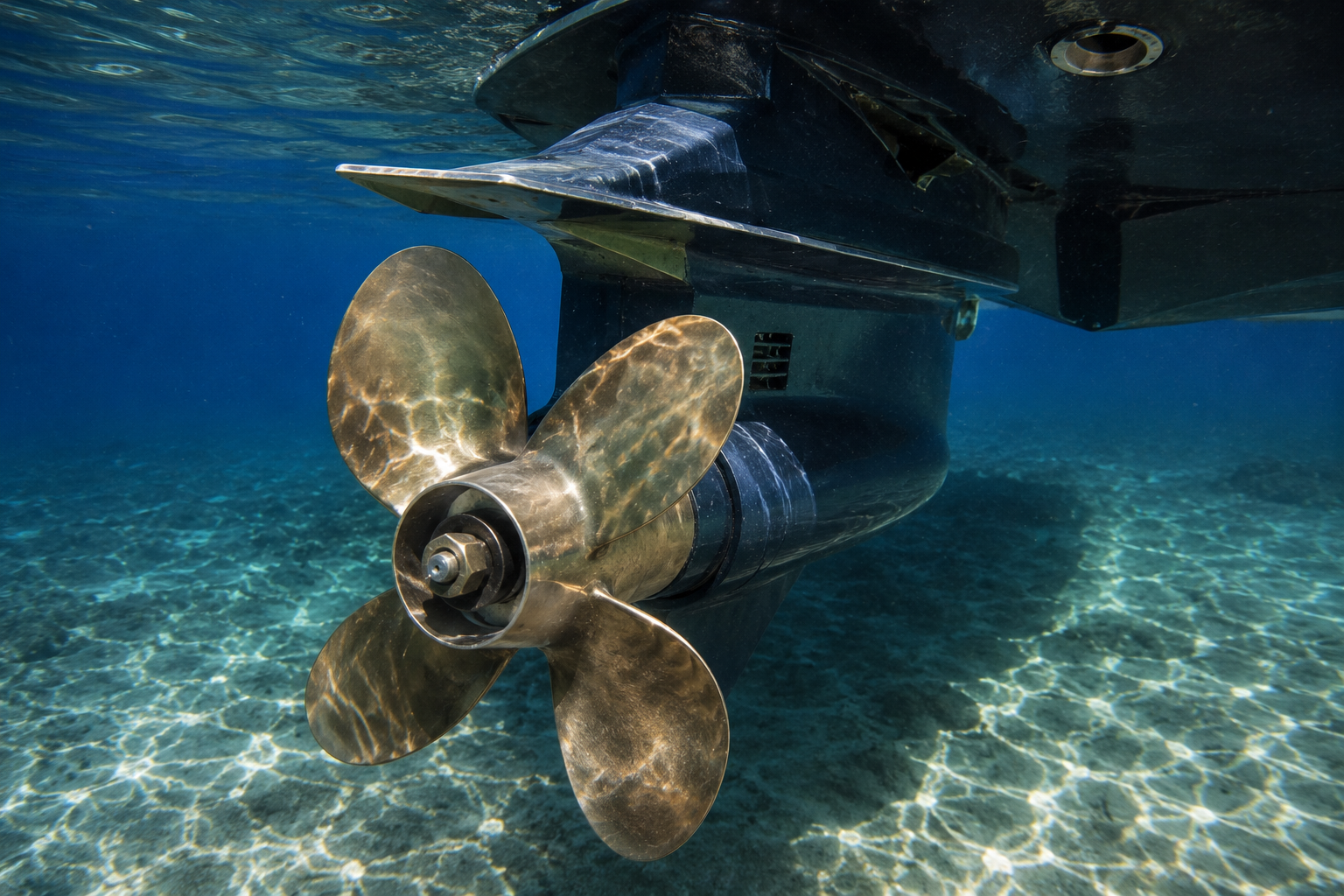
The propeller is your boat’s most critical propulsion component, converting engine power into forward thrust. Its condition directly impacts performance, fuel consumption, vibrations, safety, drivetrain durability, and onboard comfort. Neglecting basic care leads to catastrophic drivetrain damage and expensive shipyard bills. This guide provides a complete blueprint for propeller maintenance, covering cleaning, antifouling, galvanic corrosion protection, balancing, troubleshooting warning signs, and real-world costs.
Why Boat Propeller Maintenance Is Essential
Preserving Boat Performance
A clean, pristine propeller maximizes propulsion efficiency, translating engine power into immediate thrust. Regular maintenance ensures optimal top-end speed and sharp acceleration, keeping the hull responsive.
Reducing Fuel Consumption
Even light marine growth creates severe hydrodynamic drag, forcing the engine to work harder. Unbalanced propellers corrupt fluid dynamics, causing massive fuel spikes that rapidly inflate operating costs.
Limiting Wear on the Drivetrain
Propeller defects transmit destructive energy upstream. A neglected wheel places immense mechanical stress on the propeller shaft, saildrive units, internal gearbox components, and cutlass bearings, accelerating structural fatigue.
Avoiding Expensive Repairs
Proactive care prevents minor issues from snowballing into catastrophic financial liabilities. Routine inspections eliminate the root causes of bent shafts, excessive vibrations, galvanic corrosion, and permanent cavitation damage.
Key Maintenance Impacts
- Efficiency: Smooth blades minimize slip.
- Protection: Sacrificial anodes shield expensive metallurgy.
- Longevity: Balanced rotation extends transmission lifespan.
Different Types of Boat Propellers
Mechanical Configurations
- Fixed Propellers: The most common, durable, and cost-effective design. They deliver reliable thrust in both forward and reverse, but create massive hydrodynamic drag when sailing.
- Folding Propellers: Ideal for sailboats. The blades fold back like a beak under water flow when sailing, minimizing drag. They require consistent pivot-point lubrication to ensure smooth deployment.
- Feathering Propellers: Blades automatically rotate parallel to the water flow when the shaft stops spinning. They offer excellent reverse thrust and ultra-low sailing drag, though they feature complex internal gears requiring specialized marine grease.
Material Profiles
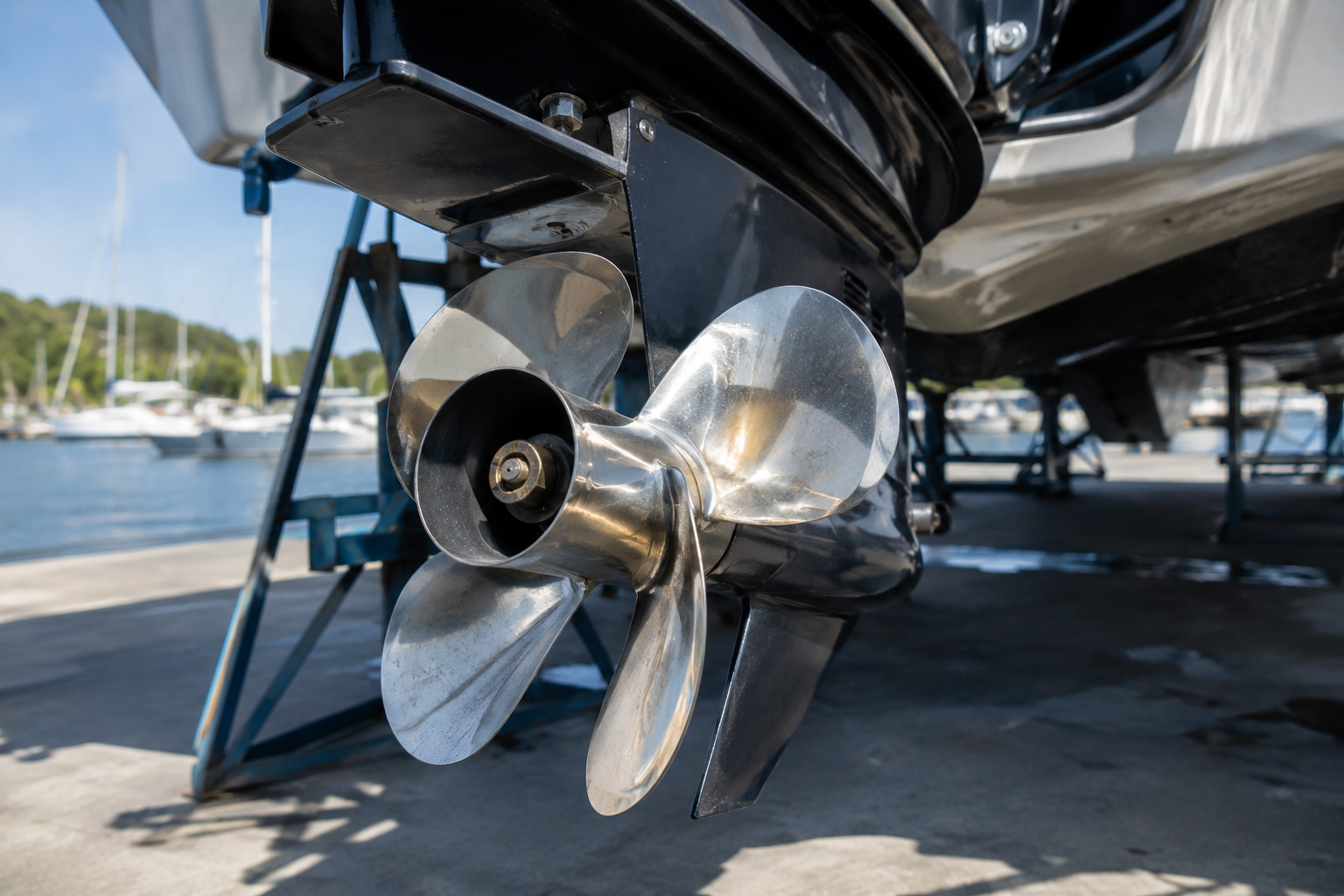
- Stainless Steel Propellers: Exceptionally rigid and durable, providing maximum performance, speed, and impact resistance. They are expensive and require vigilant anode protection against galvanic corrosion.
- Aluminum Propellers: Lightweight, highly affordable, and easily repaired. Their flexibility reduces peak efficiency under heavy loads, and they are prone to rapid cavitation wear.
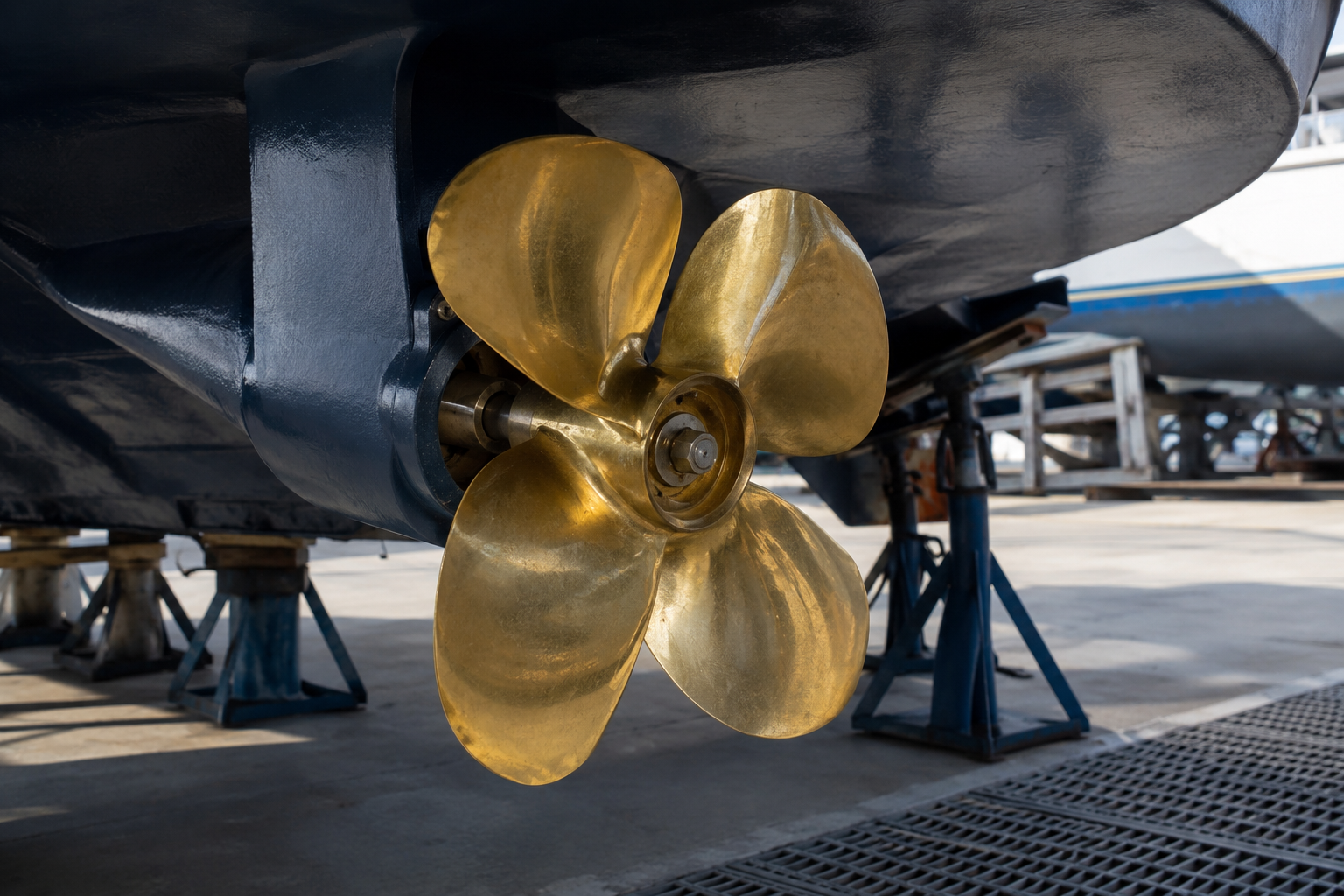
- Bronze and Cupro-Aluminum Propellers: The gold standard for heavy displacement vessels and traditional inboard shafts. They resist marine growth well and offer superb mechanical longevity under constant stress.
When Should You Maintain a Boat Propeller?
Before Winter Storage
Winterization is your defense against seasonal stagnation. Before locking the boat away, clean the propeller thoroughly to remove salt deposits and organic matter. This prevents atmospheric moisture from locking onto surface contaminants and causing deep pitting or corrosion over the winter months.
After Haul-Out
The absolute best time to clean a propeller is immediately after haul-out, while the hull is still wet. Calcium deposits, barnacles, and algae are soft and easily pressure-washed or scraped away at this stage. If left to dry, marine growth calcifies into a rock-hard shell that requires aggressive, damaging scraping to remove.
Before Launching the Boat
Treat the pre-launch window as your final mechanical safety check. This is when you install fresh sacrificial anodes, apply specialized antifouling or silicone coatings, grease the internal gears of folding or feathering models, and torque the propeller nut to exact factory specifications.
During the Boating Season
Routine maintenance does not stop when the boat is in the water. Periodically don a mask and snorkel to inspect the blades for tangled fishing lines, clear away early marine fouling, and verify that your anodes are not completely consumed.
After Hitting an Object or Grounding
An underwater impact demands an immediate haul-out and inspection. Even a minor grounding can introduce microscopic hairline cracks, bend a blade out of true alignment, or slip the rubber hub bushing. Continuing to run an impacted propeller introduces severe vibrations that will quickly destroy your cutlass bearings and transmission shaft.
How to Properly Clean a Boat Propeller
Visual Inspection Before Cleaning
Before clearing away debris, execute a thorough structural evaluation. Check the blades for hairline cracks, impact marks, and severe blade deformation. Look closely for pinkish discoloration, a telltale sign of galvanic corrosion, and examine the blade tips for pit marks caused by cavitation damage.
Structural Removal of Growth
Begin with immediate pressure washing right after haul-out to blast away loose slime and soft algae. For stubborn barnacles and calcified tubeworms, use a plastic or wooden scraper to pop off the shells. When removing tightly fused calcium bases, use brass or stainless steel wire brushes correctly by brushing parallel to the grain of the metal to avoid deep scoring.
Surface Finishing and Chemical Safety
Follow up with light sanding using a fine 220-grit wet-and-dry sandpaper to smooth out tiny surface roughness without altering the propeller’s hydrodynamic profile.
Professional Tip: Never use aggressive steel wire wheels, coarse sandpaper, or harsh pool acids (like unbuffered muriatic acid) on aluminum or bronze wheels. These products strip away protective oxide layers and accelerate destructive metal pitting.
For chemical cleaning, stick to specialized marine scale removers or household white vinegar to dissolve calcium safely.
How to Protect a Propeller From Marine Growth
Propeller Polishing
Achieving a mirror-like finish is a highly effective, non-chemical defense. By polishing metal blades to a high gloss with specialized compound wheels, you eliminate the microscopic texture that barnacles and algae need to latch onto the surface.
Advanced Coatings
- Antifouling Coatings: Hard, metal-binding paints infused with biocides resist intense fouling in high-fouling zones.
- Silicone-Based Coatings: Products like Propspeed use an ultra-slick, non-biocidal silicone barrier. Marine growth cannot grip the slippery surface, and any attached organisms simply fly off once the propeller spins at cruising RPMs.
Should You Apply Antifouling Paint on a Propeller?
This is a high-intent question for boaters. Yes, but never use standard hull paint. Standard ablative hull paints are too soft and will immediately sling off under the immense centrifugal force of a spinning propeller. Furthermore, copper-based hull paints applied directly to aluminum outboards cause devastating galvanic corrosion. You must use specialized, hard-binding aerosol primers and paints engineered specifically for high-load running gear.
Temporary Protection
For short-term relief, applying a thin film of specialized lanolin-based grease offers a non-toxic, temporary barrier that resists growth for several weeks of light operation.
Corrosion and Electrolysis: Hidden Enemies of Boat Propellers
Understanding Galvanic Corrosion
Galvanic corrosion occurs when dissimilar marine metals sit submerged in an electrolyte like saltwater. The more noble metal steals electrons from the less noble metal, physically dissolving it over time. Stray-current electrolysis accelerates this degradation rapidly via electrical faults.
Signs of Electrolysis
Watch for blistering paint, deep surface pitting, or a crumbly texture. On bronze propellers, a distinct pinkish discoloration indicates that the zinc has been leached out, leaving the alloy structurally compromised.
The Role of Sacrificial Anodes
Sacrificial anodes act as your drivetrain’s electrical shield. Made of zinc, aluminum, or magnesium, they are intentionally less noble than your propeller, meaning they corrode first to preserve the expensive running gear.
Prevention and Replacement
Replace anodes when they are 50% consumed. To prevent premature corrosion, ensure perfect metal-to-metal contact during installation and install a galvanic isolator to block shore-power stray currents.
Lubricating Folding and Feathering Propellers
Why Lubrication Is Critical
Unlike fixed props, folding and feathering models rely on complex internal moving parts, gears, and pins. Without proper lubrication, salt buildup and calcified growth will jam the mechanisms, preventing the blades from opening or pitching correctly under load.
Choosing the Right Grease
Always use a high-viscosity, water-insoluble marine grease. Synthetic Teflon or calcium-sulfonate-based greases are ideal, as they resist water washout under extreme rotational forces.
Step-by-Step Maintenance
- Folding Propellers: Dismantle the pivot pins annually, clean the gear teeth with a wire brush, apply a liberal coating of grease to the moving joints, and reassemble.
- Feathering Propellers: Locate the integrated grease zerk fittings. Pump marine grease into the hub using a grease gun until fresh grease purges out through the blade seals.
Mistakes to Avoid
Never use standard lithium grease, which degrades quickly in saltwater, and avoid over-greasing, which can blow out internal seals.
Propeller Balancing: An Often Overlooked Maintenance Step
Why Proper Balancing Matters
Even a microscopic weight discrepancy between propeller blades creates immense centrifugal force at high RPMs. Precision balancing ensures even hydrodynamic loading, maximizing fuel efficiency and smoothing out power delivery.
Symptoms and Risks
The primary symptom of an unbalanced propeller is a persistent, rhythmic hull vibration that worsens as engine speed increases. Left unchecked, these harmonic vibrations travel straight up the drivetrain, accelerating wear on cutlass bearings, destroying transmission seals, and threatening to warp or bend the propeller shaft itself.
When to Check and Action
Have a professional prop shop check the balance during every annual haul-out, or immediately following any underwater impact. Minor imbalances caused by surface erosion can be corrected through precision grinding and tuning. However, if a blade has suffered severe structural distortion or deep metal loss, full replacement is required to safeguard your drivetrain.
Warning Signs of Propeller Wear You Should Never Ignore
Acoustic and Physical Indicators
Never ignore unusual vibrations felt through the hull or steering wheel; a rhythmic shudder indicates an unbalanced wheel or a bent shaft. Similarly, abnormal noises, such as low-end humming, rattling, or high-pitched singing, point to physical blade deformation or failing hub components.
Performance Degradation
A sudden, unexplained loss of top-end speed or lazy acceleration indicates that your blades are slipping or losing hydrodynamic efficiency. This performance drop invariably triggers increased fuel consumption, as the engine must work harder to maintain cruising velocity.
Structural Hazards
Check for excessive blade play by physically shaking the prop; any movement on the shaft means worn splines or a loose retention nut. Finally, look for cavitation damage—distinguishable by a singed, pitted, or “pockmarked” surface near the blade tips—which destroys metallurgy and requires immediate professional intervention.
Can a Boat Propeller Be Repaired?
Repair Capabilities and Limits
Minor damage does not always mean buying a replacement. Specialized prop shops can successfully straighten bent propellers back to original factory specifications using digital scanning templates and hydraulic presses.
For cracked or broken blades, certified technicians utilize precision TIG welding and blade rebuilding techniques, adding fresh metal alloy before grinding it smooth to match the original hydrodynamic profile.
Material Differences and Replacement
The success of a repair depends heavily on the metallurgy:
- Stainless Steel: Highly elastic and strong; it handles major restructuring beautifully.
- Aluminum: Brittle; it quickly metal-fatigues, making extensive welding risky.
When to Replace: You must choose replacement over repair if a blade shows hairline cracks extending all the way to the root hub, exhibits severe cavitation rot, or has lost more than 10% of its original surface area.
Maintenance of the Propeller Shaft and Related Components
Traditional and Modern Shaft Seals
A propeller cannot function efficiently without a pristine drivetrain. For traditional stuffing boxes, verify that the flax packing drips slightly at rest to cool the assembly. Modern dripless lip seals require regular inspection for scoring and must be replaced every five to six years to prevent catastrophic water ingress.
Structural Bearings and Support
Examine the rubber-lined cutlass bearings for wear. Grab the propeller shaft and shake it vertically; any perceptible play indicates it is time to press out the old bearing. A misaligned or bent propeller shaft introduces micro-vibrations that quickly destroy these tight-tolerance seals.
Saildrive Systems
For saildrive units, check the lower gearcase oil for a milky appearance, which indicates a compromised propeller shaft seal. Additionally, inspect the primary hull diaphragm gasket annually for structural degradation to maintain vessel watertight integrity.
Mistakes That Prematurely Destroy Boat Propellers
Critical Mechanical Neglect
The fastest way to destroy running gear is continuing to use a damaged propeller after an impact. Ignoring small impacts and vibrations introduces micro-fractures and warps the shaft, leading to catastrophic drivetrain failure. Delaying annual maintenance or running the boat in shallow water too often forces the blades to act as underwater plows, causing severe abrasion and a spun hub bushing.
Chemical and Material Errors
Using the wrong antifouling paint is a devastating mistake. Applying copper-based hull paint directly to aluminum outboards triggers rapid galvanic corrosion that eats away metallurgy within weeks. This destruction is accelerated by neglecting sacrificial anodes or ignoring early signs of stray-current electrolysis. When cleaning, over-sanding the propeller surface ruins precision hydrodynamic profiles and strips the factory-applied protective oxide layer.
Lubrication Blunders
Failing to lubricate moving parts on folding and feathering models causes gears to jam, forcing the blades out of alignment. Using low-quality marine grease—such as basic automotive lithium grease—compounds this issue because it quickly emulsifies and washes away in saltwater, leaving critical pivot joints bare and highly vulnerable to calcified marine growth.
Most Common Boat Propeller Maintenance Mistakes
Material and Chemical Errors
The absolute most destructive blunder is ignoring sacrificial anodes. Allowing them to waste past 50% exposes expensive propeller metallurgy to rapid galvanic corrosion. Similarly, applying the wrong antifouling paint—such as copper-based hull paint onto aluminum drives—triggers catastrophic chemical reactions. When cleaning, over-sanding the propeller must be avoided, as it thins the blades, ruins hydrodynamic profiles, and strips protective factory oxides.
Mechanical and Operational Neglect
On folding or feathering models, using the wrong grease (like automotive lithium grease) is a critical error; it washes out quickly, causing gears to jam. Furthermore, ignoring vibrations felt through the hull allows minor blade imbalances to warp shafts and destroy bearings. Finally, delaying annual maintenance permits marine growth to calcify into rock-hard shells, turning what should be simple upkeep into a highly expensive, complex repair project.
How Much Does Boat Propeller Maintenance Cost?
Propeller maintenance costs scale with vessel size and material. DIY pressure washing and scraping are free, but professional cleaning and specialized silicone antifouling kits run between $100 and $300. Replacing sacrificial anodes is an affordable necessity, typically costing $20 to $100 for parts. For precision mechanical work, professional prop shops charge $150 to $350 for computer balancing and minor blade repairs, while extensive TIG welding on damaged stainless steel can exceed $500. If the damage is catastrophic, a full propeller replacement ranges from $150 for basic aluminum to over $2,500 for complex feathering bronze models.
Annual Boat Propeller Maintenance Checklist
An effective maintenance schedule hinges on three distinct seasonal phases. Before winter storage, focus on complete decontamination by pressure washing the wet hull, scraping away calcified barnacles, and performing a thorough visual inspection for hairline cracks or pinkish galvanic discoloration. Before launching, shift to structural and chemical preparation by checking the propeller nut torque, installing fresh sacrificial anodes to guarantee metal-to-metal contact, and applying a specialized silicone-based antifouling coating. Finally, inspections during the season require routine diving with a mask to clear away tangled fishing lines and verify that anodes are not prematurely consumed.
Expert Tips to Extend the Lifespan of Your Boat Propeller
Maximizing propeller longevity requires a blend of smart operational habits and proactive technical care. Begin by choosing a specialized antifouling coating tailored precisely to your specific sailing area, matching the formula to local water temperatures and fouling pressure. On the water, avoid aggressive acceleration to minimize cavitation erosion, and carefully monitor shallow water navigation to prevent abrasive sandblasting or catastrophic groundings. Finally, protect the entire drivetrain by checking engine alignment annually to eliminate destructive harmonic vibrations, and always schedule professional prop shop inspections to catch microscopic structural imbalances before they cause permanent metallurgy fatigue.
Conclusion
A well-maintained propeller is essential for fuel efficiency, drivetrain longevity, and vessel safety. By committing to seasonal checklists, replacing sacrificial anodes promptly, and addressing minor impacts immediately, you protect your running gear from premature failure. Investing small amounts of time in routine cleaning and balancing prevents catastrophic underwater failures, ensuring your boat delivers optimal hydrodynamic performance and smooth, reliable propulsion every time you hit the water.
