

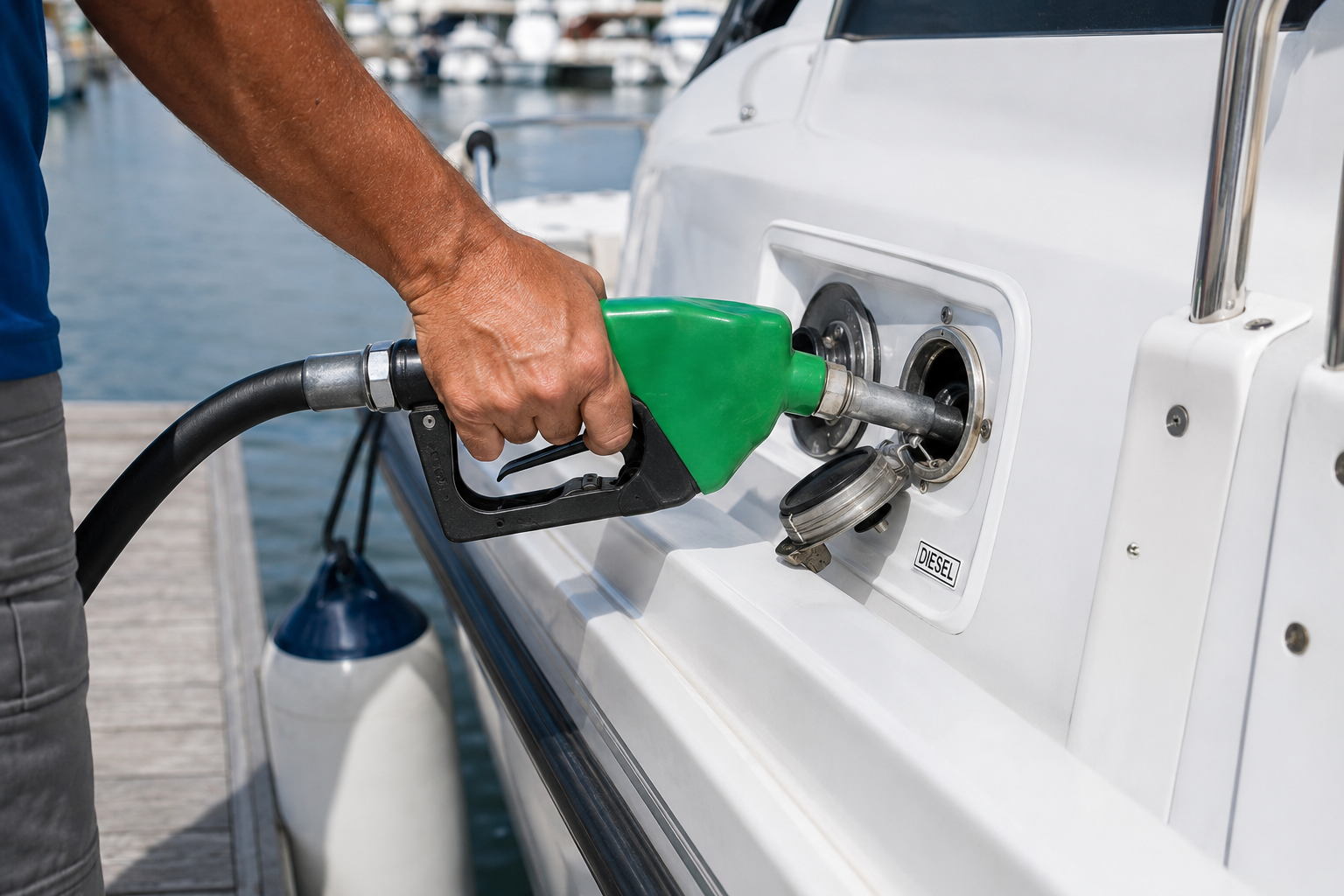
Boat Fuel: the complete guide to choosing the right one
Fuel is often a boater’s largest operating expense, directly impacting engine performance, cruising range, and longevity. Pushing a hull through water requires immense energy, meaning your fuel management choices directly shape your operational costs and environmental footprint.
This guide breaks down modern marine options—from standard gasoline and diesel to emerging eco-friendly alternatives—giving you the exact formulas, storage best practices, and efficiency tips needed to optimize your consumption and safeguard your engine.
What Types of Fuel Are Used in Boats?
Unleaded Gasoline (Petrol)
Unleaded gasoline is vaporized, mixed with air, compressed by pistons, and ignited via spark plugs. It offers excellent power-to-weight ratios and rapid acceleration, but its high volatility poses safety risks and it has a short storage life. It is standard for outboards, runabouts, and personal watercraft (PWCs).
Marine Diesel
Operating via compression ignition, marine diesel superheats air inside the cylinder to detonate fuel instantly upon injection. It delivers superior low-RPM torque and 20% to 30% greater fuel efficiency than gasoline. While engines are heavier and costlier upfront, their reliability makes them the default choice for displacement cruisers, trawlers, and yachts.
Bioethanol
Bioethanol is a renewable alcohol made from fermented plant biomass, typically blended into gasoline (e.g., E10). While it cuts carbon emissions, its highly hygroscopic nature causes it to absorb moisture from the air, triggering phase separation that stalls marine engines. It is incompatible with older fuel systems.
Marine Biofuels
Sourced from hydrotreated vegetable oils (HVO) or recycled cooking fats, these renewable drop-in fuels mirror petroleum structures. They drastically reduce greenhouse gases and mix seamlessly with standard diesel, though high pump costs and limited marina distribution remain primary challenges.
Liquefied Natural Gas (LNG)
LNG is natural gas cooled to -162°C to shrink its volume for containment. It cuts nitrogen oxides by 85% and eliminates sulfur oxides. However, its massive, heavily insulated cryogenic storage needs restrict it to commercial fleets and mega-yachts; recreational infrastructure is virtually nonexistent.
Hydrogen and Fuel Cells
This technology uses compressed hydrogen gas fed into an electrochemical cell stack, reacting with oxygen to generate electricity silently with zero direct emissions—only water vapor. While hybrid prototypes are expanding, current challenges include a 150-nautical-mile range limit and massive storage space requirements compared to diesel.
Heavy Fuel Oil (Bunker Fuel)
HFO is a thick, highly viscous residual byproduct of crude oil refining that requires onboard pre-heating to flow. It remains common in industrial maritime shipping due to low costs, but its toxic sulfur emissions and massive engine scale completely ban it from recreational boating.
Fishing Diesel (Marine Gas Oil)
Marine Gas Oil (MGO) is a premium pure distillate fuel featuring high cetane ratings and robust lubricating properties. It provides steady thermal stability under continuous loads, making it the legal and practical standard for commercial fishing fleets and workboats.
Gasoline vs Diesel: Which Fuel Is Best for Your Boat?
Mechanical and Performance Dynamics
Gasoline engines rely on precise spark timing to detonate a volatile fuel-air mixture, delivering rapid acceleration and excellent power-to-weight ratios. Diesel engines utilize extreme cylinder compression to superheat air, detonating heavy fuel droplets instantly upon injection. While gasoline outboards dominate in raw speed and agility, diesel inboards deliver superior low-RPM torque, making them ideal for pushing heavy displacement hulls.
Efficiency and Operational Costs
From a consumption standpoint, diesel extracts significantly more energy per gallon, burning roughly 20% to 30% less fuel per hour than an equivalent gasoline setup. This extreme thermal efficiency yields a vastly superior cruising range, allowing long-distance mariners to venture further between fill-ups.
| Attribute | Gasoline Engines | Diesel Engines |
| Initial Cost | Lower | Higher |
| Fuel Efficiency | Moderate | Exceptional |
| Maintenance | Spark plugs, electrical | Fuel filters, zincs |
| Lifespan | 1,500 – 2,500 hours | 5,000 – 8,000+ hours |
While gasoline engines boast lower up-front purchase prices and simpler electrical components, their operating costs run high due to lower fuel economy. Conversely, marine diesels carry high initial acquisition costs and strict filtration needs, but eliminate spark plug failures and outlast gasoline blocks by thousands of hours.
Choosing Your Style
Your final choice depends entirely on your boating habits. For weekend day-boating, coastal water sports, and short, fast runs, gasoline outboards offer unmatched convenience. For long-range blue-water passage making, heavy trawler operations, or heavy-duty commercial cruising, diesel remains the undisputed choice.
Which Fuel Should You Use Based on Your Boat Type?
High-Speed and Lightweight Hulls
- Jet Skis: Engineered exclusively around high-RPM, high-output gasoline engines running on premium unleaded fuel to maintain rapid waterjet acceleration.
- Rigid Inflatable Boats (RIBs): Highly optimized for mid-to-high horsepower gasoline outboards that perfectly complement their lightweight, agile hull designs.
- Powerboats: Typically leverage twin or triple gasoline outboards for raw agility and ease of trailering, though sportfishers over 35 feet transition to inboard diesels.
Cruising and Displacement Hulls
- Sailboats: Depend almost universally on small, ultra-reliable inboard auxiliary diesel engines (10 to 50 hp) for safety, heavy weather propulsion, and long-range battery charging.
- Catamarans: Large cruising multihulls house twin diesel sail-drives tucked into independent hulls, maximizing fuel efficiency and close-quarters maneuvering.
- Yachts: Luxury vessels rely heavily on high-displacement twin inboard diesels to move massive hull weights cleanly while simultaneously powering heavy generator loads.
- Houseboats and Canal Boats: Prefer low-RPM inboard diesels or specialized high-thrust gasoline outboards optimized for continuous, low-speed displacement cruising through inland waterways.
How Much Does a Boat Consume?
Variables Dictating Burn Rates
Unlike road vehicles, a boat must constantly push aside a dense, high-resistance medium. This makes marine fuel consumption highly dynamic and dependent on several shifting variables:
- Weight Dynamics: Total boat weight, plus passenger and cargo distribution, directly impacts how cleanly a hull rides.
- Engine & Speed: Total engine power matched against cruising speed—specifically the inefficient transition zone between displacement and planing speeds.
- Environmental Forces: Adverse weather conditions, a choppy sea state, and running directly into head currents add immense strain.
- Hydrodynamic Drag: Hull condition is critical; marine slime, algae, and barnacle fouling can increase resistance and spike fuel burn by over 40%.
Average Consumption Benchmarks
Gasoline outboards consume roughly 1 gallon per hour (GPH) for every 10 horsepower output when operated at wide-open throttle (WOT). At an optimized cruising RPM, a standard 200 hp gasoline engine averages 6 to 10 GPH. Marine diesel engines are significantly leaner due to higher thermal efficiency, averaging 1 gallon per hour for every 18 to 20 horsepower produced.
| Boat Type | Fuel Type | Average Consumption (Cruising) |
| Jet Ski | Gasoline | 3 to 8 GPH (spikes to 12+ at WOT) |
| Sailing Catamaran | Diesel | 1 to 3 GPH (utilizing small twin units) |
| Motor Yacht (50ft+) | Diesel | 20 to 60+ GPH (when up on plane) |
How to Calculate Boat Fuel Consumption
Safely calculating your cruising radius comes down to understanding your motor’s total output power alongside how hard you push the throttle on the water.
Core Consumption Rules of Thumb
Instead of complex equations, you can use simple rules of thumb to calculate your maximum fuel burn at wide-open throttle:
- Gasoline Engines: Expect to burn approximately 1 gallon per hour for every 10 horsepower your engine produces at maximum capacity.
- Diesel Engines: Expect a more efficient burn rate of roughly 1 gallon per hour for every 18 horsepower at maximum output.
Real-World Calculation Example
If your boat is equipped with a 300 hp gasoline outboard, running it at full throttle means it will consume a maximum of 30 gallons per hour.
However, you rarely cruise at wide-open throttle. When you back off to an optimized cruising speed, your engine typically operates at peak efficiency and burns roughly half of its maximum rate. In this scenario, your actual cruising consumption drops down to a much more manageable 15 gallons per hour.
Estimating Pre-Trip Costs
To figure out your trip budget, multiply your cruising burn rate by the duration of your journey. For a 3-hour coastal run at 15 gallons per hour, you will need a total fuel volume of 45 gallons. Simply multiply those 45 gallons by the current price at your local marine fuel dock to establish your baseline cost before casting off.
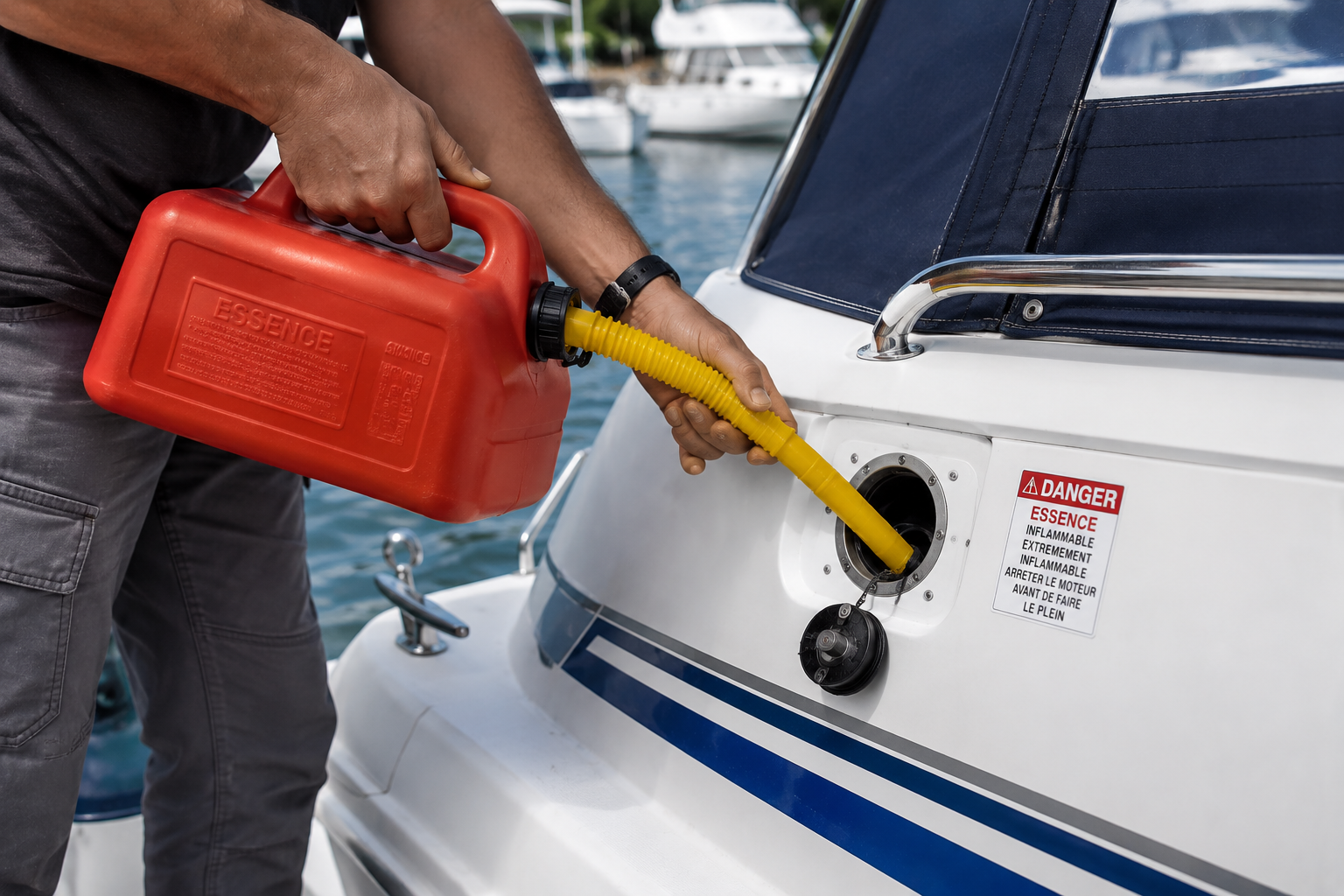
How to Reduce Boat Fuel Consumption
Maintain an Efficient Cruising Speed
Every boat hull has an optimized “sweet spot” where it transitions cleanly onto a plane without throwing a massive, fuel-wasting wake. Backing off the throttle by just 10% to 20% from wide-open operation can flatten your consumption curve, slicing hourly fuel burn by up to 50%.
Optimize Weight Distribution
Keep your vessel balanced by distributing passengers, heavy gear, and water tanks evenly. A boat that squats at the stern or plows at the bow creates immense hydrodynamic drag, forcing the engine to work significantly harder and burn extra fuel just to maintain speed.
Plan Routes According to Weather and Currents
Consult marine navigation apps before casting off to capitalize on favorable tidal currents. Plotting a course that shields your hull from pounding directly into heavy head seas or strong winds will dramatically lower engine strain and preserve fuel reserves.
Keep Your Engine Properly Maintained
A finely tuned marine engine operates at peak thermal efficiency. Regularly replacing old spark plugs, cleaning clogged air intake filters, flushing injectors, and changing oil ensures complete combustion, preventing unburned fuel from washing out the exhaust.
Clean the Hull Regularly
Even a thin layer of marine slime or algae increases underwater resistance, raising fuel consumption by 10%. Hard barnacle fouling is far worse, capable of spiking your burn rate by over 40%. Keep the bottom completely clean through regular scraping or specialized antifouling coatings.
Choose the Right Propeller
Running an incorrectly pitched or damaged propeller forces the engine out of its optimal RPM operating band. Ensuring your propeller pitch matches your typical boat load prevents engine lugging or over-revving, maximizing your miles-per-gallon efficiency.
Avoid Unnecessary Idling
Modern marine engines do not require lengthy warm-ups. Cut your engine entirely when waiting at fuel docks, sitting inside locks, or drifting during casual conversations; avoiding unnecessary idling eliminates pure fuel waste and lowers cumulative engine hours.
Boat Fuel Storage and Preservation
Storage and Contamination Prevention
Preserving fuel quality requires limiting its exposure to air, heat, and moisture. To prevent water contamination caused by diurnal temperature swings—which create condensation on internal tank walls—keep your fuel tanks filled to 95% capacity during long storage periods, leaving a 5% buffer for thermal expansion. Always inspect deck fill O-rings regularly, as degraded seals are the primary entry point for rainwater and deck runoff.
Storage Lifespan and Degradation Risks
Untreated marine fuel degrades rapidly, forming gums, varnish, and sediment that clog high-pressure injectors.
- Ethanol-Blended Gasoline (E10): Lasts only 2 to 3 weeks before risking phase separation, where water pulls the ethanol down into a highly corrosive sludge layer at the bottom of the tank.
- Pure Gasoline (E0): Stays stable for roughly 3 months without treatment.
- Marine Diesel: Boasts a longer shelf life of 6 to 12 months but faces high risks from microbial growth (“diesel bug”) if water infiltrates the tank.
The Value of Additives
High-quality marine fuel stabilizers and biocides are highly valuable and absolutely worth using. When added to fresh fuel, specialized stabilizers can extend gasoline longevity up to one year and diesel up to two years, while anti-microbial biocides completely halt bacterial reproduction.
Common Fuel-Related Problems in Boats
Diagnostic and Contamination Challenges
Fuel issues account for a massive percentage of marine engine breakdowns. Sourcing low-quality fuel from aged marina tanks can introduce fine sediment and rust scales that quickly score precision fuel injectors. More severe is water infiltration; when water enters the fuel system through degraded deck fills or condensation, it sinks to the bottom of the tank. In gasoline systems, this causes immediate phase separation. In diesel tanks, the water-fuel interface becomes the perfect breeding ground for specialized microbes (diesel bacteria or fuel algae), which rapidly multiply into a thick, black, gelatinous slime.
System Failure and Troubleshooting
A sudden drop in engine RPMs or sputtering under load typically points to heavily clogged fuel filters choking off fuel delivery. If left untreated, old, stale fuel oxidizes over time, turning into a sticky varnish that ruins fuel pump seals and causes hard starting. Furthermore, accidentally using the wrong fuel—such as running high-ethanol automotive gas in a vintage outboard—can rapidly dissolve internal fiberglass fuel tanks and degrade flexible rubber lines, causing severe engine damage. Always carry spare fuel filters and check your fuel lines regularly to catch these issues before they leave you stranded.
Environmental Impact of Marine Fuels
Traditional marine petroleum fuels release substantial carbon dioxide, nitrogen oxides, and particulates directly into fragile coastal atmospheres. Beyond exhaust emissions, accidental fuel spills and oily bilge discharges present severe localized pollution risks to marine wildlife. While diesel outputs more particulate matter than gasoline, its superior thermal efficiency results in lower total greenhouse gas emissions per mile. Increasingly strict international environmental regulations are accelerating change. Consequently, the industry is transitioning toward highly sustainable alternatives, including advanced renewable biofuels, marine bioethanol, liquefied natural gas (LNG), hydrogen fuel cells, and pure electric propulsion systems to minimize the recreational boating footprint.
The Future of Boat Fuel
The marine industry is undergoing an energetic shift away from fossil fuels, driving highly advanced propulsion technologies into recreational boating.
- Next-Generation Biofuels & Bioethanol: Drop-in fuels like Hydrotreated Vegetable Oil (HVO) utilize recycled plant biomass to slash carbon emissions by 90% without requiring any mechanical engine modifications.
- Electric & Hybrid Propulsion: Pure battery-electric motors and gas-electric hybrids are dominating lakes and inland waterways, while innovative hydrofoiling designs eliminate 80% of water drag to expand range.
- Hydrogen, Fuel Cells, & LNG: Emerging compressed hydrogen fuel cells and Liquefied Natural Gas (LNG) offer zero-emission, silent cruising. Though high-end superyachts are successfully adopting fuel cells, widespread adoption still hinges on expanding sparse seaside bunkering infrastructure.
Common Fuel Mistakes Boat Owners Should Avoid
Using Incompatible Fuel
Running high-ethanol automotive gas (like E15 or E85) in standard marine outboards is a critical mistake. Ethanol degrades flexible rubber lines, dissolves older fiberglass fuel tanks, and corrodes internal aluminum carburetors, leading to severe mechanical failure.
Storing Fuel for Too Long
Leaving untreated fuel sitting in your tanks over winter layups guarantees stale, oxidized fuel by spring. Without stabilization, gasoline undergoes phase separation and diesel becomes a breeding ground for bacteria, clogging your fuel system during your first launch.
Neglecting Fuel Filters
Failing to inspect and replace your fuel-water separating filters at least annually allows accumulated water and fine sediments to bypass the filter element. This debris flows straight into high-pressure injection pumps, causing incredibly expensive engine damage.
Poor Fuel Storage Practices
Storing fuel in semi-sealed containers or leaving tanks half-empty accelerates harmful water accumulation. Temperature swings cause ambient air moisture to condense directly on the exposed inner walls of your tank, contaminating the fuel below.
Running at Full Throttle Constantly
Operating your vessel at 100% Wide Open Throttle (WOT) spikes fuel consumption exponentially while placing extreme thermal stress on the block. Backing off the throttle slightly saves massive amounts of fuel and extends engine life.
Failing to Maintain a Fuel Reserve
Ignoring the classic maritime rule of fuel safety is a dangerous gamble. Always allocate one-third of your fuel capacity for the outbound trip, one-third for the return journey, and keep one-third safely in reserve for unexpected weather delays.
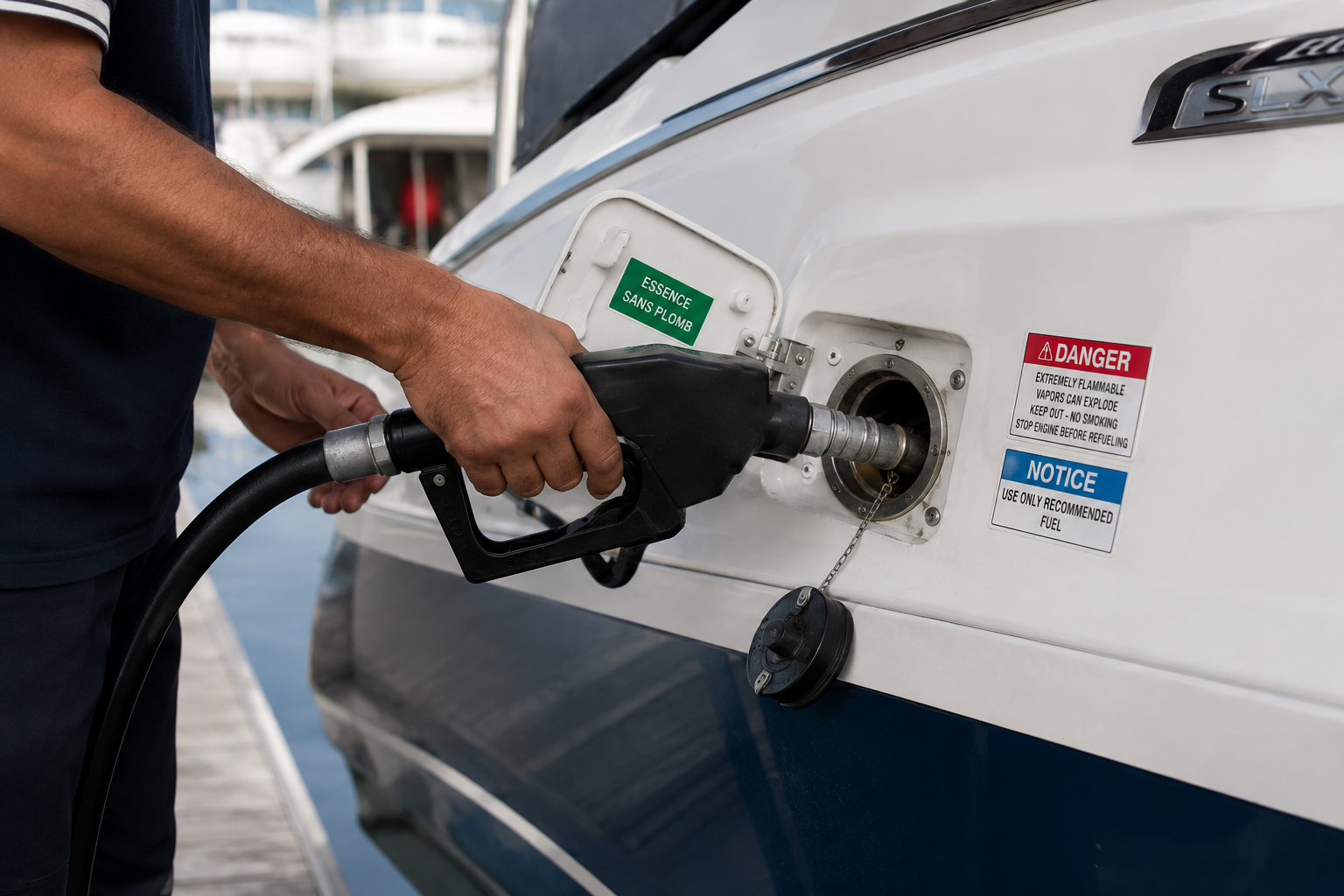
How Much Does Boat Fuel Cost?
Marine fuel docks consistently carry a financial premium over roadside gas stations, driven by lower sales volume, waterfront environmental liabilities, and specialized additive treatments. Retail marine gasoline typically commands a premium above standard pump prices, while marine diesel costs reflect acute global distillate pressures.
Your overall operating expense scales directly with your vessel configuration and boating style:
- Average Annual Budgets: A casual weekend boater operating a light runabout can expect to spend $500 to $1,500 annually. Conversely, active offshore sportfishing teams or luxury yacht operators easily exceed $10,000 to $50,000 per season.
- A Typical Day out: Spending an afternoon tracking coastal routes might run $50 to $100 to top off a modest bowrider, whereas powering a large twin-diesel cruiser up onto plane for an offshore run can clear $1,000 in a single afternoon.
To insulate your seasonal budget from volatile fuel dock pricing, actively back off the throttle to maintain optimized cruising RPMs, run smooth hulls free of drag-inducing marine growth, and always purchase fuel from high-volume, reliable marinas.
Marine Fuel Comparison Table
To help you quickly evaluate your options, the table below compares the primary marine fuels available today across five key categories.
| Fuel Type | Cost | Fuel Efficiency | Availability | Environmental Impact | Typical Use |
| Unleaded Gasoline (Petrol) | Moderate | Moderate | High (Standard at all marinas) | Moderate to High (Emits $CO_2$ and particulates) | Outboards, PWCs, runabouts, and tow-boats |
| Marine Diesel (MGO / AGO) | High initial setup; lower per-mile operational cost | High (20-30% more efficient than gasoline) | High (Widespread commercial and recreational ports) | Moderate ($CO_2$ emissions, but low sulfur) | Inboard cruisers, yachts, trawlers, and workboats |
| Bioethanol Blends (E10) | Lower at the pump | Low to Moderate (Lower energy density than pure gas) | High (Standard automotive stations, sparse at marinas) | Lower tailpipe emissions; high risk of engine phase separation | Older engines cannot run it; limited to modern compatible outboards |
| Marine Biofuels (HVO / Drop-in) | Premium (Typically 10-15% costlier than fossil diesel) | Exceptional (High cetane rating improves combustion) | Developing (Expanding rapidly in European and major global hubs) | Very Low (Cuts lifecycle carbon footprint by up to 90%) | Diesel-engine vessels seeking an immediate eco-friendly alternative |
| Liquefied Natural Gas (LNG) | High conversion/build cost; lower fuel cost | High (Excellent thermal output) | Low (Restricted to major industrial and commercial shipping ports) | Low ($CO_2$ cut by 20-30%, eliminates sulfur oxides, minimizes particulate matter) | Commercial transport fleets, ferries, and custom mega-yachts |
Conclusion
Selecting the right marine fuel directly impacts your boat’s performance, operating costs, and environmental footprint. Whether you choose the rapid acceleration of gasoline, the rugged efficiency of diesel, or are exploring next-generation sustainable biofuels, matching your fuel choice to your vessel’s hull design and cruising habits is essential. By practicing smart storage techniques, maintaining clean hulls, and monitoring your fuel burn, you will maximize your time on the water.
