

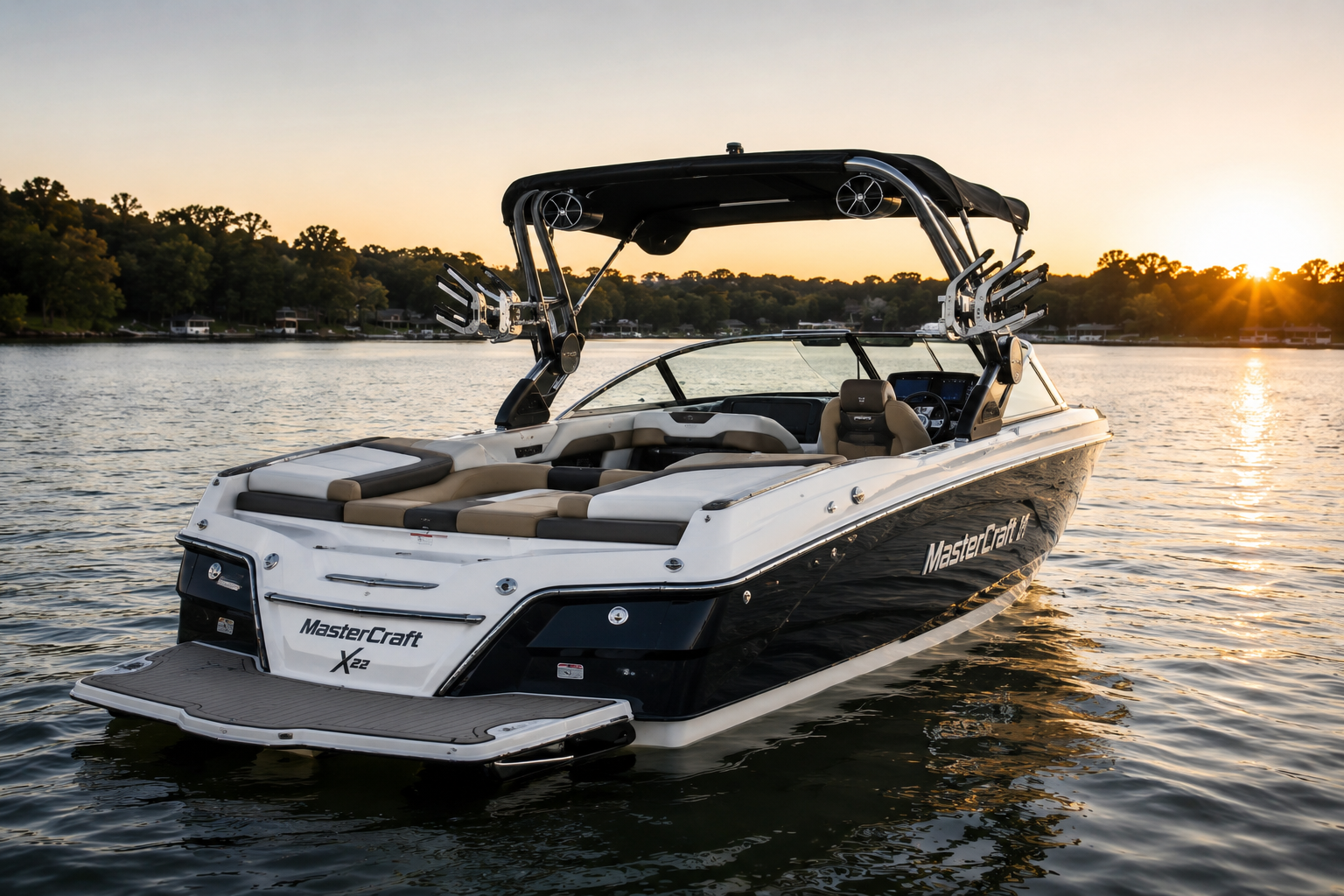
Outboard vs Inboard Engine: Which One Should You Choose for Your Boat?
Choosing the right engine configuration is one of the most critical decisions a boat owner will make. Far from a minor technical detail, your choice between an outboard or inboard system dictates your vessel’s performance, onboard comfort, fuel consumption, and long-term maintenance costs, while directly influencing its resale value and your overall boating experience.
Simply put, outboard engines are self-contained units mounted externally on the transom, while inboard engines are integrated deep inside the hull. This guide breaks down the key mechanical differences, real-world ownership costs, and operational pros and cons to help you choose the ideal propulsion setup for your boating lifestyle.
What Is an Outboard Engine?
Outboard engines represent the most popular form of marine propulsion for small to medium-sized vessels, valued for their modular design and high power-to-weight ratios.
Definition and How It Works
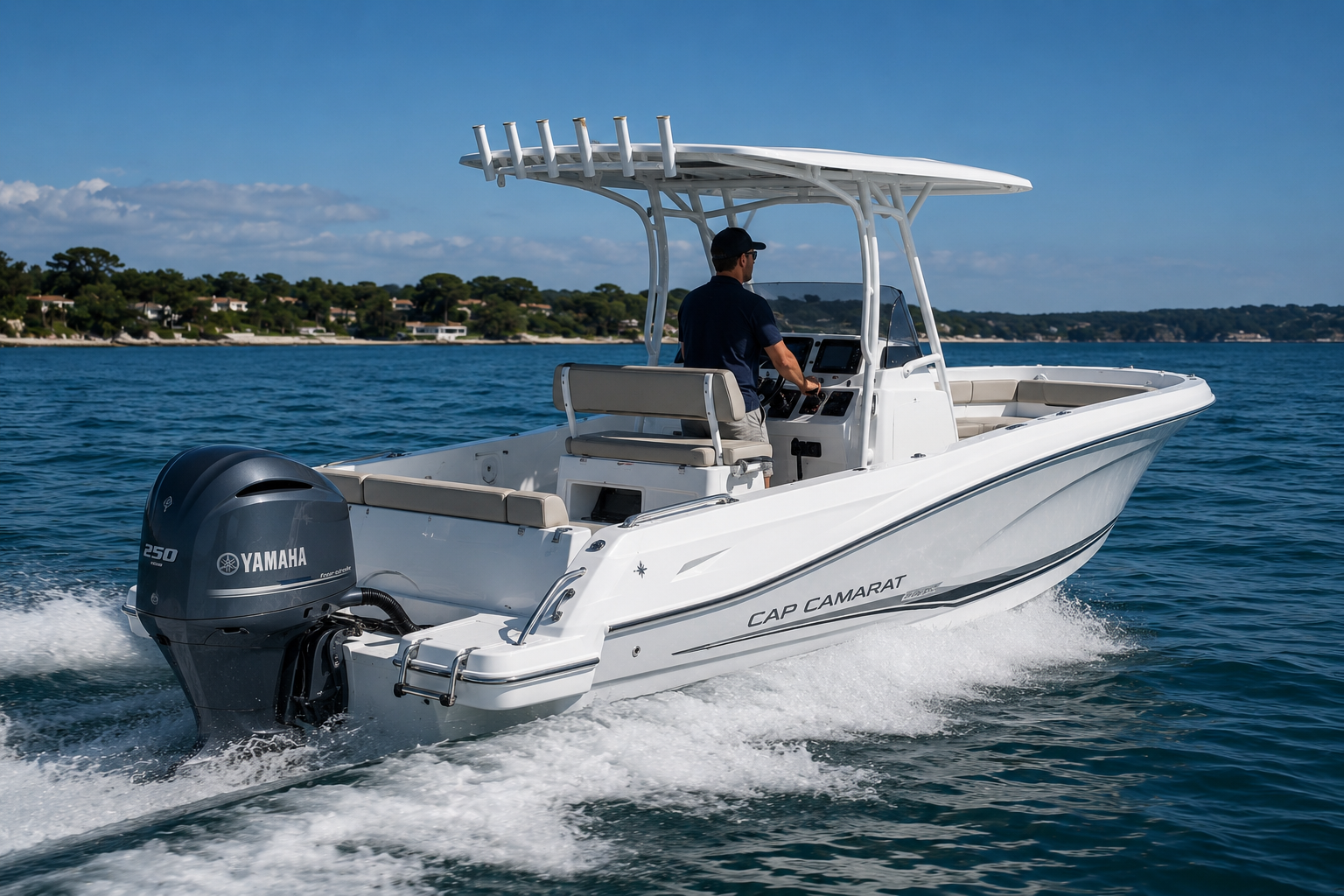
An outboard engine is a self-contained propulsion system mounted externally on the transom (the flat back section) of the boat. Unlike inboard systems, which separate the motor from the driving gear, an outboard is an integrated propulsion system containing the engine block, fuel systems, transmission, and drive propeller in a single unit.
Steering is accomplished by physically pivoting the entire engine assembly, providing highly responsive directional thrust. Crucial to their design is the hydraulic tilting and trimming system. This allows the operator to adjust the engine’s angle while underway to optimize the boat’s running attitude, or tilt the entire unit completely out of the water when anchored or navigating shallow areas.
Different Types of Outboard Engines
The outboard market features several distinct categories based on mechanical design and application:
- 2-Stroke Outboards: Modern direct-injection 2-stroke engines are highly advanced. They offer excellent low-end torque and a light power-to-weight ratio, making them highly responsive.
- 4-Stroke Outboards: The modern industry standard. 4-stroke outboards operate similarly to automotive engines, running cleaner, quieter, and with significantly better fuel efficiency than traditional 2-stroke models.
- Electric Outboard Motors: A rapidly growing segment for small craft, tenders, and inland lake boating. These motors offer silent operation, zero emissions, and virtually eliminate mechanical maintenance.
- Twin and Multi-Engine Setups: For larger vessels, transoms can be configured with dual, triple, quad, or even quintuple outboard configurations. This provides massive horsepower, high top speeds, and built-in mechanical redundancy when navigating far offshore.
Advantages of Outboard Motors
- Easy Maintenance: Because the entire engine sits outside the boat, mechanics enjoy unhindered access. Basic servicing like oil changes, spark plug replacements, and gear-case oil swaps can be performed easily.
- Lower Purchase Costs: Compared to a diesel inboard system of equivalent horsepower, outboards generally carry a lower initial purchase price and are less expensive to install.
- More Interior Space Onboard: By moving the entire powertrain outside the hull, the space that would normally be occupied by an engine box is freed up, creating more room for cockpit seating, storage, or fishing decks.
- Simple Mechanics: Their modular design means that troubleshooting is straightforward, and the systems are highly standardized across major manufacturers.
- Easy Engine Replacement: When an outboard reaches the end of its lifespan, repowering the boat is as simple as unbolting the old unit from the transom and hanging a new one.
- Ideal for Shallow Waters: The ability to tilt the engine upward allows boats to venture into shallow flats, navigate uncharted rivers, or beach the boat safely without risking damage to the running gear.
- Sporty and Responsive Performance: Outboards offer excellent power-to-weight ratios and highly responsive handling, delivering quick acceleration and sharp turning capabilities.
Disadvantages of Outboard Motors
- Noisier Operation: Because the powerhead sits above the waterline and just behind the passengers, outboards—especially at high RPMs—can be louder than well-insulated inboard options.
- Exposed to Weather and Corrosion: Sitting permanently in the elements subjects outboards to UV damage, humidity, and saltwater corrosion, requiring rigorous flushing and cover protection.
- Reduced Aesthetics on Some Boats: For classic cruising designs, the sight of large plastic and metal cowlings hanging off the stern can disrupt the clean lines of the vessel.
- Potentially Lower Cruising Autonomy: Outboards primarily run on gasoline, which burns faster than diesel. This can limit their total range compared to heavy-duty diesel inboards with large fuel capacities.
- Less Comfortable on Larger Boats: On vessels over 35 feet, the weight distribution and thrust characteristics of outboards can create a less stable ride compared to the planted feel of an inboard.
What Is an Inboard Engine?
Inboard engines are the traditional choice for larger cruising vessels, motor yachts, and dedicated towboats, prioritizing heavy-duty endurance and structural balance.
Definition and How It Works
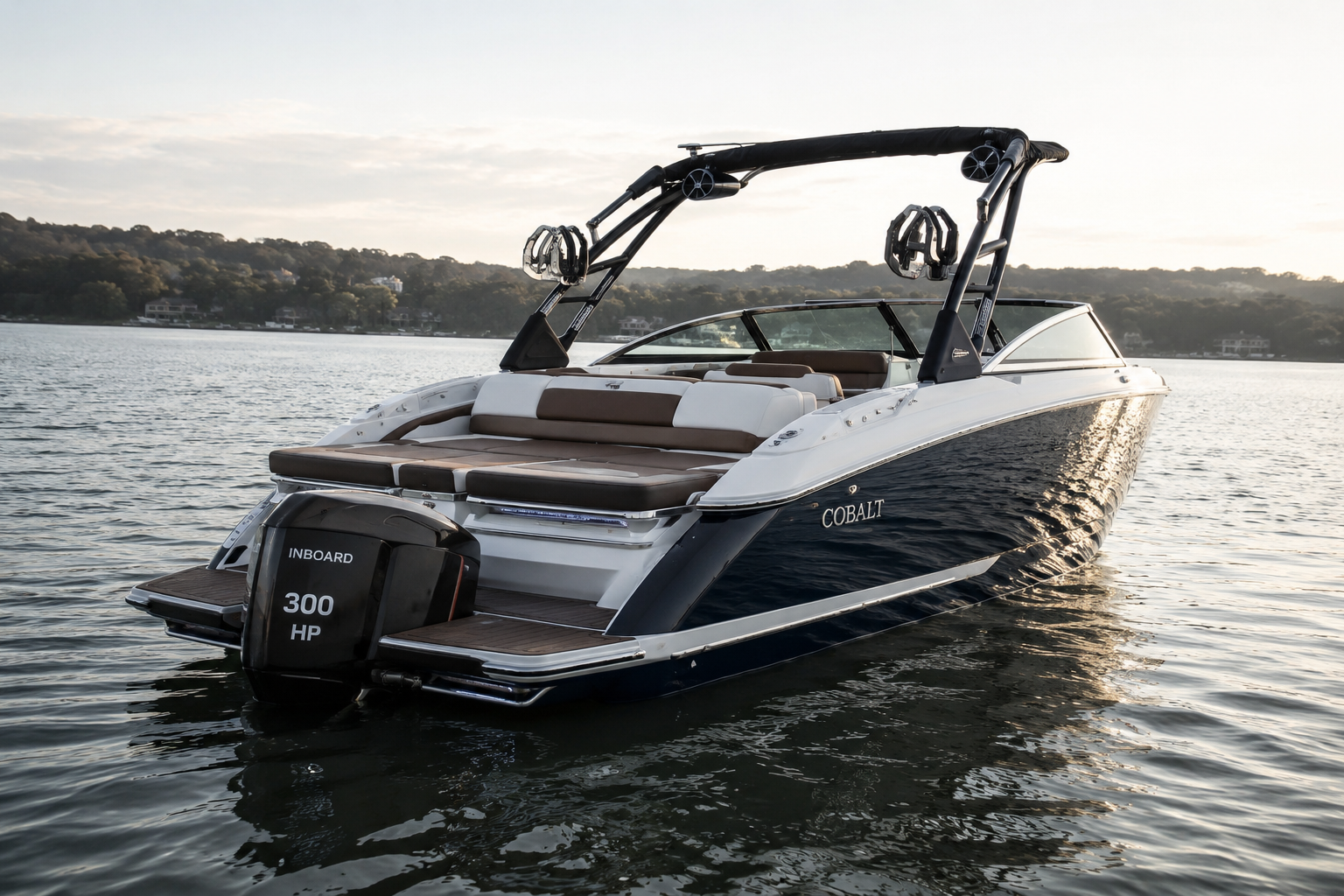
An inboard engine is a propulsion system engine integrated inside the hull of the vessel, typically located near the center of gravity or low in the bilge. Power is transferred to the water using either a traditional shaft drive (where a fixed stainless steel shaft passes through the bottom of the hull to a propeller, paired with an independent rudder for steering) or a sterndrive system (also known as an inboard/outboard or Z-drive, which mates an internal engine to a steerable external lower unit mounted on the transom). These systems can be configured in either gasoline or diesel configuration, with diesel being the preferred choice for heavy, long-range vessels.
Different Types of Inboard Engines
The inboard market features several distinct engineering setups depending on the hull type and use case:
- Direct Shaft Drive: The most traditional and reliable setup. The engine connects directly to a straight shaft extending out the bottom of the hull. It has very few moving parts, making it highly reliable and low-maintenance.
- Sterndrive / Z-Drive: A hybrid approach where an inboard engine sits at the absolute stern of the boat and connects through the transom to an steerable outdrive unit. This combines the clean interior space of an inboard with the steering responsiveness and trim capabilities of an outboard.
- Jet Propulsion: The engine drives an internal impeller that sucks water in and forces it out of a directional nozzle at high pressure. This eliminates external propellers completely, making it incredibly safe for swimmers and ideal for shallow, rocky rivers.
- Hybrid Systems: Modern configurations that pair a traditional diesel inboard engine with an electric motor and battery bank, allowing for silent, zero-emission electric cruising at slow speeds and diesel power for long distances.
Advantages of Inboard Engines
- Superior Stability: Placing a heavy cast-iron or aluminum engine block low in the bilge lowers the vessel’s center of gravity, significantly reducing rolling and improving the boat’s stability in rough seas.
- Quieter Navigation: Because the engine is buried inside the hull and surrounded by insulated engine boxes and bulkheads, passenger spaces remain remarkably quiet, allowing for easy conversation at cruising speeds.
- Better Weight Distribution: Centralizing the weight prevents the boat from being stern-heavy, allowing the hull to plane smoothly and maintain a level running attitude.
- Excellent for Cruising: The steady, predictable torque curve of an inboard makes it perfectly suited for maintaining consistent cruising speeds over long distances.
- Improved Endurance: Inboard components are built to heavy-duty standards, allowing them to run continuously for hours or days without fatigue.
- Diesel Fuel Efficiency: Diesel inboard engines burn significantly less fuel per hour than gasoline outboards of comparable power, while providing superior torque for moving heavy hulls.
- Ideal for Offshore Boating: The structural integrity of a fixed shaft and rudder system, combined with a heavy diesel block, provides the rugged dependability required for blue-water ocean navigation.
Disadvantages of Inboard Engines
- More Complex Maintenance: Inboard systems involve through-hull fittings, packing glands, complex cooling raw-water circuits, and separate steering gears, all of which require specialized mechanical oversight.
- Higher Purchase Cost: The initial investment for an inboard boat—particularly one equipped with a marine diesel engine—is substantially higher than an outboard-powered equivalent.
- Limited Engine Accessibility: Mechanics must often crawl into cramped bilges, lift cockpit floors, or work in hot, tight spaces to perform routine checks and repairs.
- Reduced Onboard Storage Space: The engine compartment occupies valuable volume within the hull, reducing the space available for under-deck storage, mid-cabin berths, or livewells.
- More Technical Winterization: Winterizing an inboard requires completely draining raw-water cooling blocks, heat exchangers, and exhaust manifolds to prevent catastrophic freeze cracking, a process far more involved than simply tilting an outboard down to drain.
Complete Comparison: Outboard vs Inboard Engines
To evaluate these two propulsion systems objectively, we must look at how they compare across core financial, structural, and operational metrics. While outboards excel in modularity and ease of access, inboards offer structural stability and heavy-duty longevity.
Detailed Comparison Table
The following table provides a direct side-by-side comparison to help you analyze which configuration fits your technical requirements and budget.
| Criteria | Outboard Engine | Inboard Engine |
| Purchase Price | Lower initial purchase and installation cost | Higher initial investment, especially for diesel |
| Fuel Consumption | Higher hourly burn rate (primarily gasoline) | Lower hourly burn rate (highly efficient diesel options) |
| Maintenance | Simple, straightforward, and highly accessible | Complex, requiring through-hull and shaft oversight |
| Reliability | Very High (highly advanced modern electronics) | Exceptional (commercial-grade heavy duty blocks) |
| Noise Level | Moderate to High (mounted above the waterline) | Low (insulated deep within the hull compartments) |
| Maneuverability | Excellent at low speeds due to directional thrust | Moderate (relies heavily on the rudder or twin screws) |
| Performance | High top speeds and rapid hole-shot acceleration | High torque output, steady power under heavy loads |
| Long-Distance Cruising | Moderate (range is limited by gasoline capacity) | Excellent (optimal range, stability, and fuel economy) |
| Watersports | Excellent (highly responsive lightweight options) | Superior (centralized weight creates optimal wake shapes) |
| Fishing | Superior for coastal/flats (frees up deck space) | Superior for offshore trolling (clear transom area) |
| Coastal Navigation | Ideal (can be trimmed up completely for shallows) | Good (requires careful monitoring of fixed draft) |
| Offshore Navigation | Good (with multi-engine setups for redundancy) | Superior (low center of gravity improves sea-keeping) |
| Resale Value | Holds value well; easily updated or repowered | Holds value exceptionally well on diesel cruising hulls |
| Interior Space | Maximum (the entire powertrain sits outside the hull) | Reduced (the engine box or bilge compartment takes up room) |
| Engine Accessibility | Perfect (complete 360-degree walk-up access) | Restrictive (often hidden in cramped bilge spaces) |
| Winterization | Quick, simple, and naturally self-draining | Labor-intensive; requires extensive flushing circuits |
| Lifespan | Average of 1,500 to 2,500 operating hours | 5,000 to 8,000+ hours (for well-maintained diesels) |
| Repair Costs | Moderate (highly standardized parts and labor) | High (specialized parts, especially marine diesel) |
| Safety | High (isolated fuel systems outside the cockpit) | High (gas models require strict bilge blower discipline) |
Which Engine Should You Choose Based on Your Boating Style?
No single engine configuration fits every scenario. Your choice should align directly with your target vessel size, your typical boating environment, and the primary activities you plan to enjoy on the water.
| Boating Style / Use Case | Recommended Configuration | Operational Verdict and Key Advantages |
| First-Time Boat Owners | Outboard Engines | Simplicity and peace of mind. Predictable handling with immediate directional thrust. Visible placement on the transom is reassuring, and the power trim allows beginners to raise the engine to avoid costly shallow-water damage. |
| Day Trips | Outboard Motors | Maximize socializing space. Moving the powertrain outside the hull frees up cockpit seating and under-seat storage. Offers quick setup times, fast cruising speeds, minimal preparation, and easy end-of-day washdowns. |
| Watersports | High-Performance Outboards (and Dedicated Inboards) | Incredible hole-shot acceleration to pop skiers up instantly. Modern forward-facing outboard designs add safety for close-proximity sports like wakesurfing, while providing excellent versatility in rougher water. |
| Fishing | Tied (Application dependent) | Coastal/Flats: Outboards dominate for shallow-water access and 360-degree deck fishability.
Offshore Trolling: Inboards keep the transom completely clear, removing obstructions when fighting large game fish. |
| Long Cruises | Diesel Inboard Engines | The undisputed gold standard for long-distance travel. Superior mechanical efficiency significantly extends range, resulting in fewer fuel stops. Diesel fuel is also less volatile and safer to store in large quantities inside the hull. |
| Offshore Navigation | Inboard Systems | Superior stability in heavy seas. Concentrating the heavy engine block weight low and centrally prevents the bow from slamming in head seas and stops the stern from lifting in following seas, minimizing passenger fatigue. |
| Rigid Inflatable Boats (RIBs) | Outboards Dominate | The lightweight, high-buoyancy design of RIB hulls pairs perfectly with the high power-to-weight ratio of outboard motors, creating a highly agile, responsive, and fast platform. |
| 26–33 ft Boats | The Strategic Crossroad | Choose Outboards for maximized storage, top speeds over 40 knots, simple winterization, and shallow-water beaching.
Choose Inboards/Sterndrives for a heavier, more stable open-water ride, an open swim platform, or low-RPM cruising predictability. |
Cost Comparison: Outboard vs Inboard
When evaluating the financial side of boat ownership, the choice between an outboard and an inboard propulsion system impacts both your initial investment and your long-term operating budget. While outboards offer flexibility and ease of access, inboards provide longevity and heavy-duty torque.
The baseline figures below compare mid-range setups (150 to 300 horsepower) for typical recreational, coastal, or inland boats.
Purchase Price
The initial sticker price of the engine itself shows a distinct gap between the two styles, primarily driven by configuration and engineering packaging.
- Outboard: A new 150 to 300 hp outboard engine ranges from €14,000 to €42,000. Because the engine, midsection, and lower gearcase are packaged as a single external unit, you are paying for highly consolidated, lightweight marine engineering.
- Inboard: A standard marine inboard gas or diesel engine block ranges from €9,500 to €28,000. However, this price frequently excludes the necessary transmission, shafting, struts, rudders, or sterndrive (outdrive) units. When comparing a complete, turn-key propulsion package, a boat configured with an inboard or sterndrive package often carries a premium that sits 2% to 5% higher than an equivalent outboard-powered hull.
Installation Costs
Putting the power on or in the boat requires drastically different amounts of labor, structural integration, and rigging components.
- Outboard: Installation is relatively simple and generally costs between €1,400 and €3,700. The engine is mounted directly onto the transom or an external bracket. Rigging includes connecting fuel lines, steering cables, and electrical wiring through the transom. Replacing or upgrading an outboard engine later in the boat’s lifespan is usually quick and straightforward.
- Inboard: Installation costs range from €3,800 to €9,500+. It is a highly complex architectural process requiring precise structural alignment of the engine mounts, internal stringers, driveshaft, transmission, through-hull fittings, and exhaust systems. If you ever need to replace an inboard engine down the road, the labor involves extracting the block out from under a cockpit deck or dedicated engine room hatch, which skyrockets the cost.
Fuel Expenses
Fuel consumption depends on hull design and usage, but modern design dynamics give one system a distinct edge in efficiency.
- Outboard: Expect typical operational costs of €38 to €115 per hour (assuming marine fuel prices at €1.80 to €2.20 per liter). Outboards feature an exceptionally high power-to-weight ratio. Because they weigh less than inboards, the boat requires less energy to get on plane, which often translates to 10% to 20% better fuel economy across standard cruising speeds.
- Inboard: Operational costs run €48 to €145+ per hour. Inboards are heavy, automotive-derived engine blocks sitting deep inside the hull. While they offer excellent torque for pulling heavy loads or cutting through rough seas, they carry a weight penalty that demands higher fuel consumption to sustain identical speeds. (Note: Diesel inboards improve thermal efficiency and drop hourly fuel consumption, but the initial engine purchase price is significantly higher).
Annual Maintenance Costs
Routine maintenance keeps a marine engine alive in a punishing environment. The difference here comes down to physical accessibility.
- Outboard: Basic annual service runs €280 to €700. This includes engine oil, gear lube changes, spark plugs, and fuel filters. Because the entire motor sits outside the boat, you can stand comfortably next to it on a trailer or dock. This high accessibility means lower shop labor hours and makes outboards highly popular for DIY owners.
- Inboard: Annual servicing runs €550 to €1,400+. Routine tasks like changing oil, swapping fuel filters, and replacing raw water impellers require working inside cramped engine spaces or beneath heavy deck hatches. Sterndrive variants (inboard/outboard setups) add the complexity of checking universal joints, rubber bellows, and hydraulic trim lines, which drives up professional shop labor hours.
Insurance Costs
Marine insurance underwriters base premiums on risk profiles, horse-power levels, and how easily a vessel can be damaged or stolen.
- Outboard: Annual premiums average €450 to €1,400. Outboard boats are statistically associated with higher speeds and carry a minor risk of external engine theft. However, because a mechanical failure rarely risks sinking the boat, underwriters keep rates moderate.
- Inboard: Annual premiums range from €550 to €1,700. Inboard vessels, especially sterndrives or shaft-drives, feature critical through-hull seals, cooling hoses, and packing glands below the waterline. A failure in these components can cause the vessel to take on water or sink at the dock, creating a higher liability risk that can raise insurance premiums.
Winterization Costs
If you operate your boat in a region that experiences freezing winter temperatures, preparing the block for storage is non-negotiable.
- Outboard: Winterization is simple and costs €140 to €330. When tilted completely down, an outboard motor is naturally self-draining via gravity. The process involves fogging the cylinders, stabilizing the fuel system, and ensuring the lower unit gear oil is free of water contamination.
- Inboard: Winterization is critical and costs €380 to €850. Because an inboard cooling system retains water inside the engine block jacket and exhaust manifolds, it cannot drain on its own. A marine technician must manually flush the system with non-toxic marine antifreeze. Missing a spot can cause the water to freeze, crack the engine block, and destroy the engine entirely.
Repairs and Spare Parts
When component failures happen, structural design determines how long the boat spends in the repair bay.
- Outboard: Average repair costs run €450 to €2,300 per incident. Parts are mass-produced and highly standardized across primary brands (Mercury, Yamaha, Suzuki). If a lower unit is destroyed by striking an underwater object, the entire lower gearcase can be unbolted and swapped out in a couple of hours. Additionally, outboards can tilt completely out of the water when moored, eliminating saltwater corrosion on the drive components.
- Inboard: Average repair costs run €950 to €4,700+ per incident. Because internal engines or sterndrives sit constantly submerged in the water when moored, they suffer from accelerated galvanic corrosion and marine growth, requiring frequent replacement of sacrificial anodes and seals. Replacing a damaged shaft, prop strut, or rebuilding an outdrive requires specialized alignment tools and extensive shop labor hours.
Cost Comparison Summary
| Cost Category | Outboard (150–300 HP) | Inboard / Sterndrive (150–300 HP) | Financial Advantage |
| Purchase Price | €14,000 – €42,000 | €9,500 – €28,000 (Engine block only) | Outboard (Complete package value) |
| Installation | €1,400 – €3,800 | €3,800 – €9,500+ | Outboard |
| Fuel (per hour) | €38 – €115 | €48 – €145+ | Outboard |
| Annual Maintenance | €280 – €700 | €550 – €1,400+ | Outboard |
| Insurance (Annual) | €450 – €1,400 | €550 – €1,700 | Outboard |
| Winterization | €140 – €330 | €380 – €850 | Outboard |
| Repairs & Parts | €450 – €2,300 | €950 – €4,700+ | Outboard |
Reliability and Lifespan: Which Engine Lasts Longer?
When investing in a boat, understanding the longevity and mechanical reliability of your propulsion system is essential for protecting your capital. While both engine types are engineered to withstand harsh aquatic environments, their internal architectures, materials, and operating RPMs create a significant gap in overall lifespan.
Average Engine Lifespan
The design philosophy behind each engine configuration leads to entirely different expectations regarding operational longevity:
- Outboard Engines (Gasoline): Typically provide a reliable lifespan of 1,500 to 2,500 hours of operation before requiring a major mechanical overhaul or replacement. Because outboards are engineered to be lightweight, they rely on high-RPM performance (often running at 4,500 to 6,000 RPM at cruising speeds), which naturally accelerates internal wear over time.
- Inboard Engines (Gasoline): Mirror their automotive counterparts, generally lasting between 1,500 and 3,000 hours depending on how hard they are run and how well they are maintained.
- Inboard Engines (Diesel): Are the undisputed champions of longevity, regularly surpassing 5,000 to 8,000+ hours of service. Built with heavy-duty castings, robust internal components, and operating at much lower rotational speeds (typically 2,000 to 3,500 RPM), marine diesel blocks are designed for continuous, long-range endurance.
Preventive Maintenance
To achieve the maximum possible lifespan, strict adherence to a preventive maintenance schedule is mandatory. For both systems, this means changing engine oil, transmission or gearcase lubricants, and fuel filters every 100 hours or at least once per season.
With outboards, special attention must be paid to the water pump impeller, which should be replaced annually to prevent catastrophic overheating. For inboards, critical preventive steps include monitoring through-hull cooling hoses, verifying the alignment of the propeller shaft to prevent transmission stress, and inspecting structural engine mounts for signs of fatigue.
Common Mechanical Issues
Each engine configuration has unique vulnerability points that operators must monitor:
- Outboards: Frequently suffer from fuel system complications. Because they run primarily on gasoline, they are highly susceptible to ethanol phase-separation, which clogs fine fuel injectors and corrodes fuel lines. Electrical issues due to exposed wiring harnesses under the cowling are also common.
- Inboards: Often deal with cooling and raw-water circuit failures. Clogged heat exchangers, failing raw-water pumps, and leaking exhaust manifolds (risers) are frequent issues. For vessels with sterndrives, degraded rubber bellows can let water enter the boat or damage universal joints, requiring immediate haul-out repairs.
Saltwater Corrosion Risks
Saltwater is the natural enemy of marine metallurgy. Outboards hold a significant engineering advantage in mitigating this risk: when your day on the water is done, you can hydraulically tilt the entire lower unit completely out of the water, isolating the metal components from marine growth and galvanic scale.
Inboard systems (excluding sterndrives that can be partially raised) feature running gear, propellers, shafts, and rudders that remain permanently submerged when moored. This makes them entirely dependent on the frequent replacement of sacrificial zinc or aluminum anodes to absorb destructive electrical currents, alongside routine hull cleanings to prevent marine growth from blocking water intakes.
Importance of Proper Winterization
If you operate your vessel in a climate that experiences sub-zero winter temperatures, winterization is the single most important factor determining whether your engine survives to see the next season.
Because an outboard motor stores its water vertically, gravity allows it to drain naturally when tilted down, making winterization highly forgiving. Inboards, however, trap raw cooling water inside low pockets within the heavy engine block and exhaust system. If this water freezes, it expands, splits the metal castings, and destroys the engine instantly. Thoroughly flushing the internal cooling loops with non-toxic marine antifreeze is non-negotiable for preserving an inboard engine block.
Fuel Consumption: Which Engine Is More Efficient?
Fuel efficiency directly dictates your long-term running costs and your vessel’s maximum safe cruising range. When comparing outboard and inboard configurations, efficiency is determined by a combination of fuel chemistry, engine weight, and operating thermodynamics.
Gasoline vs. Diesel
The fundamental difference in efficiency begins with the type of fuel the engine burns.
- Gasoline (Primarily Outboards): Gasoline has a lower energy density than diesel fuel. Because outboards run on gasoline and operate at higher rotational speeds to generate power, they naturally consume a larger volume of fuel to produce the same amount of propulsion energy.
- Diesel (Inboards): Diesel fuel possesses a higher energy density, and compression-ignition diesel engines are thermally more efficient than spark-ignition gasoline engines. A diesel inboard engine converts a higher percentage of its fuel into raw torque, making it inherently more efficient for heavy-duty marine applications.
Cruising Speed Efficiency
Every hull has an optimal “sweet spot” where it achieves maximum fuel economy, usually measured in miles per gallon (MPG) or liters per nautical mile.
- Outboard Efficiency: Because outboards have a superior power-to-weight ratio, they excel at getting a boat up on plane quickly. At moderate cruising speeds, modern four-stroke outboards are highly efficient. However, if you push them past their optimal cruising RPM toward wide-open throttle (WOT), their fuel consumption spikes dramatically.
- Inboard Efficiency: Inboard engines—especially diesels—maintain an incredibly flat and predictable fuel burn curve across their mid-to-high RPM ranges. They are designed to sit at a continuous cruising speed for hours on end, delivering steady, high-torque propulsion without the steep fuel penalty seen when pushing outboards to their performance limits.
Real-World Fuel Consumption
To put this into perspective, consider a typical 28-foot (8.5-meter) coastal cruiser under real-world operating conditions:
- Twin 200-HP Outboards (Gasoline): At a comfortable cruising speed of 30 mph (26 knots), the setup will typically burn roughly 53 to 68 liters per hour (14 to 18 gallons).
- Single 300-HP Inboard (Diesel): At a comparable cruising speed of 26 mph (22 knots), the high-torque diesel setup will only burn approximately 26 to 38 liters per hour (7 to 10 gallons), nearly cutting the hourly fuel bill in half.
Boat Weight Impact
Weight distribution changes how a hull interacts with the water, which heavily influences fuel usage.
- Outboards: Because the engines are lightweight and mounted completely on the transom, they keep the overall vessel weight down. This makes the boat highly responsive and allows it to skim over the water with less resistance, maximizing fuel economy on lighter hulls.
- Inboards: Inboard engines are heavy castings positioned deep inside the bilge. This added weight places a permanent load on the hull, forcing it to displace more water. While this improves stability in rough seas, the engine must burn more fuel simply to overcome the hull’s constant hydrodynamic drag.
Tips to Reduce Fuel Usage
Regardless of which engine configuration you choose, you can actively lower your fuel consumption by practicing smart boat management:
- Find Your Plane: Avoid running the boat in the inefficient transition zone where the bow is riding high in the air and plowing water. Get on plane smoothly and pull the throttle back to your engine’s optimal cruising RPM.
- Optimize Trim: Use your outboard’s trim or your inboard boat’s trim tabs to keep the hull running parallel to the water’s surface. Proper trimming reduces surface drag and maximizes forward thrust.
- Keep the Hull Clean: Marine growth, barnacles, and algae scale create massive amounts of underwater resistance. Clean your hull regularly to ensure the smooth flow of water beneath the boat.
- Manage Onboard Weight: Don’t carry unnecessary cargo, full freshwater tanks you don’t need, or excessive gear. Extra weight forces the engine to work harder and burn more fuel.
Noise Level and Boating Comfort
Beyond performance figures and ownership costs, the choice between an outboard and an inboard engine heavily determines the atmosphere onboard. Noise and physical vibrations are primary factors in passenger fatigue, making your propulsion choice a major driver of overall boating comfort.
Vibrations
The physical sensation of engine movement is handled entirely differently by these two architectural layouts.
- Outboard Engines: Because outboards are bolted directly to the exterior transom, any engine vibration is isolated outside the main living spaces of the boat. Heavy rubber motor mounts within the engine bracket absorb the bulk of the rotational kinetic energy. At idle, modern four-stroke outboards are so smooth and vibration-free that operators often have to look at their tachometers to verify if the engine is running.
- Inboard Engines: Inboard engines sit directly on structural stringers inside the hull. Because the engine block is physically integrated into the boat’s framing, mechanical vibrations can resonate through the deck floor, bulkhead walls, and cabin spaces. While heavy-duty rubber isolation mounts mitigate this, a slight driveshaft misalignment can cause noticeable, rhythmic hull vibrations that can be felt throughout the entire vessel.
Noise During Navigation
How sound travels from the engine block to the human ear varies based on proximity and insulation.
- Outboard Noise: Outboard engines operate completely above the waterline and sit immediately behind the cockpit or aft seating area. Because they lack thick fiberglass or heavy insulation around their plastic cowlings, they rely on open air to dissipate sound. While incredibly quiet at low idle, outboards can produce a loud, high-pitched mechanical whine at high cruising RPMs, which can make conversation difficult near the stern.
- Inboard Noise: Inboard engines are buried deep within the bilge or a dedicated engine compartment. This positioning allows manufacturers to line the surrounding bulkheads and engine boxes with thick, specialized acoustic sound-deadening foam. Because the mechanical roar is trapped beneath heavy deck hatches and well-insulated flooring, inboard boats provide a significantly quieter cockpit environment during mid-speed navigation, letting passengers talk without raising their voices.
Passenger Comfort
The layout of the deck and how passengers utilize the boat depends heavily on where the engine noise and physical heat are concentrated.
- On an Outboard Boat: The absolute stern of the boat is dominated by the engine cowlings. This means the aft bench seats receive the highest concentration of noise and exhaust fumes depending on wind direction (often called the “station wagon effect”). However, the entire middle and bow areas of the boat remain completely open, breezy, and isolated from mechanical heat, providing highly comfortable seating zones away from the powertrain.
- On an Inboard Boat: Because the engine sits centrally or under the cockpit floor, the stern area is completely open. This allows for massive, uninterrupted wrap-around seating and wide, quiet swim platforms where families can lounge safely while anchored. The trade-off is that the central cockpit deck floor can become slightly warm over hours of continuous engine operation, and anyone sitting directly above the engine box will experience a steady, low-frequency hum.
Comfort on Long Trips
When spending full days or consecutive days on open water, mechanical harshness can accelerate physical exhaustion.
- Long Outboard Trips: The high-pitched pitch of an outboard running continuously at 4,500 RPM over several hours can cause cognitive fatigue for the operator and passengers. Additionally, because outboard boats are lighter, they tend to ride over the waves rather than cutting through them, resulting in a quicker, bounce-heavy motion in rough chop that requires more physical effort from passengers to brace themselves.
- Long Inboard Trips: Inboards excel at long-distance comfort. The deeply muffled, low-frequency rumble of a low-RPM inboard engine is easy on the ears and blends into the background over long hours of passage-making. Combined with the heavy displacement of an internal engine block lowering the vessel’s center of gravity, inboard boats offer a planted, stable ride that cuts smoothly through waves, significantly reducing physical fatigue and the likelihood of seasickness on extended journeys.
Maintenance: Which Engine Is Easier to Maintain?
A boat engine operates under a constant, heavy workload in a highly corrosive environment. Regular servicing is the only way to ensure reliability on the water. When comparing outboard and inboard systems, the maintenance workload differs significantly—not necessarily because of the core internal mechanics, but because of where the engine is physically located on the boat.
Routine Maintenance
The basic checklist for keeping a marine engine healthy is relatively standard across both configurations: changing engine oil, swapping fuel-water separators, replacing oil filters, and checking spark plugs or fuel injectors.
- Outboard Routine: Standard servicing is highly streamlined. Because outboards are engineered as self-contained units, basic fluid changes and spark plug swaps are quick, straightforward tasks that many owners feel comfortable handling themselves.
- Inboard Routine: The mechanical tasks are identical, but they carry added structural layers. In addition to standard engine servicing, inboard owners must monitor through-hull water intake valves, inspect the transmission fluid, check the alignment of the propeller shaft, and regularly service the packing glands or shaft seals to ensure water isn’t seeping into the bilge.
Engine Accessibility
This is the area where outboards hold a massive, undeniable advantage over inboard systems.
- Outboards offer 360-degree walk-up accessibility. By unlatching the lightweight fiberglass cowling, the entire powerhead sits completely exposed right at the stern of the boat. A mechanic can stand comfortably on a trailer, a dock, or the swim platform and access every filter, belt, wire, and spark plug without straining.
- Inboards are buried deep inside the hull. To perform even basic maintenance, a technician must often lift heavy cockpit floor hatches, crawl into tight bilge compartments, or squeeze between hot bulkheads. Working in these cramped, dark, and poorly ventilated spaces complicates simple tasks, extends repair times, and turns a routine oil filter swap into a physically demanding chore.
Spare Parts Costs
The cost of replacement components is closely tied to how standardized and widely distributed the engine platform is.
- Outboard Parts: Because outboard motors from brands like Mercury, Yamaha, and Suzuki are highly commoditized and mass-produced globally, their spare parts are widely stocked and competitively priced. Swapping out a damaged component or a worn electrical harness is usually a matter of ordering a standard part number.
- Inboard Parts: Gasoline inboard parts (often derived from standard automotive blocks) are generally reasonable. However, marine diesel inboard components—such as specialized heat exchangers, turbochargers, high-pressure fuel injectors, or water-jacketed exhaust risers—carry premium marine price tags. These parts are highly specialized and engineered out of heavy-duty alloys to resist internal salt scaling, which increases acquisition costs.
Professional Servicing
If you prefer to hand your keys over to a professional marine technician, the physical layout of your engine will directly impact your shipyard invoice.
- Servicing an Outboard: Because a mechanic can complete diagnostic troubleshooting and part swaps quickly due to open access, professional labor hours remain low. Most standard 100-hour or annual outboard services are billed at flat-rate shop times.
- Servicing an Inboard: The lack of physical accessibility means professional labor costs can escalate rapidly. If a component deep on the bottom or side of an inboard block fails, a mechanic might spend two hours simply removing peripheral parts, hoses, and floor panels just to reach the broken piece. Consequently, inboard repair bills often feature significantly higher labor hours for identical mechanical fixes.
Winter Storage and Preparation
If you boat in a geographic region where winter temperatures drop below freezing, preparing your engine for seasonal storage is critical for its survival.
- Outboard Preparation: Winterizing an outboard is quick and highly forgiving. When tilted completely down vertically, the engine’s cooling passages are self-draining via gravity. The winter storage routine simply requires adding fuel stabilizer, fogging the internal cylinders to prevent surface rust, and changing the lower-unit gear oil to verify no water has breached the seals.
- Inboard Preparation: Winterizing an inboard is a highly technical, labor-intensive process. Because the cooling system retains water inside low pockets within the heavy engine block jacket, heat exchangers, and exhaust manifolds, it cannot drain on its own. A technician must manually flush the system with non-toxic marine antifreeze. Missing a hidden water pocket can cause the liquid to freeze, expand, and crack the internal engine casting, completely destroying the engine block before the next season starts.
Resale Value: Which Engine Holds Value Better?
When the time comes to sell or upgrade your boat, the type of engine sitting on or inside the hull becomes one of the most critical factors determining your return on investment. Prospective buyers evaluate propulsion configurations through the lens of longevity, modern styling, and potential repower costs, causing outboards and inboards to follow distinct depreciation paths.
Current Boating Market Trends
The global marine market has experienced a massive paradigm shift over the past decade, heavily favoring outboard propulsion. Thanks to engineering breakthroughs that have produced high-horsepower, ultra-reliable, and highly efficient four-stroke outboards, manufacturers are now designing large cruising and center-console boats up to 45 feet that are powered entirely by multiple outboards.
As a result, pre-owned outboard-powered vessels are in exceptionally high demand. Buyers actively seek them out because they represent modern marine design, leaving traditional gasoline inboard and sterndrive configurations facing a shrinking market share and longer listing times on the brokerage market.
Buyer Preferences
On the secondary market, the modern used-boat buyer prioritizes ease of ownership, versatility, and minimal maintenance surprises.
- Why Buyers Prefer Used Outboards: Buyers love the peace of mind that comes with an outboard. They know the engine can be trimmed completely out of the water to prevent corrosion, and if the motor ever experiences a catastrophic failure, it can be unbolted and replaced with a brand-new engine in a single afternoon.
- Why Buyers Choose Used Inboards: Inboard preferences are highly specialized. Buyers looking for dedicated watersports towboats or heavy, long-range offshore diesel cruisers will always insist on an inboard configuration. However, buyers generally avoid older gasoline inboards or sterndrives due to fears of hidden bilge rot, manifold corrosion, and complex underwater mechanical failures.
Depreciation
All boats depreciate, but the curve varies sharply depending on what is powering the hull:
- Outboard Depreciation: Outboard boats tend to hold their value remarkably well during the first 5 to 7 years of ownership. Because outboards are highly desirable and easily updated, the boat retains a strong baseline value. Even an older outboard hull remains highly salable because a buyer can factor in the cost of a simple “repower” (hanging a new engine) to essentially get a brand-new boat.
- Inboard Depreciation: Gasoline inboard and sterndrive vessels experience the steepest depreciation curve on the used market. The structural complexity of replacing an internal engine means that once a gas inboard reaches 10 to 15 years of age, the cost of extracting and replacing the engine block can easily exceed the total value of the boat itself. Conversely, diesel inboard vessels follow a much slower, steadier depreciation curve; because a marine diesel block is built for commercial-grade longevity, a well-maintained diesel yacht will hold a premium resale price for decades.
Engine Hours Impact
Just like an odometer on a car, engine hours are the primary metric used to appraise a used boat’s value. However, the exact same number of hours means something completely different to a surveyor depending on the engine configuration:
- On an Outboard: A total of 500 to 700 hours is considered mid-life for a recreational outboard. Once an outboard crosses the 1,000 to 1,500-hour mark, buyers view it as approaching its twilight years, and the resale value of the vessel will drop significantly to compensate for the upcoming cost of a replacement motor.
- On an Inboard: For a gasoline inboard, a 1,000-hour reading represents a fully mature engine requiring a close structural inspection of the exhaust risers and cooling jackets. However, on a diesel inboard, 1,000 hours is considered just broken in. A marine diesel engine with 1,500 hours retains almost all its mechanical value, as buyers confidently expect it to run smoothly for thousands of additional hours before needing serious internal attention.
Common Mistakes to Avoid When Choosing a Boat Engine
Selecting the right propulsion system is a long-term commitment. A hasty or uneducated decision can turn an exciting investment into a source of constant mechanical frustration and financial strain. When navigating the choice between an outboard and an inboard system, keeping an eye out for these five common pitfalls will help keep your boating experience seamless and enjoyable.
Choosing Based Only on Price
Focusing strictly on the initial purchase price is the most common mistake made by new boat buyers. While a gasoline inboard or a used sterndrive model might feature a lower upfront price tag compared to a modern, high-horsepower four-stroke outboard setup, looking only at the initial cost hides the true cost of ownership.
A cheaper entry point can quickly turn into a financial burden if the engine configuration demands complex professional maintenance, specialized winterization, or expensive through-hull repairs down the road. Always look past the initial sticker price and calculate the total cost of ownership over a five-year period.
Underpowering the Boat
In an attempt to save money or lower fuel consumption, some buyers choose the smallest or lowest-horsepower engine option rated for their hull. This is highly counterproductive.
An underpowered boat must work twice as hard to get up on a plane and sustain cruising speeds. This forces the engine to run constantly at high, straining RPMs, which actually increases fuel consumption and accelerates internal mechanical wear. Furthermore, an underpowered vessel can become a serious safety hazard when trying to navigate strong tidal currents, heavy head seas, or when carrying a full load of passengers and gear.
Ignoring Maintenance Costs
Many buyers buy a boat based on a monthly payment schedule but completely fail to budget for annual servicing. Marine engines operate under a continuous heavy load in a highly corrosive environment.
Choosing a complex inboard system without realizing that basic tasks—like swapping raw-water impellers or servicing a transmission shaft alignment—require paying premium shop labor rates to a technician squeezed into a dark bilge can lead to skipped maintenance. Neglecting these routines is a quick way to cause a catastrophic mechanical failure.
Choosing the Wrong Engine for Your Usage
Your engine choice must align perfectly with your geography and lifestyle. Buying a boat with a fixed inboard shaft-drive system when you live on a shallow coastal bay or frequently visit shifting sandbars will lead to bent propellers and damaged rudders.
Conversely, choosing a high-RPM, lightweight outboard setup for a heavy, long-range offshore displacement hull will result in a noisy, unstable, and inefficient cruising experience. Be honest about exactly how and where you will use your boat before committing to a propulsion configuration.
Underestimating Fuel Costs
It’s easy to overlook fuel consumption when viewing a boat on a showroom floor or a trailer, but real-world fuel burn can quickly impact your weekend plans. Gasoline outboards pushed to wide-open throttle or heavy internal engines plowing through rough chop can consume massive amounts of fuel per hour.
Failing to research the exact fuel-burn curve of your chosen engine at your preferred cruising speed can lead to severe “sticker shock” at the marine fuel dock, often resulting in the boat sitting unused on its trailer or slip.
Quick Recommendation Table Based on Your Profile
To simplify your final decision, look for your primary boating style in the profile summary below to see which propulsion setup aligns best with your goals on the water.
| Your Profile | Recommended Engine | Why It Fits Your Style |
| Beginner | Outboard | Easy to operate, highly predictable steering, and can be trimmed up to avoid shallow-water mistakes. |
| Coastal Fishing | Outboard | Allows you to navigate shallow flats and bays, with easy 360-degree fishability around the deck. |
| Family Cruising | Inboard | Keeps the stern swim platform completely open and safe for children while minimizing engine noise in the cockpit. |
| Watersports | Outboard | Offers incredible hole-shot acceleration and snappy, responsive handling for towing skiers and tubers. |
| Offshore Cruising | Inboard | Concentrates weight low in the hull for maximum stability and safety when navigating rough open ocean waves. |
| Budget-Friendly Boating | Outboard | Delivers lower initial package costs, simple winterization, and highly accessible maintenance for DIY savings. |
| Premium Comfort | Inboard | Places the engine deep inside insulated hull compartments, providing a quiet, low-vibration cruising experience. |
