

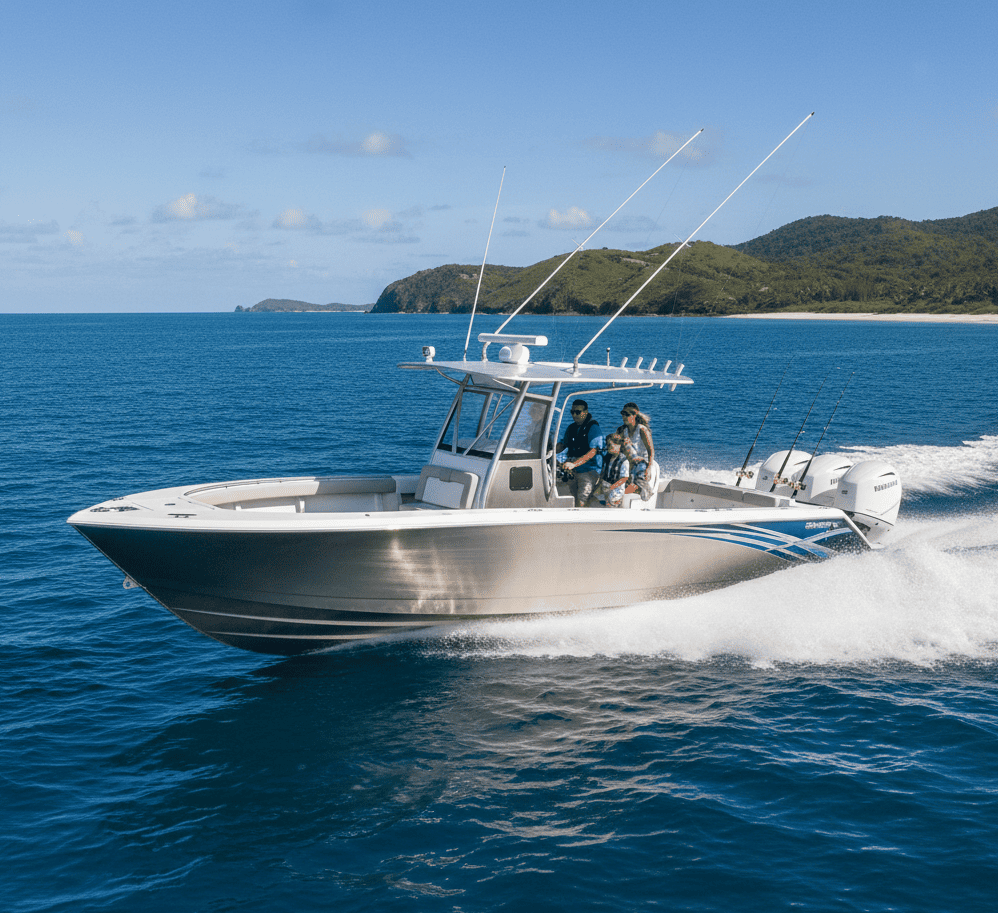
Aluminum Boat vs Fiberglass: Advantages and Disadvantages
Choosing between aluminum and fiberglass is the most consequential decision any boat buyer will face. More than just a matter of style, your hull material determines where you can navigate, how much fuel you’ll burn, and the true cost of long-term ownership.
This guide breaks down the rugged durability of aluminum versus the smooth performance of fiberglass. Whether you are an angler, a coastal cruiser, or a first-time buyer, we provide the real-world data you need to choose the perfect vessel for your adventures.
Understanding the Two Materials
Before weighing the pros and cons, it is essential to understand the fundamental differences in how an aluminum hull and a fiberglass hull are engineered and built.
What Is an Aluminum Boat?
At its core, an aluminum boat is built from marine-grade aluminum alloys (typically 5000 or 6000 series) known for their exceptional strength-to-weight ratio.
- Welded Construction: High-quality modern boats feature a welded aluminum hull, where plates are fused together to create a rigid, seamless structure. This is generally superior to older, riveted methods which are prone to leaking over time.
- Lightweight Structure: Aluminum is significantly lighter than fiberglass. This allows for smaller engines, better fuel economy, and easier trailering.
- Versatility: You will predominantly find aluminum in fishing, utility, and expedition boats. Its “industrial” nature makes it the go-to for workboats, though high-end custom builds now offer luxury finishes that rival traditional pleasure craft.
What Is a Fiberglass Boat?
Fiberglass boats are technically made of Fiberglass Reinforced Plastic (FRP). This material has dominated the recreational boating market for decades due to its versatility in design.
- Mold-Based Production: Unlike aluminum, which is cut and welded, a fiberglass hull is created by layering glass fibers and resin inside a precision-engineered mold. This allows for complex, aerodynamic curves and “deep-V” shapes that provide superior hydrodynamics.
- Gelcoat Finish: The exterior is finished with a gelcoat, a specialized resin that provides a smooth, high-gloss aesthetic. This layer is what gives fiberglass boats their signature “premium” look.
- Market Presence: Because of its ability to dampen sound and absorb vibration, FRP boat construction is the standard for recreational cruisers, luxury yachts, and high-performance offshore vessels.
Quick Comparison Table
For many buyers, the choice comes down to a few key performance indicators. This high-level overview compares an aluminum hull against fiberglass (FRP) across the most critical ownership factors.
| Feature | Aluminum Boat | Fiberglass Boat |
| Durability | High (Impact & abrasion resistant) | Moderate (Prone to cracking/chipping) |
| Weight | Lightweight (Easy to trailer) | Heavy (Better stability in wind) |
| Maintenance | Low (Rinse and go) | Moderate (Waxing & polishing required) |
| Initial Cost | Higher for high-end welds | Lower for mass-produced models |
| Lifespan | Extremely long (30-40+ years) | Long (20-30 years, depends on care) |
| Repairs | Simple structural welding | Complex cosmetic/structural resin work |
| Resale Value | High (Strong demand for utility) | Moderate (Highly dependent on aesthetics) |
| Appearance | Industrial / Utilitarian | Sleek / Luxury / High-Gloss |
Pro Tip: When evaluating aluminum vs fiberglass boat options, consider your local environment. If you frequently navigate rocky rivers or shallow lakes, aluminum’s durability is an unbeatable asset. If you prioritize a “head-turning” finish at the marina, fiberglass remains the industry standard.
Advantages of Aluminum Boats
When veterans of the water discuss the benefits of aluminum boats, the conversation usually centers on one word: toughness. Aluminum is the material of choice for those who treat their boat like a tool rather than a trophy.
Superior Impact Resistance
The primary advantage of an aluminum hull is its ability to withstand physical trauma. Unlike fiberglass, which can crack or shatter upon impact, aluminum tends to dent. This makes it ideal for rivers, shallow water, and rocky shorelines. If you accidentally “kiss” a submerged rock or scrape a gravel bar, you are likely looking at a minor cosmetic dent rather than a structural hull breach.
Lightweight and Fuel Efficient
Aluminum is significantly lighter than fiberglass, which translates to massive savings and convenience:
- Smaller Engines: You can achieve the same speeds with lower horsepower.
- Fuel Economy: Less weight means less drag, reducing your burn rate significantly.
- Towability: Being lightweight makes these boats much easier to trailer, often allowing for smaller towing vehicles.
Long Structural Lifespan
Marine-grade aluminum is incredibly resilient. It does not suffer from the “fatigue” that some composite materials experience over decades. An aluminum boat does not absorb water, nor is it affected by UV rays, which means the structural integrity remains virtually unchanged for 30, 40, or even 50 years if properly maintained.
Easier Structural Repairs
If you do manage to damage an aluminum hull, the repair process is often more straightforward for a professional. Structural fixes involve cutting out the damaged section and welding in a new plate of marine-grade alloy. These repairs are typically “as strong as new,” whereas structural fiberglass repairs can sometimes create weak points if not executed perfectly.
Ideal for Commercial and Adventure Use
Because of the low maintenance and high durability, aluminum is the gold standard for commercial and adventure use. From search-and-rescue teams and fishing charters to expedition vessels in the Arctic, professionals choose aluminum because it can handle the abuse of daily, high-intensity operations in the harshest environments on Earth.
Disadvantages of Aluminum Boats
While aluminum is incredibly rugged, it is not without its drawbacks. Potential owners must be aware of specific technical challenges that come with metal hulls, particularly regarding maintenance and comfort.
Higher Initial Cost
In the premium market, a high-quality welded aluminum boat can actually be more expensive than its mass-produced fiberglass counterpart. While basic riveted utility boats are affordable, the labor-intensive process of expert welding and the high price of marine-grade alloy plates can lead to a higher upfront investment in the 20 to 30-foot segment.
Electrolysis and Corrosion Risk
The biggest “silent killer” of an aluminum hull is galvanic corrosion (often referred to as electrolysis).
- Dissimilar Metals: When aluminum comes into contact with other metals (like stainless steel screws or bronze fittings) in saltwater, an electrical reaction occurs that can eat holes in the hull.
- Stray Current: If you keep your boat at a marina with faulty shore power wiring, stray electrical currents in the water can rapidly deteriorate the metal. Proper use of sacrificial anodes (zincs) and careful electrical grounding are mandatory.
Reduced Noise and Thermal Insulation
Metal is an excellent conductor of both sound and temperature, which leads to two common complaints:
- Hull Slap: The sound of waves hitting an aluminum hull can be significantly louder than in a fiberglass boat, which can be distracting while fishing or trying to sleep.
- Temperature Sensitivity: Aluminum hulls feel very cold in winter and hot under a summer sun. Without aftermarket insulation or foam filling, the interior cabin temperature will fluctuate rapidly with the outside water temperature.
Limited Aesthetic Customization
Aluminum is difficult to shape into the complex, fluid curves seen on modern luxury yachts. Most aluminum boats have a more “angular” or industrial appearance. Furthermore, maintaining a painted finish on aluminum is challenging; paint tends to chip or bubble more easily on metal than gelcoat does on fiberglass. Many owners choose to leave the hull unpainted for this reason, embracing the raw, utilitarian look.
Advantages of Fiberglass Boats
For decades, fiberglass has been the dominant material in the recreational boating industry. When exploring the advantages of fiberglass boats, it becomes clear why they remain the top choice for families and offshore enthusiasts who prioritize comfort and style.
Lower Entry Price (Mass Production)
Because fiberglass boats are built using reusable molds, manufacturers can mass-produce hulls with incredible efficiency. This scalability often leads to a lower entry price for the consumer in the most popular boat segments (16 to 25 feet). While high-end custom fiberglass builds exist, the average buyer can typically get “more boat” for their dollar when choosing a mass-market fiberglass model compared to a high-quality welded aluminum one.
Smoother Ride in Choppy Water
One of the most cited benefits of a fiberglass hull is its performance in rough conditions. Fiberglass is naturally heavier than aluminum, and that added mass provides several mechanical advantages:
- Momentum: A heavier hull “cuts” through waves rather than bouncing over them.
- Complex Geometry: Molds allow for complex “Deep-V” shapes, sharp entries, and flared bows that deflect spray and soften impacts. This results in a much smoother, more stable ride when the wind picks up and the water gets “choppy.”
Better Sound Insulation
Fiberglass is a naturally dampened material. Unlike the “ringing” or “slapping” sound often heard in metal boats, fiberglass absorbs the energy of the water. This provides superior sound insulation, making for a much quieter experience both at the helm and inside the cabin. Whether you are trolling for fish or entertaining guests, the lack of hull noise significantly increases the overall comfort level.
More Design Flexibility
The use of molds gives designers total creative freedom. Fiberglass can be curved, tapered, and sculpted into almost any shape imaginable. This design flexibility allows for:
- Integrated Features: Built-in seating, livewells, and storage compartments that are molded directly into the deck.
- Luxury Aesthetics: Sleek, flowing lines and high-gloss gelcoat finishes that provide a premium, “yacht-like” appearance that is simply impossible to replicate with aluminum plates.
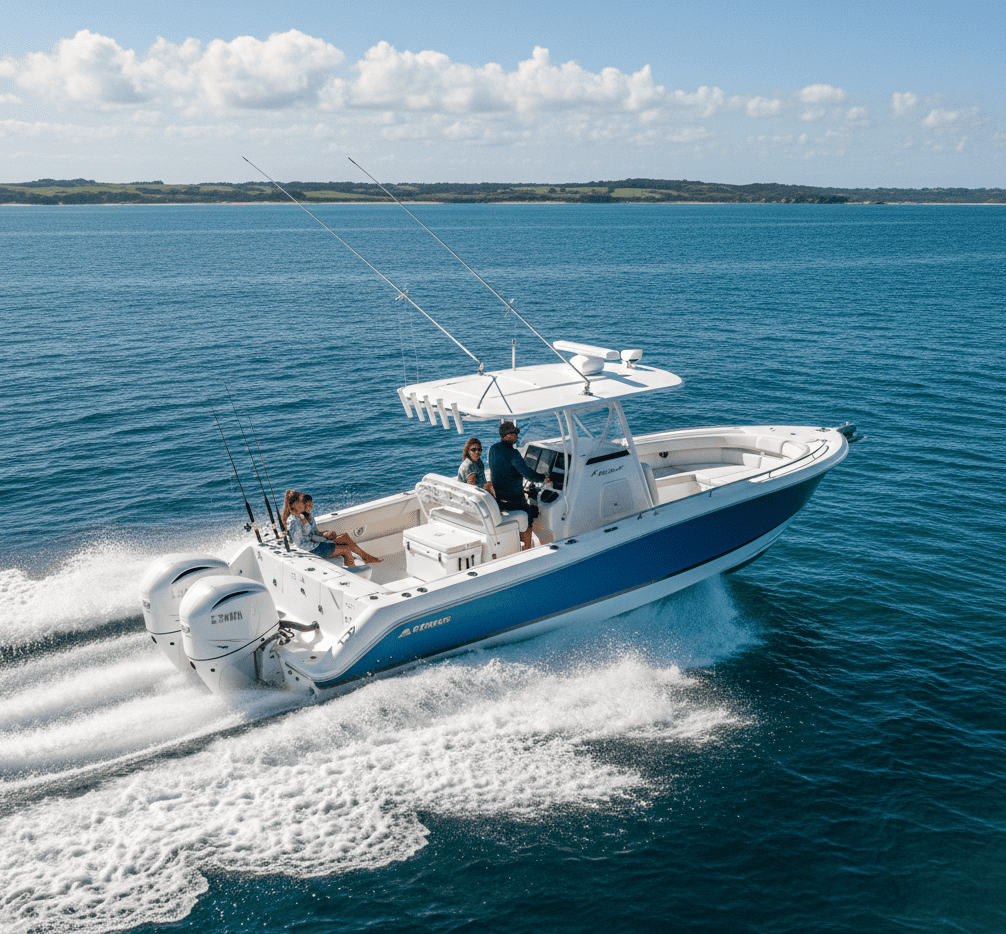
Disadvantages of Fiberglass Boats
While fiberglass is prized for its beauty and comfort, it is a composite material that requires specific care. Over time, environmental exposure and structural stress can reveal the inherent weaknesses of an FRP boat construction.
Vulnerability to Osmosis
The most common long-term issue with fiberglass is osmosis, often referred to in the boating world as “hull blisters.” Because fiberglass is slightly porous, water can eventually penetrate the outer gelcoat and react with the resin inside. This creates pockets of fluid that cause the gelcoat to bubble or blister. If left untreated, osmosis can compromise the hull’s integrity and significantly decrease the vessel’s value.
Susceptibility to Structural Cracks
Fiberglass is rigid, but that rigidity makes it brittle compared to metal.
- Stress Cracks: Over time, the natural flexing of the hull in heavy seas or the vibration of the engine can cause small “spiderweb” cracks in the gelcoat.
- Impact Damage: While aluminum dents, fiberglass shatters. A hard impact with a dock or a floating log can lead to structural cracking or delamination, where the layers of glass and resin begin to separate.
Heavier Hull Weight
While weight helps with a smooth ride, it is a double-edged sword. A heavier fiberglass hull comes with several logistical and financial costs:
- Higher Fuel Consumption: Pushing a heavier boat through the water requires more energy and larger engines.
- Towing Challenges: You will likely need a more powerful vehicle and a heavy-duty trailer to transport a fiberglass boat compared to an aluminum one of the same size.
- Storage: Heavier boats are more difficult to launch and retrieve, especially at ramps with shallow inclines or soft sand.
Repair Complexity in Severe Damage
Fixing a badly damaged fiberglass boat is an art form that requires specialized skills. Unlike welding metal, fiberglass repair involves grinding away damaged sections, layering new glass matting with resin in precise temperatures, and then painstakingly sanding and color-matching the gelcoat. Achieving a seamless, “invisible” repair is time-consuming and expensive, and a poor repair job can leave the boat with permanent structural weak points.
Best Choice Based on Intended Use
Deciding between aluminum vs fiberglass often depends on where and how you plan to spend your time on the water. To help you make a final decision, here is the breakdown of which material wins in specific real-world scenarios.
Freshwater Fishing: The Aluminum Edge
If your passion is bass fishing in timber-filled lakes or chasing walleye in rocky rivers, aluminum is the undisputed winner. Its light weight allows you to navigate shallower waters where the fish are hiding, and you won’t have a heart attack every time your hull grazes a stump or a gravel bar.
Offshore Cruising: The Fiberglass Advantage
For those heading miles offshore into the open ocean, fiberglass is almost always the better choice. The heavier hull and complex “V” shapes allow the boat to track better in swells and provide a much softer landing when crashing through big waves. If passenger comfort and a “dry ride” are your priorities, go with fiberglass.
Saltwater Coastal Boating: A Toss-Up
This is where the debate gets interesting.
- Choose Fiberglass if you want a boat that looks great at the sandbar, offers integrated seating for the family, and is easy to clean after a day in the salt.
- Choose Aluminum (specifically high-quality welded builds) if you want a “no-nonsense” boat that can be beached on rocky islands without fear. Just remember to keep an eye on your sacrificial anodes to prevent corrosion.
First-Time Boat Owners: Aluminum for Peace of Mind
For a first-time boat owner, the learning curve of docking and trailering can be steep. An aluminum boat is far more forgiving of “rookie mistakes” like a hard bump against a concrete pier. Additionally, the lower maintenance requirements (no waxing or polishing) allow beginners to focus on learning navigation skills rather than hull detailing.
Commercial or Expedition Use: Aluminum Wins
For workboats, dive charters, or expedition vessels heading to remote areas, aluminum is the industry standard. The ease of structural repair in remote locations, combined with the ability to handle extreme “wear and tear” without cosmetic heartbreak, makes it the only logical choice for professional mariners.
Total Cost of Ownership Over 10 Years
When comparing aluminum vs fiberglass, the sticker price is only the beginning. To understand the true financial impact, you must look at the Total Cost of Ownership (TCO). Over a decade, the “cheaper” boat can often become the more expensive one.
Purchase Price vs. Long-Term Value
While mass-produced fiberglass boats often have a lower entry price, premium welded aluminum boats hold their value remarkably well. Over 10 years, a fiberglass boat may require more cosmetic investment to stay “showroom ready,” whereas an aluminum boat’s value is tied to its indestructible structure.
Maintenance and Repairs
- Fiberglass: Costs add up quickly. You will need annual detailing, waxing, and potentially expensive gelcoat repairs for stress cracks. If the boat is kept in the water, “bottom painting” and monitoring for osmosis blisters are mandatory expenses.
- Aluminum: Maintenance is significantly cheaper. Aside from rinsing and replacing sacrificial anodes (to prevent electrolysis), the hull requires very little. Structural repairs, if needed, are generally faster and cheaper than specialized fiberglass reconstruction.
Fuel Consumption
This is where aluminum wins consistently. Because aluminum hulls are lighter, they require less horsepower to reach cruising speeds. Over 10 years of regular use, the savings in fuel can amount to thousands of dollars, especially if you rack up high engine hours.
Depreciation and Resale Value
- Fiberglass: High-end brands hold value well, but “entry-level” fiberglass boats depreciate quickly as their upholstery and gelcoat age. A 10-year-old fiberglass boat that hasn’t been polished can look decades older than it is.
- Aluminum: These boats are often viewed as “lifetime” purchases. Because the material doesn’t degrade, the resale market remains incredibly strong. A well-maintained aluminum boat often fetches a higher percentage of its original price than a similar-aged fiberglass vessel.
Maintenance Comparison
The time you spend in the driveway or at the shipyard is time you aren’t spending on the water. Understanding the different maintenance profiles of these materials is crucial for long-term satisfaction.
Cleaning Requirements
- Aluminum: This is the “rinse and go” option. A simple wash with fresh water and mild soap is usually enough to remove salt and grime. Because many aluminum boats are unpainted, you don’t have to worry about scratching a delicate finish.
- Fiberglass: Requires more effort. To keep that “new boat” shine, you must frequently wash and chamois-dry the hull to prevent water spots and salt crystallization.
Anti-fouling
Both materials require anti-fouling paint if they are kept in the water for extended periods to prevent barnacle and algae growth. However, there is a critical difference:
- Aluminum requires specialized copper-free anti-fouling paint. Using standard copper-based paint on an aluminum hull will trigger rapid galvanic corrosion, potentially destroying the hull in a single season.
- Fiberglass can use standard copper-based paints, which are often more affordable and widely available.
Corrosion Protection (Aluminum Specific)
The most critical maintenance task for an aluminum boat is managing sacrificial anodes. These blocks of zinc, magnesium, or aluminum “sacrifice” themselves to electrolysis so your hull doesn’t have to. You must inspect these regularly and replace them once they are 50% consumed.
Gelcoat Maintenance (Fiberglass Specific)
To prevent the fiberglass from “chalking” (a white, powdery oxidation caused by UV rays), you must wax and polish the hull at least once or twice a year. If the gelcoat is neglected, it becomes porous and dull, making it much harder to clean and more susceptible to staining.
Storage Considerations
- Aluminum: Generally more resilient to outdoor storage. It handles “freeze-thaw” cycles well and isn’t affected by UV degradation.
- Fiberglass: Ideally should be covered or stored indoors when not in use. Prolonged UV exposure can yellow the gelcoat and weaken the resin over many years. Additionally, it is vital to ensure a fiberglass boat is properly supported on its trailer to prevent “hooks” or permanent hull deformations.
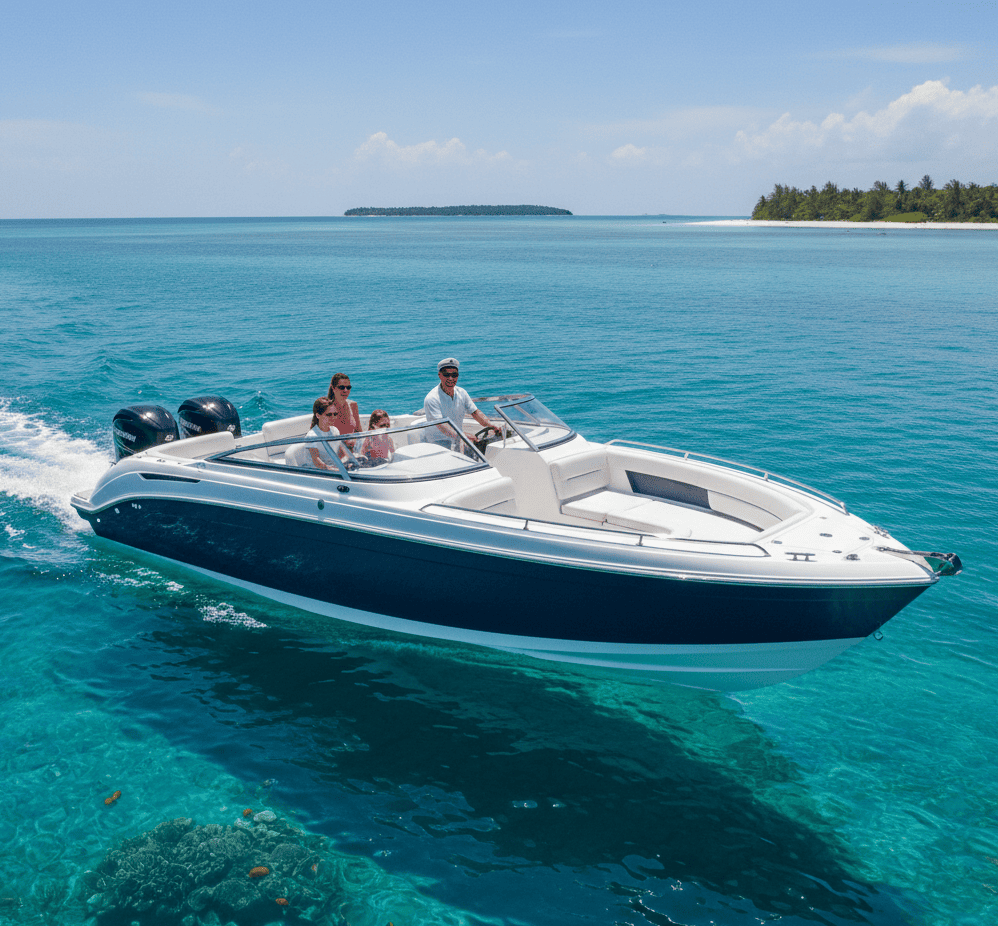
Resale Value and Market Demand
In the boating world, your boat is an investment. Understanding the market perception of these materials is key to ensuring that when it comes time to upgrade, you aren’t left with a vessel that is impossible to move.
Market Perception: Utility vs. Luxury
The resale market views these two materials through different lenses:
- Aluminum is perceived as a “workhorse.” Buyers looking for used aluminum boats prioritize structural integrity and engine hours over cosmetic perfection. Because they are known to be “indestructible,” they often sell quickly to practical buyers and anglers.
- Fiberglass is viewed as a “lifestyle” purchase. Resale value is heavily tied to aesthetics. A used fiberglass boat with a faded gelcoat or torn upholstery will see its value plummet, even if the engine is in perfect condition.
Longevity Impact
The “age” of a boat is interpreted differently based on the hull material:
- A 15-year-old aluminum boat is often considered to be in its “prime,” provided the welds are intact and there is no significant corrosion.
- A 15-year-old fiberglass boat is frequently viewed as “aging.” Potential buyers will be wary of hidden issues like stringer rot, transom delamination, or osmosis—problems that simply do not exist in the world of aluminum.
Buyer Preferences: US vs. Europe
Market demand shifts significantly depending on where you are selling:
- The United States: There is a massive, high-demand market for both. Aluminum dominates the Great Lakes and river systems, while fiberglass reigns supreme in Florida and the Gulf Coast. However, the US has seen a recent surge in “premium” welded aluminum boats (like those from the Pacific Northwest) becoming popular nationwide.
- Europe: Traditionally, the European market has leaned heavily toward fiberglass for leisure. However, in Northern Europe and Scandinavia, aluminum is king. In France and the UK, there is a growing niche for aluminum “adventure” yachts and RIBs (Rigid Inflatable Boats) with aluminum hulls, prized for their ability to handle rugged Atlantic coastlines.
Environmental Impact
In today’s market, the “green” footprint of a vessel is becoming a decisive factor for many buyers. When comparing the long-term sustainability of aluminum vs fiberglass, there is a clear winner in terms of lifecycle management.
Aluminum Recyclability: A Circular Lifecycle
Aluminum is one of the most eco-friendly materials in the marine industry. It is 100% recyclable without losing any of its natural properties.
- Scrap Value: When an aluminum boat finally reaches the end of its life (often after 50+ years), the hull can be melted down and repurposed.
- Energy Efficiency: Recycling aluminum requires only about 5% of the energy used to produce primary aluminum from ore, significantly reducing the carbon footprint of the replacement vessel.
Fiberglass Disposal Challenges: The Landfill Dilemma
Fiberglass (FRP) presents a significant environmental challenge. Because it is a composite material—a mix of glass fibers and cured resins—it cannot be easily melted down or recycled.
- End-of-Life Issues: Currently, the vast majority of decommissioned fiberglass boats end up in landfills or, worse, abandoned in waterways.
- Grinding and Incineration: While some new technologies allow fiberglass to be ground down into filler for cement, the process is expensive and not yet widely available. For now, a fiberglass boat is essentially a permanent addition to the planet’s waste once its service life ends.
Long-Term Sustainability Considerations
Sustainability isn’t just about the end of the boat’s life; it’s about the years in between:
- Chemical Exposure: Maintaining a fiberglass boat requires resins, gelcoats, and waxes—many of which contain Volatile Organic Compounds (VOCs).
- Microplastics: Over time, the wear and tear or sanding of a fiberglass hull can release microplastics into the marine ecosystem.
- Longevity: Aluminum’s sheer lifespan means fewer boats need to be manufactured over a century compared to fiberglass, making it the superior choice for the environmentally conscious mariner.
Common Mistakes When Choosing
Selecting a boat is an emotional experience, but letting your heart override your head can lead to “buyer’s remorse” once the honeymoon phase ends. Here are the most common pitfalls to avoid.
Choosing Based on Looks Only
It is easy to be seduced by the gleaming gelcoat and sleek, curved lines of a brand-new fiberglass boat. However, aesthetics don’t help when you are navigating a rocky river or trying to trailer your boat alone in a crosswind. Always prioritize the functionality of the hull over its “curb appeal.” A boat that looks beautiful at the dock but doesn’t suit your lifestyle will eventually spend more time on its trailer than on the water.
Ignoring the Navigation Area
Your local environment should dictate your material choice.
- Buying a fiberglass boat for a region with extreme tides and rocky outcroppings often leads to expensive structural repairs.
- Conversely, buying a light aluminum boat for a location known for heavy offshore “chop” might result in a ride that is too uncomfortable for your family. Match the material to the water, not just the price.
Underestimating Maintenance Costs
Many first-time buyers look at the monthly loan payment but forget the “hidden” costs of ownership.
- If you choose fiberglass, you must budget for professional detailing or spend dozens of hours a year waxing and buffing.
- If you choose aluminum, you must be vigilant about electrical systems and anodes. Failing to account for these requirements can lead to rapid depreciation and mechanical failure.
Not Considering Long-Term Ownership
Are you buying a boat for the next three years or the next twenty?
- If you plan to upgrade frequently, the mass-market appeal of a well-maintained fiberglass boat might make it easier to trade in.
- If you are looking for a “forever boat” that you can pass down to your children, the structural longevity and ease of repair offered by aluminum make it the superior long-term investment.
Final Verdict: Which One Is Right for You?
Choosing between aluminum and fiberglass isn’t about finding the “best” material—it’s about finding the best match for your specific lifestyle and environment.
Objective Summary
- Choose Aluminum if you prioritize rugged durability, fuel efficiency, and low-maintenance “workhorse” capabilities. It is the king of shallow waters, rocky shores, and long-term structural integrity.
- Choose Fiberglass if you prioritize ride quality, aesthetic appeal, and creature comforts. It is the gold standard for offshore stability, high-speed performance, and luxury design.
Use-Case Driven Recommendation
To make your final decision, look at your primary boating goal:
- The Weekend Angler: If you fish in rivers or lakes where underwater hazards are common, Aluminum will save you a fortune in repair bills and stress.
- The Family Cruiser: If you spend your Saturdays entertaining guests or crossing open bays, the “dry ride” and integrated seating of Fiberglass will keep everyone happy and comfortable.
- The Long-Term Investor: If you want a vessel that will hold its structural value for 30+ years with minimal fuss, Aluminum is the smarter financial play.
- The Coastal Perfectionist: If you want your boat to be the pride of the marina with a flawless, high-gloss finish, Fiberglass is the only way to go.
Follow Your Boating Goals
Ultimately, your boat should be a source of freedom, not a source of constant worry. Before signing the contract, be honest about where you will truly navigate and how much time you are willing to spend with a polishing cloth or a multimeter.
Define your mission first; the material will follow.
