

How to Create an Effective Boat Safety Plan: A Complete Guide for Every Skipper
Out on the open water, a vessel must operate as its own self-contained rescue unit. When an emergency strikes, your survival depends entirely on proactive preparation rather than panicked reaction. Most onboard crises stem from predictable and preventable causes, such as sudden mechanical failure, shifting weather conditions, or human error. This guide will teach you how to build a comprehensive safety plan, audit your vessel’s critical gear, brief your passengers, and execute decisive emergency procedures so you can handle any situation with absolute confidence.
What Is a Boat Safety Plan?
What Is an Onboard Safety Plan?
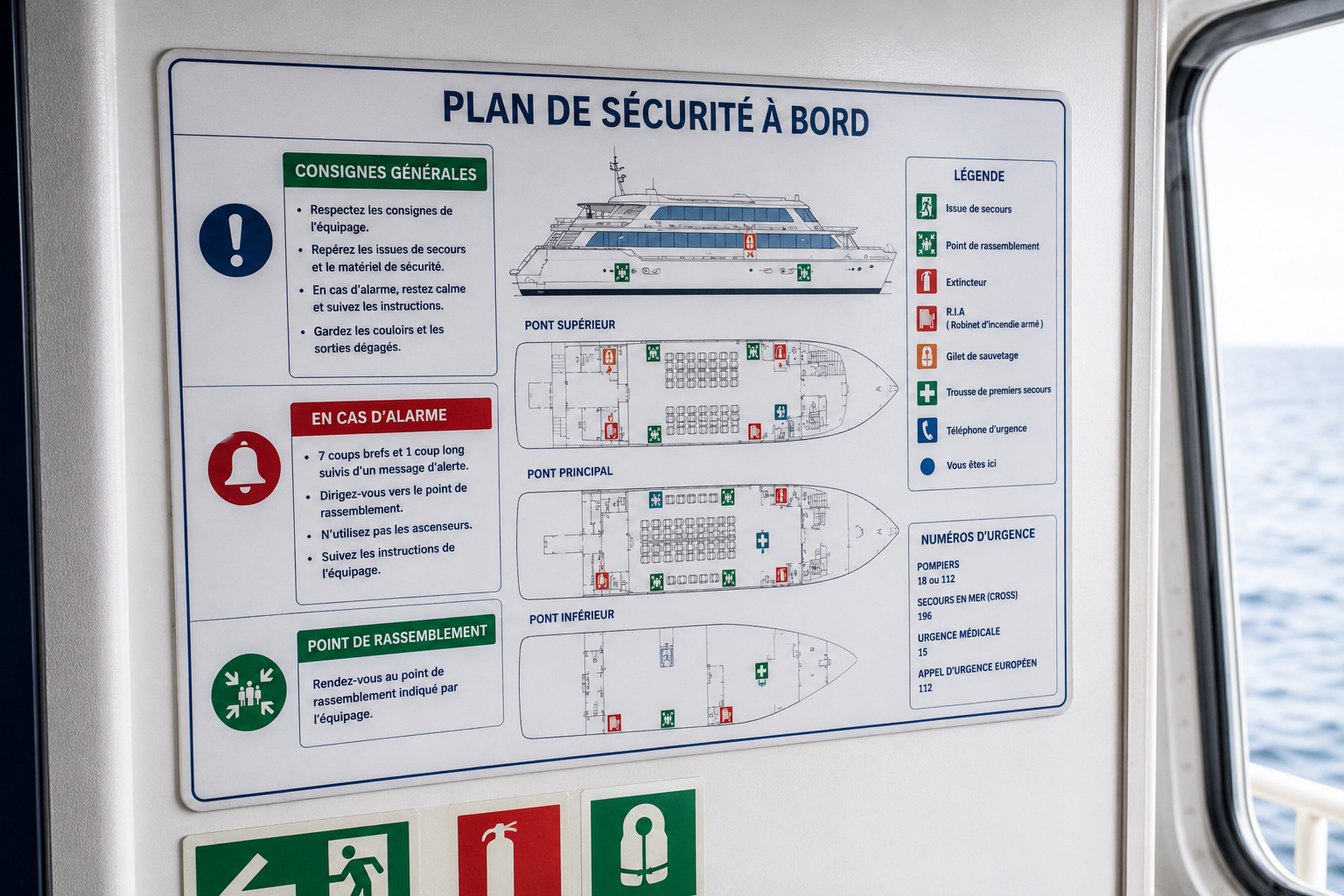
An onboard safety plan is a structured, written protocol that defines a vessel’s emergency readiness and response framework. It serves as an active operational blueprint detailing pre-departure verifications, the precise locations of survival equipment, and specific step-by-step maneuvers required to counter sudden maritime perils.
Why Every Boat Should Have One
The ocean environment is volatile. A formal safety plan transforms chaotic reactions into disciplined, practiced actions. It ensures critical tasks—like broadcasting a distress signal or sealing a breach—are executed systematically, preserving crew cohesion and drastically reducing response times when seconds count.
Who Is Responsible for Safety on Board?
- The Skipper: Carries ultimate legal and moral responsibility for the vessel. They are the final authority, tasked with monitoring conditions, verifying gear, and managing crises.
- Crew Members: Must master specific safety roles, handle lines, operate the VHF radio, and be prepared to take command if the skipper is incapacitated.
- Guests and Passengers: Responsible for following orders, wearing life jackets when instructed, and refraining from behaviors that compromise deck stability.
Preparing Before Leaving the Dock
Check the Weather and Sea Conditions
Analyze up-to-date marine forecasts, looking at wind speed, wave height, tidal heights, and incoming fronts. Never rely on general shore forecasts; understand how localized wind-versus-current dynamics will affect your route.
Inspect Your Boat
Perform a physical walk-through to confirm structural and operational integrity:
- Hull: Check the waterline, looking for structural impacts, and ensure all through-hull valves open and close smoothly.
- Steering: Turn the helm fully from lock to lock, verifying tight cable tension or checking for fluid leaks in hydraulic lines.
- Engine: Check fluid levels, inspect belts for cracking, and verify that raw-water cooling strainers are completely clear of debris.
- Bilge: Ensure the bilge is dry and clean; test automatic float switches to confirm they activate immediately.
- Navigation Lights: Cycle all running and anchor lights to ensure full visibility for night operations or low-visibility weather.
Verify Fuel, Batteries, and Essential Systems
Calculate fuel needs using the rule of thirds: one-third for the outward trip, one-third for the return, and one-third in reserve. Test battery voltages under load and check that the freshwater system and secondary pumps function properly.
File a Float Plan & Inform Someone Ashore
Document your boat description, registration, passenger manifest, itinerary, and communication gear. Leave this detailed float plan with a reliable person ashore, establishing a hard contact deadline for when they should alert search and rescue services if you fail to return.
Confirm Crew Readiness
Assess the physical and mental state of everyone on board. Ensure all crew members are rested, hydrated, and wearing appropriate deck apparel, and verify that anyone prone to motion sickness has taken preventative measures well before casting off.
Essential Safety Equipment Every Boat Should Carry
Required Life-Saving Apparatus
- Personal Flotation Devices (PFDs): You must carry one USCG-approved, appropriately sized life jacket for every person on board. They matter because they provide essential buoyancy and keep an unconscious person’s airway clear of the water during a sudden immersion.
- Fire Extinguishers: Boats are required to carry marine-rated B-I or B-II portable fire extinguishers, strategically placed near the engine compartment and galley. They are critical for suppressing fuel, electrical, or structural fires before they compromise the hull.
- Marine VHF Radio: A fixed-mount or handheld VHF radio provides a direct communication link to rescue agencies and nearby vessels via channel 16. Unlike cell phones, it functions reliably miles offshore where cellular signals fail.
- EPIRB and Personal Locator Beacons: Emergency Position Indicating Radio Beacons (EPIRBs) and PLBs broadcast a coded distress signal directly to global search-and-rescue satellites. They matter because they pinpoint your exact GPS coordinates during a catastrophic event.
- Visual Distress Signals: Pyrotechnic flares, electronic distress lights, and orange smoke signals are mandatory for offshore signaling. They allow rescue crews and passing vessels to visually locate your position, especially in low-visibility or night conditions.
- Bilge Pumps: High-capacity manual and electric bilge pumps are necessary to evacuate water resulting from leaks or taking on heavy seas, keeping the vessel stable and afloat.
- First Aid Kit: A fully stocked, waterproof medical kit is essential for treating injuries, managing severe bleeding, and stabilizing fractures until professional medical care can be reached.
- Throwable Flotation Devices: A minimum of one Type IV throwable device (such as a ring buoy or cushion) must be immediately accessible on deck to provide rapid, life-saving buoyancy to a person overboard.
- Emergency Grab Bag: This floating, waterproof bag houses your most critical survival items—including passports, a backup VHF, water, and rations—ready to be taken instantly if you must abandon ship.
- Emergency Tools and Spare Parts: Carrying a collection of basic tools, spare belts, impellers, fuel filters, and wooden through-hull plugs allows you to make mechanical repairs at sea, preventing a breakdown from cascading into a major emergency.
Assigning Roles and Conducting a Safety Briefing
Assigning Crew Responsibilities
Before casting off, the skipper must delegate specific operational duties based on experience. Assign one crew member as the primary radio operator and another to manage anchor deployment or line handling. Most importantly, designate a clear second-in-command who can safely operate the vessel and navigate back to port if the skipper becomes incapacitated.
Briefing Passengers Before Departure
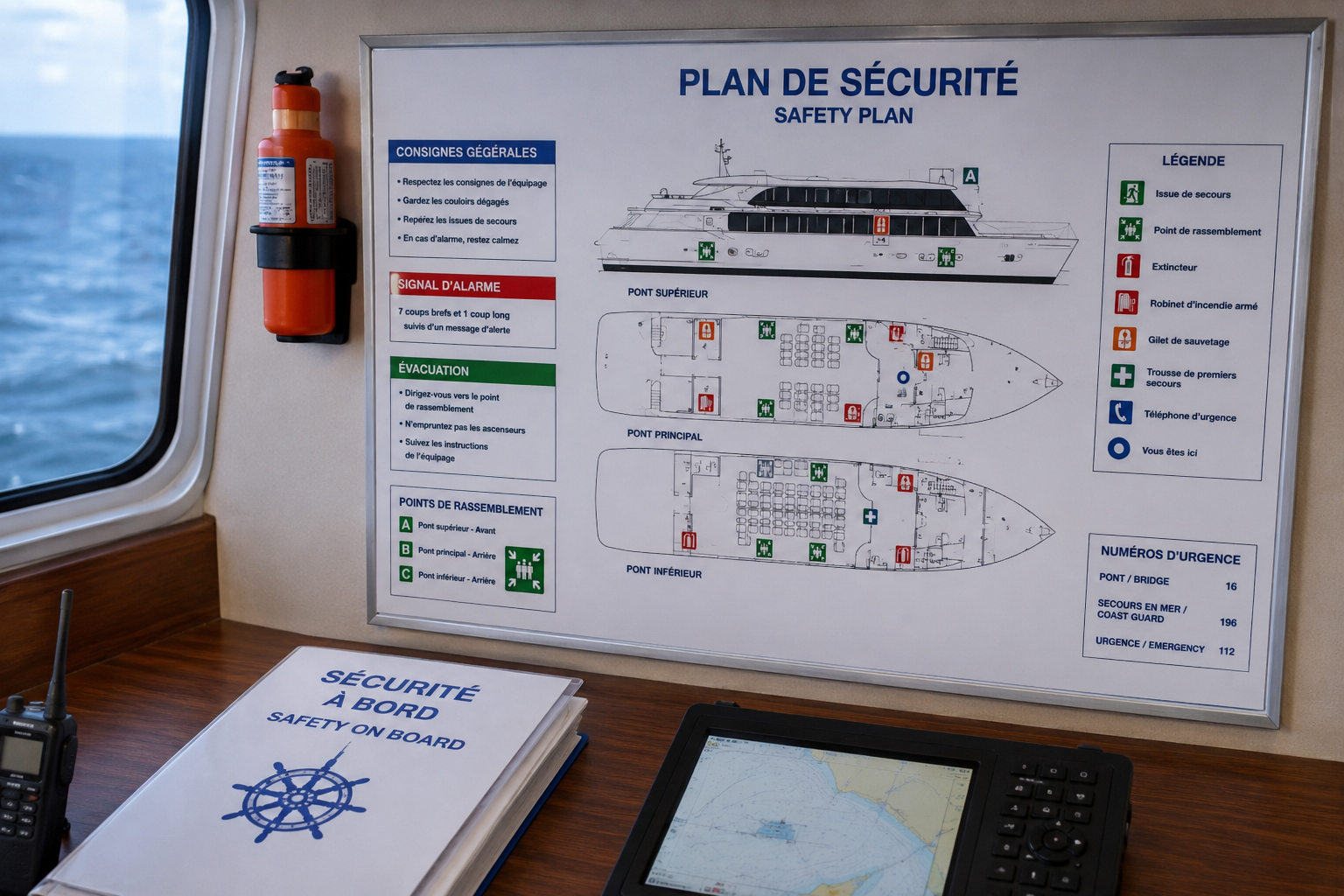
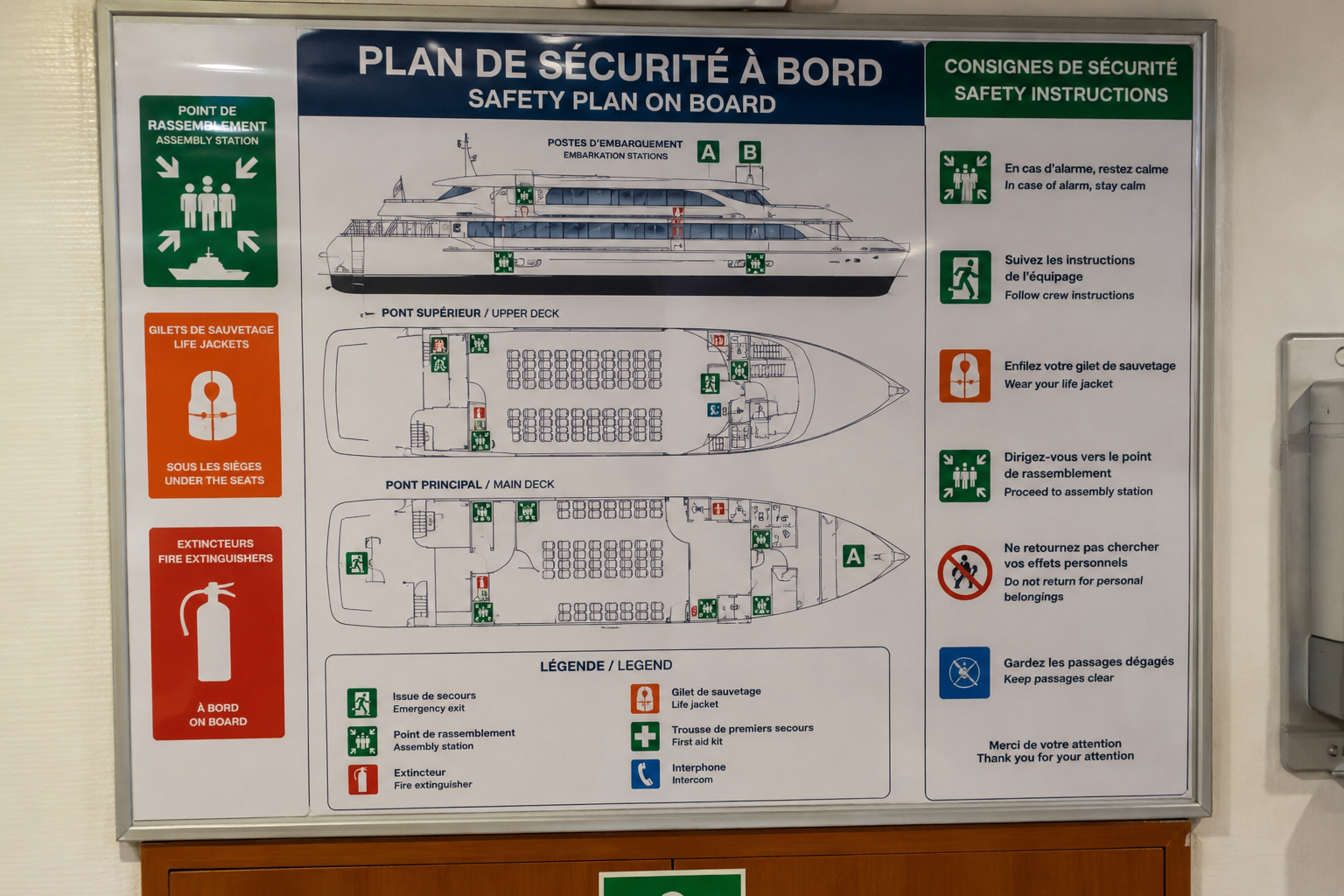
Gather all passengers on deck for a mandatory pre-departure briefing. Walk through the layout of the boat, demonstrating how to use the marine heads and move safely using handrails. Show everyone the exact locations of the life jackets, fire extinguishers, VHF radio, flares, and the emergency grab bag, ensuring they know how to access them instantly.
Explaining Emergency Procedures
Explain precisely what to do during a crisis: sit down, stay calm, and wait for orders. Outline basic protocols for a man overboard or fire situation. For children and non-swimmers, enforce a strict policy requiring life jackets to be worn at all times while on deck, and pair them with a dedicated adult who is responsible for their safety during an emergency.
Emergency Procedures Every Skipper Should Plan For
Man Overboard
- Immediate Actions: Shout “Man Overboard!” to alert the crew. Appoint one person to maintain continuous visual contact, pointing directly at the victim. Throw a life ring and a tracking marker immediately. Hit the MOB button on your GPS plotter to log the exact coordinates of the incident.
- Recovery Techniques: Execute a Williamson turn or a close-reach return to circle back safely. Approach the victim slowly from downwind, bringing the boat into the wind to stall your momentum next to them, keeping your propeller in neutral to prevent injuries.
- Aftercare: Carefully haul the individual back aboard using a swim ladder or a lifting sling. Check immediately for hypothermia or secondary drowning symptoms. Wrap them in blankets, monitor their vital signs, and provide dry clothing.
Fire On Board
- Assess the Fire: Identify the source, size, and material fueling the fire (electrical, fuel, or galley) to choose the correct fire extinguisher.
- Shut Down Engines and Fuel: Turn off the main engines, blowers, and fuel supply valves immediately to cut off the supply of oxygen and fuel feeding the fire.
- Fight or Evacuate: Aim the extinguisher at the base of the flames. If the fire cannot be contained within the first , order the crew to prepare to abandon ship.
Flooding or Hull Damage
- Locate the Leak: Trace the incoming water to its source, checking through-hull valves, transducer fittings, the stuffing box, or structural impact areas.
- Control Flooding: Hammer a soft wooden cone plug into a broken valve, or use cushions and sails to slow hull damage. Activate all manual and electric bilge pumps.
- Stabilize the Boat: Position the boat so the damaged area sits above the waterline, using weight distribution or a tactical heading to minimize water intake.
Engine Failure
- Maintain Control: Turn the helm to navigate away from immediate hazards, using your remaining steering momentum to keep the vessel stable.
- Anchor if Necessary: Drop the anchor quickly to stop the boat from drifting toward shallow water, breaking surf, or busy shipping channels.
- Prepare for Assistance: Check basic fuel filters and breakers. If the problem cannot be resolved, broadcast a Pan-Pan message on VHF channel 16 to request a tow.
Medical Emergency
- Assess the Situation: Evaluate the severity of the victim’s injury or illness, and check their breathing and pulse.
- Administer First Aid: Open the onboard medical kit to stop severe bleeding, perform CPR, or splint fractures, keeping the patient stable and warm.
- Prepare for Evacuation if Required: If the condition is life-threatening, call the Coast Guard on VHF channel 16. Give your GPS coordinates and clear the deck for a helicopter lift or boat transfer.
Severe Weather
- Reduce Speed: Slow down to minimize slamming impacts against heavy head seas, protecting the hull from structural damage.
- Secure Passengers: Order everyone on deck to don life jackets and clip safety harnesses into tether lines, moving non-essential passengers into the cabin.
- Seek Shelter: Alter your course toward the nearest protected harbor, bay, or lee side of an island to escape the worst of the conditions.
- Heavy-Weather Procedures: Run at an angle across the swell rather than taking waves directly on the beam, balancing throttle inputs to maintain steerage.
Abandoning Ship
- When Abandoning Becomes Necessary: Order the crew to leave only when the vessel is actively sinking or completely consumed by fire, remembering that the boat remains your primary survival asset until it goes under.
- Launching the Life Raft: Secure the painter line to a strong deck cleat, throw the container downwind into the water, and pull the line sharply to inflate the raft.
- Taking the Emergency Grab Bag: Hand the emergency grab bag, containing your handheld VHF, flares, and passports, into the life raft before boarding.
- Staying Together After Evacuation: Tie the life raft to the sinking boat using the knife provided to cut it free at the last possible moment, then lash multiple rafts together to create a larger target for search teams.
Emergency Communication Procedures
Maritime Distress Protocols
- Using a Marine VHF Radio: Turn the radio to high power () and switch to Channel 16. Speak clearly into the microphone, stating your vessel’s name, precise GPS coordinates, the nature of the emergency, and the number of people on board.
- Understanding Mayday, Pan-Pan, and Sécurité Calls: Use Mayday strictly for grave, imminent threats to life or the vessel (e.g., sinking or a massive fire). Use Pan-Pan for urgent but non-life-threatening situations, such as a disabled engine in a shipping channel. Broadcast a Sécurité call to relay critical safety or meteorological warnings to nearby vessels.
- Using Digital Selective Calling (DSC): Lift the red protective flap on your VHF radio and press the Distress button for three seconds. This instantly broadcasts an automated digital alert containing your unique MMSI number and exact GPS location to search and rescue satellites and all surrounding ships.
- Contacting Local Rescue Services: If operating close to shore within cellular range, maintain a current emergency contact list containing phone numbers for local coast guard stations, marine police, and regional towing services as a backup to your primary VHF radio communications.
Practicing Your Boat Safety Plan
Why Safety Drills Matter
Theoretical knowledge fails during a crisis. Regular onboard training builds instinctual muscle memory, transforming panic into coordinated execution. When the crew practices maneuvers repeatedly, response times drop dramatically, ensuring critical steps are never missed under pressure.
Conducting Man Overboard Drills
Test your team by tossing a fender weighted with a line into the water without warning. Practice throwing life rings, assigning a dedicated spotter, executing a recovery turn, and bringing the boat alongside the object with the propeller safely in neutral.
Practicing Fire and Flooding Response
Simulate a galley fire by having the crew retrieve extinguishers, isolate fuel lines, and declare the emergency over the radio. For flooding drills, simulate a failed through-hull valve. Have crew members locate the simulated leak and practice hammering in wooden plugs or setting up manual bilge pumps.
Reviewing and Improving Procedures
Conclude every drill with a brief debriefing session. Evaluate what worked well and identify bottlenecks, such as a buried tool kit or unclear commands. Update your safety plan and emergency checklist based on these findings to ensure your vessel remains continuously prepared for real-world scenarios.
Common Mistakes That Compromise Safety
Critical Errors in Skipper Judgment
- Assuming Emergencies Won’t Happen: Complacency is a skipper’s greatest enemy. Operating under the false assumption that a routine trip guarantees safety leads to relaxed oversight, uninspected gear, and a total lack of mental readiness when a crisis suddenly develops.
- Failing to Practice Emergency Procedures: Knowing where gear is stored is not enough. Failing to run live drills leaves the crew completely unprepared for the real-world panic, disorientation, and chaotic physical dynamics of an actual onboard emergency.
- Waiting Too Long to Call for Help: Pride or fear of embarrassment causes many skippers to delay broadcasting an alert until a manageable mechanical issue cascades into a life-threatening disaster. It is always better to cancel an early assistance request than to call when it is too late.
- Poor Communication Among Crew Members: Directing an emergency through vague shouting creates confusion and anxiety. Without clear, explicit task delegation, critical survival steps are duplicated or missed entirely.
- Ignoring Changing Weather Conditions: Stubbornly sticking to an itinerary and refusing to alter course when barometric pressures drop or winds shift directly exposes the vessel to dangerous, breaking seas.
- Overloading the Boat: Exceeding your vessel’s maximum weight capacity lowers the displacement waterline, dramatically degrades stability, and invites catastrophic flooding through cockpit drains or low gunwales.
- Relying Too Much on Technology: Treating digital chartplotters and mobile phones as infallible systems is a severe mistake. Marine electronics are highly vulnerable to sudden battery drainage, thermal shutdown, and salt-water corruption, making traditional seamanship skills essential.
Printable Boat Safety Checklist
Before Departure
- Weather checked: Marine forecast analyzed; no severe advisories active.
- Float plan filed: Details left with a reliable person shore-side.
- Fuel topped up: Fuel verified using the rule of thirds.
- Batteries charged: Main banks tested and holding charge under load.
- Safety equipment inspected: All items accessible and functional.
- Crew briefed: Roles assigned; emergency protocols explained clearly.
While Underway
- Weather monitored: Continuous observation of skies and barometric changes.
- Crew accounted for: Location and physical well-being of passengers tracked.
- Navigation systems checked: Position verified against digital and paper charts.
- Engine monitored: Temperature, oil pressure, and cooling water flow verified.
Emergency Equipment Inspection
- Life jackets: Intact, sized correctly, and equipped with whistles/lights.
- Fire extinguishers: Pressures in the green zone; seals intact.
- Bilge pumps: Automatic switches and manual backups tested.
- VHF radio: Functioning properly; radio check completed on open channel.
- Distress signals: Pyrotechnics present and within valid expiration dates.
- First aid kit: Fully stocked; medications and bandages dry.
End-of-Trip Review
- Equipment inspected: All utilized gear cleaned and stowed correctly.
- Damage recorded: Post-trip hull and mechanical wear documented.
- Supplies replenished: Used medical or safety items flagged for replacement.
- Lessons learned: Logbook updated with operational notes and drill insights.
Safety Tips for Different Types of Boating
Day Cruising
Keep a close eye on the clock and changing local weather patterns. Because day trips feel casual, skippers often neglect to pack warm clothing or adequate provisions. Ensure you carry functional navigation lights and anchor gear, as a minor mechanical delay can easily turn a brief afternoon cruise into a stressful night operation.
Offshore Boating
When operating miles past the horizon, self-reliance is mandatory. Equipping your vessel with a satellite communicator, an EPIRB, a dual-band VHF radio, and a fully certified life raft is essential. Prior to departure, double-check all fuel management calculations, pack a comprehensive selection of mechanical spares, and establish a rigid check-in schedule with a reliable contact ashore.
Coastal Cruising
Navigating near coastlines requires continuous monitoring of shifting sandbars, rocky shores, and changing tidal heights. Keep your paper and electronic charts updated to prevent groundings. Maintain a safe distance from breaking surf and busy commercial shipping channels, ensuring you always identify alternative ports of refuge along your route.
Fishing Trips
Fishing decks are highly prone to hazards from slippery fish slime, scattered tackle, sharp hooks, and open knives. Keep the washdown pump running to clear the deck constantly, secure all heavy gear in rough seas, and use extreme caution when leaning over gunwales to land large catches.
Sailing
Sailing requires managing high physical forces and moving components. Ensure all crew members wear protective footwear, watch out for the boom during unexpected jibes, and clip safety tethers into deck jacklines in heavy conditions. Reduce sail area early at the first sign of a building breeze to maintain full control of the helm.
Family Boating
Establish a strict rule requiring all children to wear appropriately fitted life jackets at all times on deck. Keep younger passengers safely seated within the cockpit while underway, keep a well-stocked supply of sunscreen, water, and snacks to counter fatigue, and assign a dedicated adult to monitor the children closely.
Solo Boating
Operating a vessel alone leaves no margin for error. Wear a high-visibility life jacket fitted with a personal locator beacon (PLB) at all times, and secure an emergency engine-cutoff switch lanyard to your wrist or life vest. If you fall overboard without a tether or a kill switch engaged, the boat will continue moving away, leaving you completely stranded.
Conclusion
An effective boat safety plan is a continuous, evolving process rather than a static piece of paperwork. True maritime safety relies entirely on proactive preparation long before casting off, requiring regular equipment audits, rigorous crew drills, and an active respect for changing weather. By embedding these structured protocols into every voyage, you protect your vessel, safeguard your passengers, and build the instinctual readiness needed to handle any crisis with confidence.
