

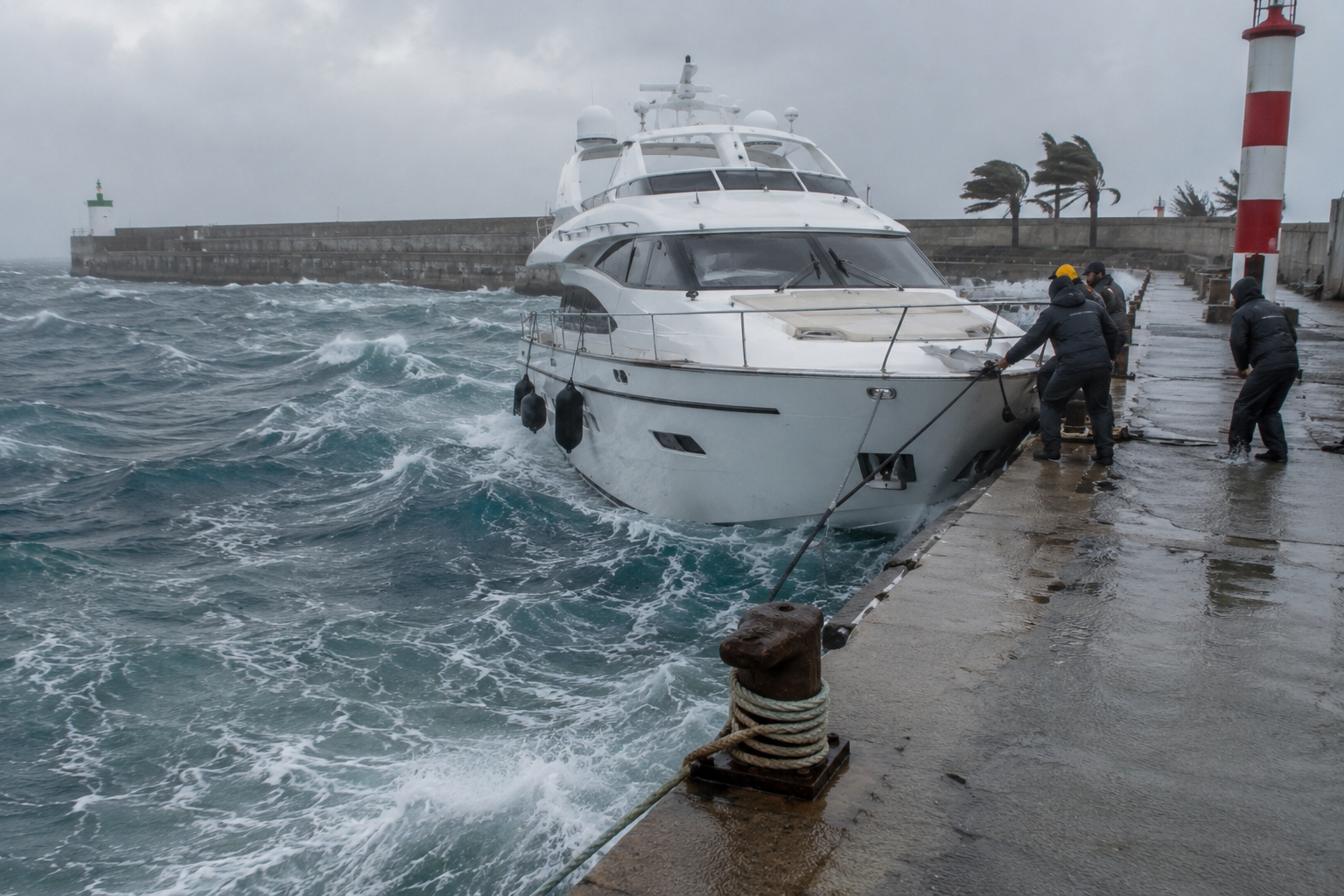
Docking in Strong Winds: Complete Guide to Safe and Controlled Boat Handling
Docking in a high blow is a true test of seamanship. At low speeds, winds quickly overpower a boat’s handling, pushing the hull sideways and risking costly collisions, fiberglass damage, or crew injury. Successfully navigating a tight marina during a storm demands meticulous pre-arrival preparation, precise engine control, and clear, quiet communication. This guide details how to read wind dynamics, use your boat’s profile to your advantage, and execute safe, controlled approaches into any slip.
Why Is Docking Difficult in Strong Winds?
How Wind Affects Boat Handling
At docking speeds, a boat’s rudder and propeller lose the continuous, high-volume water flow required to maintain crisp steering response. As hydrodynamic control decreases, aerodynamic forces take over. The wind acts as an invisible, persistent physical force that constantly pushes the hull off its intended course, inducing rapid lateral drift (leeway) that must be constantly countered with the helm and throttle.
Windage and Boat Profile
Every boat possesses a unique “windage profile”—the total surface area of the hull, superstructure, and rigging exposed to the wind. Elements like high topsides, flybridges, biminis, and canvas enclosures act exactly like fixed sails. When a strong gust strikes these areas, it creates an aerodynamic imbalance, typically blowing the lighter bow downwind much faster than the heavier, deep-seated stern.
The Influence of Boat Type
- Sailboats: Deep keels provide excellent lateral resistance below the waterline, preventing rapid sideways skating. However, towering masts and furled sails create significant high-altitude windage that causes the bow to blow off course quickly at low speeds.
- Powerboats: High-sided cabin cruisers and flybridge models present massive vertical surface areas to the wind. Combined with shallow drafts, these vessels tend to skate rapidly across the water’s surface when caught in a crosswind.
- Catamarans: Twin hulls trap a massive volume of air beneath the wide central bridge deck, creating a “trampoline effect” that causes severe leeway. Fortunately, wide-set twin engines offer exceptional leverage to counter this drift.
- Large Yachts: Heavy displacements mean high inertia. While large yachts do not accelerate sideways as quickly as lighter boats when a gust hits, their immense mass requires massive engine counter-thrust to halt once they carry momentum toward a dock.
Wind vs. Current: Understanding the Difference
Wind acts exclusively on the exposed upper structure of the boat, whereas current acts on the submerged hull and keel. It is crucial to identify which force dominates before entering a slip. A current often exerts far more physical force on a deep-draft vessel than a wind. When wind and current run in opposite directions, they can cancel out a boat’s drift or create highly erratic, choppy conditions within narrow marina channels.
Preparing Before Entering the Marina
Assess Wind Direction and Strength
Never enter a tight marina channel blind. Before dropping your speed, look for active local indicators to determine precisely what the wind is doing at dock level. Analyze flags, rigging flies, exhaust smoke, and masthead anemometers, and look closely at how surrounding boats are straining against their dock lines. This tells you whether you will be fighting a headwind, tailwind, or crosswind once you turn into your slip.
Study the Marina Layout
Visualize your approach before making your physical turn. Identify your target slip and look for potential hazards such as tight fairways, low-riding swim platforms, protruding anchors, or T-head docks where the wind might trap your bow. Noting where empty slips or open dock spaces sit provides immediate insight into where you can safely seek refuge if your primary approach path becomes blocked.
Prepare Dock Lines
Rig your heavy-weather dock lines early while still in open water. Lead your bow, stern, and spring lines underneath the lifelines or bow rails, running them cleanly out through the chocks to ensure they are completely free of knots. Coil the working ends neatly so they can be cast or handed over instantly without snagging or tangling at a critical moment.
Position Fenders Correctly
Deploy fenders on both the port and starboard sides, even if you only plan to dock on one side. Strong crosswinds can easily blow you sideways onto an opposing boat or a stray piling before you reach your destination. Adjust fender heights so they match the exact profile of the target dock or structural pilings, placing a floating “roving fender” on deck for a crew member to deploy in an unexpected impact zone.
Assign Crew Responsibilities
Hold a brief, quiet crew meeting to delegate clear roles. Assign specific crew members to the bow, stern, and midship spring lines, emphasizing that no one should ever yell or panic. Ensure your crew understands the mechanical sequence: their primary job is to safely secure a stabilizing line around a cleat, not to manually wrestle a moving multi-ton vessel against the force of the wind.
Have a Backup Plan
Always establish a clear, definitive abort point before commencing the final approach maneuvers. If a sudden gust blows your bow off target or a line misses its cleat, know exactly which way you will turn to escape back into open water. A good backup plan might involve choosing an empty, windward hammerhead dock to tie up temporarily while waiting for conditions to subside.
Understanding Wind Direction Before Docking
Skipper’s Note: Visualizing your approach vector is critical. Before initiating your turn, picture the wind as a constant fluid vector pushing against your boat’s profile, and plan your counter-steering maneuvers accordingly.
Headwind (Wind Coming From Ahead)
- Characteristics: The wind blows directly against your bow as you approach the dock or slip.
- Advantages: This is the most controllable scenario. The wind acts as a natural, predictable brake, allowing you to carry more engine RPM to maintain crisp rudder authority without excessively increasing your over-the-ground speed.
- Challenges: The moment you stop or reduce forward momentum, the wind will violently catch the bow and blow it to port or starboard. You must keep the nose pointed directly into the wind until the boat is secured.
Tailwind (Wind From Behind)
- Risks: A tailwind eliminates your braking capabilities and continuously pushes your vessel forward into the dock, dramatically increasing the risk of a high-impact collision with the bulkhead or slip finger.
- Speed Control: Traditional braking is highly ineffective here. You must shift into reverse early and use short, assertive bursts of astern throttle to control your momentum, operating at the bare minimum speed required to maintain steerage.
- Best Practices: Run a heavy stern line or a midship spring line to a dock cleat as early as possible. Once attached, you can gently use forward engine torque against this line to snub your forward momentum and stabilize the boat.
Crosswind From Port
- Boat Behavior: The wind strikes the left side of the vessel, pushing the hull bodily to starboard. Because the bow typically has less draft and higher windage than the stern, your nose will blow away from the wind first, causing the boat to pivot rapidly.
- Correction Techniques: Crab into the wind by angling your bow slightly to port (upwind) of your target destination. Keep your engine RPM high enough to counter the sideways drift, and time your approach so the wind naturally sets you down gently onto the starboard-side dock.
Crosswind From Starboard
- Steering Adjustments: With the wind pressing on your right side, your vessel will constantly drift toward the left. To execute a controlled approach, you must steer intentionally to starboard, aiming for an imaginary point well upwind of the actual slip or piling.
- Timing the Approach: Commit to a decisive, steady approach. If you hesitate or lose forward speed too early, the starboard wind will stall your forward motion and pin your port side against downwind obstacles before your crew can secure a single line.
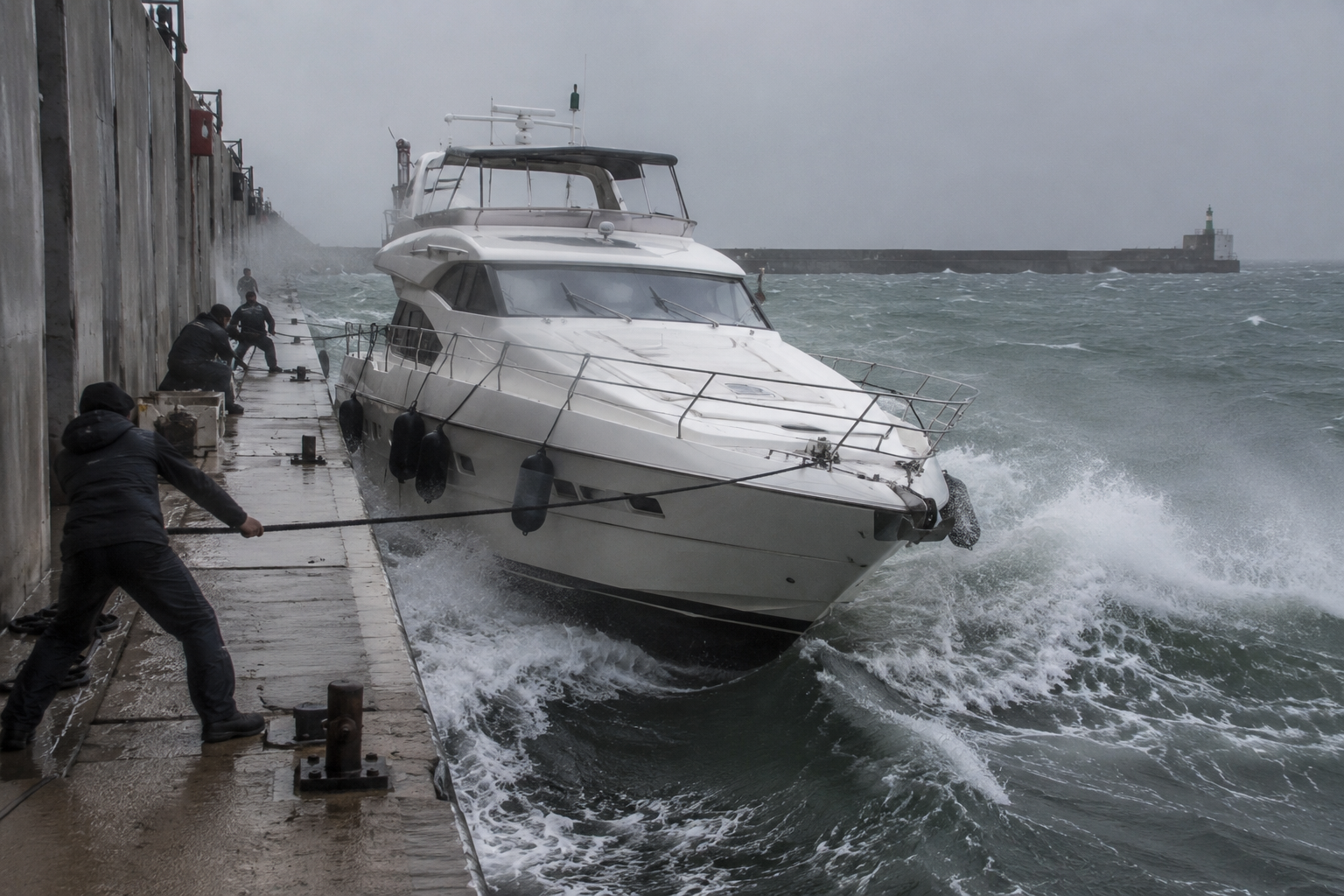
Step-by-Step Docking Procedure in Strong Winds
Reduce Speed Early
Begin your speed transition well outside the crowded marina fairway while you still have ample maneuvering room. Bringing the boat down to a controlled pace early allows you to accurately gauge exactly how much the hull will drift or skate when exposed to the current wind velocity, giving you time to adjust your approach strategy.
Maintain Boat Control
In heavy conditions, traveling too slowly is just as dangerous as traveling too fast. You must maintain enough forward momentum to keep water moving across your rudders or gearcases. If you drop below this critical speed threshold, the wind will instantly hijack your bow, stripping away your ability to steer.
Use Short Engine Bursts
Avoid keeping the engines in continuous gear, which can quickly lead to an over-speed situation. Instead, use short, deliberate, and assertive bursts of higher throttle, then immediately return to neutral. This technique gives you a crisp burst of steering responsiveness and thrust to counter a gust without building dangerous forward momentum.
Approach at the Correct Angle
When dealing with a strong crosswind, never approach parallel to the dock. Angle your bow directly into the wind at roughly a to angle toward the upwind side of your target space. This angled entry uses the boat’s power to pierce the wind, preventing the hull from being blown sideways into downwind pilings.
Secure the First Dock Line
The absolute priority upon reaching the dock is securing a midship spring line or an upwind line first. Never try to secure the bow or stern lines first in a crosswind, as the unattached end of the boat will immediately swing away. Getting a midship spring line on a cleat allows you to use low engine power to pivot and hold the boat safely against the dock.
Finish Securing the Boat
With the primary spring line holding the boat’s main pivot point stable against the wind, you can safely use the helm and light engine torque to press the rest of the hull parallel to the walkway. Your crew can then safely and efficiently secure the remaining bow, stern, and secondary breast lines without fighting the elements.
Docking Techniques Based on Wind Direction
Docking Into the Wind
Approaching a slip head-to-wind offers maximum braking control, as aerodynamic resistance naturally slows your forward progress. Steer directly into the blow, maintaining enough throttle to preserve rudder authority. The most common mistake is cutting power too early; this stalls your forward momentum, allowing the wind to instantly catch the bow and spin the vessel sideways.
Docking With the Wind
A tailwind pushes you rapidly toward the dock, creating high-impact risks. Speed management is critical: shift into reverse early, using short, firm astern bursts to arrest your momentum. As a safety tip, prioritize securing an upwind stern line or midship spring line first, using it as a brake to snub your forward travel.
Docking in a Crosswind
Crosswinds cause rapid lateral drift. Approach the dock at a sharp to angle, pointing the bow directly into the upwind side of the slip. Apply brief, assertive bursts of throttle to correct for sideways leeway, timing the final turn so the wind sets the hull gently against the fenders.
Docking in Gusty Winds
Variable gusts require instant adaptability. If a sudden gust blows you off course, counter immediately with a decisive burst of engine thrust. Abort the maneuver if the bow blows downwind past the point of correction; clear the slip immediately and head to open water to reset.
Using Your Boat’s Equipment Effectively
Bow Thruster
A bow thruster is your primary tool for countering lateral windage on your vessel’s nose. In strong winds, use the thruster in short, deliberate bursts rather than holding the button down continuously, which can overheat the electric motor or trip a thermal breaker. Anticipate gusts early and use the thruster to pin the bow directly into the wind windward of your target, preventing the lighter forward section of your hull from blowing downwind.
Stern Thruster
When paired with a bow thruster, a stern thruster allows you to move your boat completely sideways (crabbing) into a tight slip against a punishing crosswind. If you are fighting a wind blowing you off the dock, use the stern thruster to aggressively push the transom toward the walkway while your bow thruster maintains the correct parallel heading, ensuring the entire length of the boat reaches the lines simultaneously.
Twin Engines
Twin engines provide exceptional directional leverage without requiring water flow over the rudders. By splitting your throttles—putting one engine in forward and the other in reverse—you create a powerful turning moment to counter wind torque. If a strong crosswind is pushing your bow to port, putting your starboard engine in forward and your port engine in reverse will pivot the boat sharply to starboard, holding your heading steady even at a complete standstill.
Rudder Control
Traditional rudders require water moving past them to work. In high-wind situations, a stationary rudder is useless. To maintain control, turn your wheel before you apply power, then use a quick, assertive burst of forward throttle to direct a blast of water (prop wash) directly against the deflected rudder face. This creates an instant turning force to correct for wind drift without generating excessive forward speed.
Trim Adjustments
While trim tabs or outboard trim profiles are primarily used for on-plane cruising, they can subtly influence low-speed wind tracking. Adjusting your trim to pin the bow slightly lower into the water increases your forward underwater footprint, providing added lateral resistance. This prevents a crosswind from easily skating your nose across the surface while maneuvering through a tight marina basin.
Docking Techniques by Boat Type
Monohull Sailboats
Monohull sailboats feature deep, high-mass keels that offer excellent lateral resistance, preventing the boat from skating rapidly sideways in a crosswind. However, because they rely on a single propeller positioned well forward of a large rudder, they are highly susceptible to “prop walk” when backing up. When docking in strong winds, you must maintain steady steerage way to keep water flowing over the rudder, using the boat’s natural prop walk direction to help swing the stern into the dock when reversing.
Catamarans
With their high clearance and expansive structures, cruising catamarans present a massive windage profile that can cause severe lateral drift in heavy gusts. To counter this, abandon the steering wheel entirely and use your wide-set twin engine throttles to control the boat. Splitting the engines—one in forward, one in reverse—provides immense rotational leverage, allowing you to spin the hulls on their own axis and hold a precise heading directly against a crosswind without forward momentum.
Outboard Boats
Outboard-driven and sterndrive (I/O) boats are lightweight and draw very little water, meaning a strong gust will rapidly blow them sideways across the surface. Because these systems steer by physically directing propeller thrust rather than relying on water flowing past a fixed rudder, they offer instantaneous directional correction. When handling an outboard in heavy winds, use quick, proactive bursts of throttle in the exact direction you need the stern to move, countering drift before the boat builds downwind momentum.
Inboard Motorboats
Single-engine inboard motorboats present a unique handling challenge in high winds because they cannot direct propeller thrust and lack steering authority in reverse. To dock safely, always attempt to approach the slip with the wind pushing against your bow. If facing a crosswind, angle the bow sharply upwind into the breeze and use short, decisive bursts of forward throttle against a fully deflected rudder to step the stern over, relying heavily on a midship spring line to secure the vessel.
Large Cruising Yachts
Large cruising yachts possess immense displacement and structural mass. While they do not accelerate sideways as quickly as lighter vessels when a gust strikes, their extreme momentum makes them incredibly difficult to stop once they begin drifting. Successfully docking a large yacht in heavy weather requires a highly coordinated approach using twin-engine synchronization, electronic helm controls, and a dedicated crew. Utilize your integrated bow and stern thrusters early to pin the yacht against the windward side of the fairway, maintaining a slow, highly deliberate pace into the slip.
Common Docking Mistakes in Strong Winds
Approaching Too Fast
The most common reaction to a stressful, windy docking situation is carrying way too much speed into the slip. While some momentum is necessary to maintain steerage, excessive speed dramatically reduces your reaction time and leaves no room for error. If your angle is slightly off or a line misses, an over-speed approach transforms a minor drift into a high-impact collision with the dock or neighboring vessels.
Losing Steering Control
Skippers often lose steering authority because they drop the throttles into neutral too early out of fear of hitting the dock. In strong winds, dropping into neutral stalls the water flow over your rudders or gearcases. Without active prop wash, the wind will instantly seize control of your bow, spinning the boat sideways and leaving you completely defenseless against lateral drift.
Poor Crew Communication
Yelling or screaming instructions across a wind-swept deck creates panic and breaks down crew coordination. If the crew cannot hear instructions, they cannot react effectively. Heavy-weather docking requires a calm, pre-arranged system of quiet hand signals or headset communication. Every crew member must know their exact task well before the boat enters the marina fairway.
Incorrect Fender Placement
Placing your fenders at a uniform, standard height without assessing the actual dock structure is a critical mistake. In high winds, a boat will heel or roll, causing poorly positioned fenders to ride up over the dock edge or slip underneath a low floating finger. Fenders must be strategically adjusted to match the exact height of the specific pilings, bulkheads, or dock boards you are approaching.
Attempting to Stop With Hands or Feet
Safety Warning: Never, under any circumstances, place your hands, arms, legs, or feet between a moving boat and a hard structure like a dock or piling.
A multi-ton vessel moving at even half a knot carries immense kinetic energy. Fending off a boat with your body parts in high winds is a primary cause of severe fractures, crush injuries, and amputations. If the boat is drifting toward an impact, let the sacrificial fenders and rub rails do their job.
Ignoring Wind Gusts
Failing to anticipate that wind speeds are highly variable in a marina can quickly ruin an approach. Marinas are filled with localized geographic obstacles like tall multi-deck yachts, buildings, and tree lines that create erratic wind shadows and sudden, violent gusts. Assuming the wind speed in the fairway will be identical to the wind speed inside your tight slip finger will leave you completely unprepared when a sudden cross-gust strikes your hull.
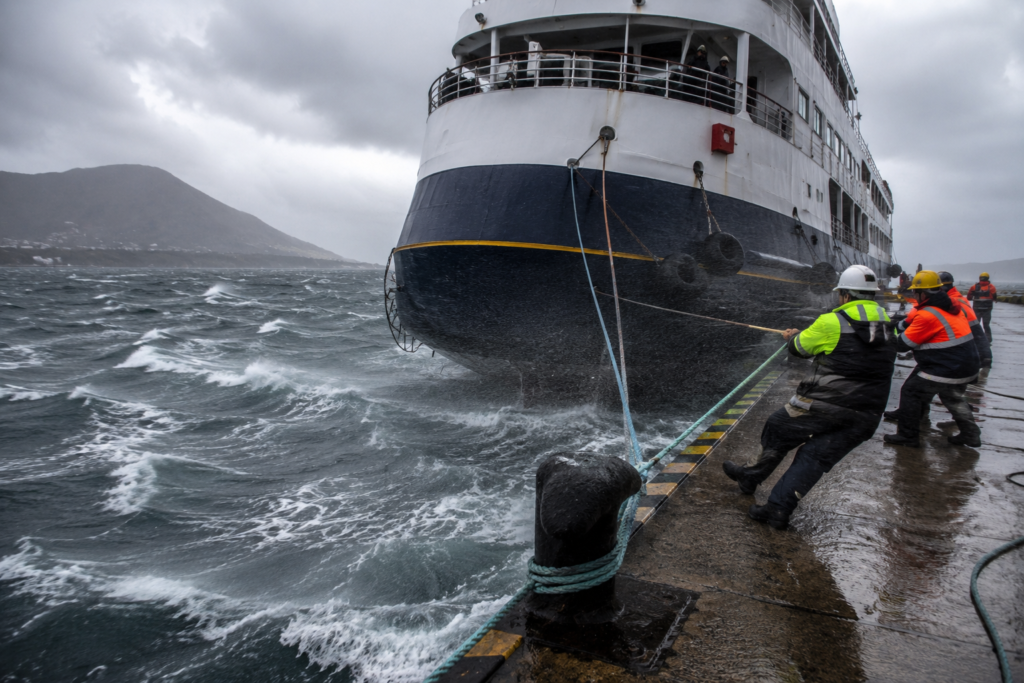 What to Do If the Docking Attempt Fails
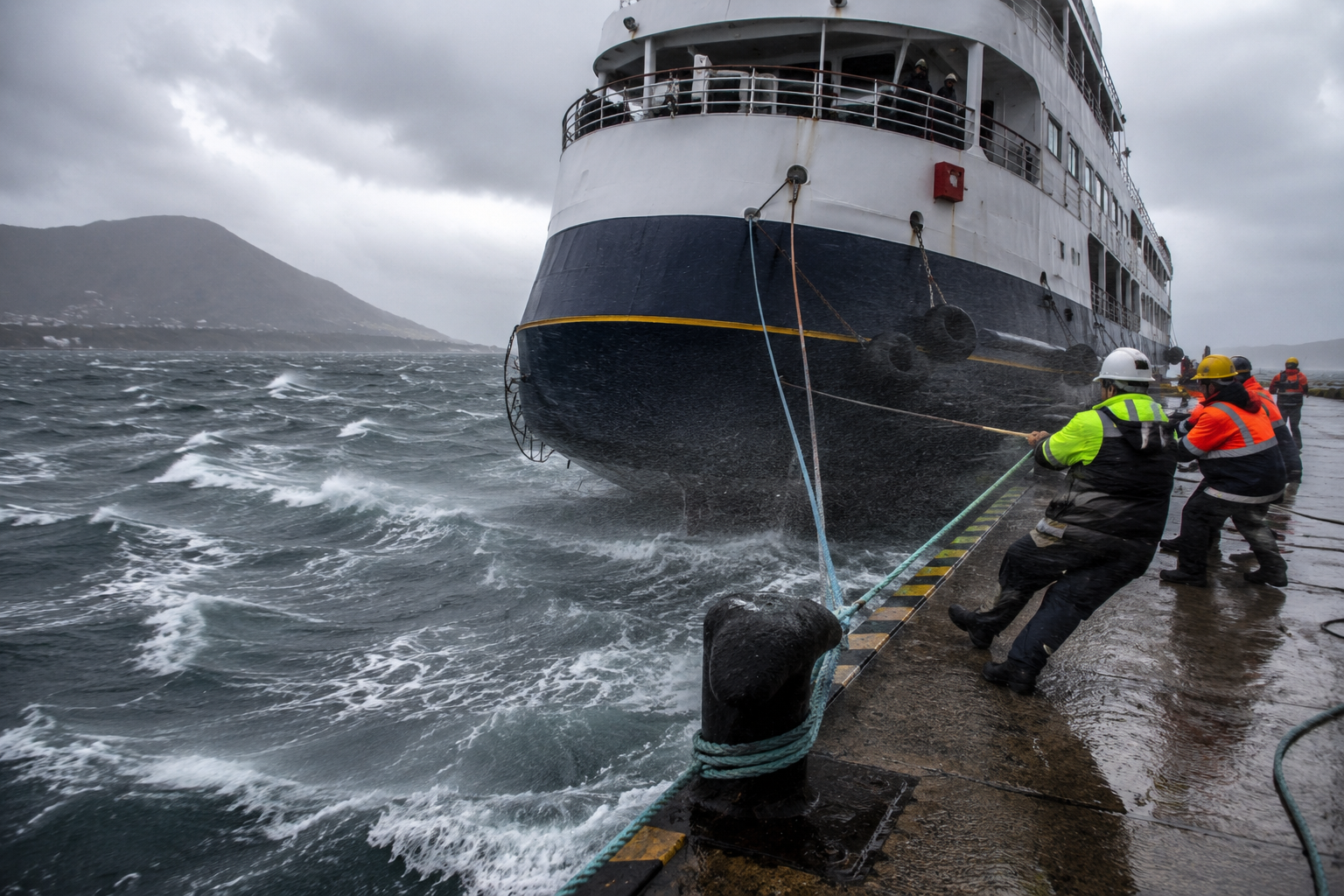
Stay Calm
When a gust catches your bow or a crew member misses a line, your immediate priority is to maintain emotional control. Adrenaline will urge you to make rapid, erratic throttle corrections, which frequently leads to over-correcting and colliding with nearby vessels. Take a slow breath, keep your voice at a conversational level, and assess the situation objectively.
Abort Early
Never try to salvage a completely botched approach by applying excessive throttle or letting your crew frantically stretch out to catch a distant piling. If the boat’s alignment drifts past the point of safe correction, make the executive decision to abort the maneuver immediately. Power out safely before you get pinned against downwind hazards.
Move to Open Water
Engage your throttles decisively to steer clear of the tight slip and narrow fairways. Back out or turn around to head toward open water or a clear turning basin within the marina. Gaining separation from hard docks and multi-million dollar vessels gives you the physical space needed to regain absolute steerage control.
Reassess Conditions
Once you are safely idling in open water, take a moment to evaluate exactly why the initial attempt failed. Did a sudden wind shadow stall your turn? Did you underestimate the lateral leeway? Look closely at the water’s surface, note any changes in wind velocity, and confirm that your lines and fenders are reset and ready.
Try Again With a Better Plan
Formulate a new strategy based on the fresh data you just gathered. Adjust your entry speed, alter your initial approach angle, or change which line your crew will secure first. If a crosswind proves too severe for your primary slip, execute a backup plan, such as backing into the wind or tying up temporarily at an empty fuel dock.
Safety Tips for Docking in Strong Winds
Wear Life Jackets
Before entering a wind-whipped marina, ensure every person on deck is wearing a properly fitted personal flotation device (PFD). High winds create slick deck surfaces, sudden boat movements, and unexpected jolts from line tension. If a crew member loses their footing and falls into a narrow gap between a moving multi-ton hull and a rigid concrete dock, a life jacket is critical for survival.
Protect Hands and Fingers
Never wrap a dock line completely around your hand, wrist, or fingers, and keep your limbs completely clear of cleats, chocks, and fairleads. When a gust hits the hull, a loose line can instantly snap taut with thousands of pounds of tension. This sudden force can cause severe friction burns, fractures, or amputations if your fingers are trapped against the hardware.
Never Jump Onto the Dock
Safety Rule: Instruct your crew to remain safely on board until the vessel has completely stopped and is resting flush against the dock.
Jumping from a moving deck onto a wet, slimy dock finger in high winds is a primary cause of severe injury. If a crew member slips or falls short, they risk being crushed between the heavy drifting hull and the solid dock structure.
Communicate Clearly
Abandon shouting matches entirely. Wind noise, flapping canvas, and roaring engines make vocal commands highly ineffective and elevate stress levels. Implement a pre-arranged system of clear, quiet hand gestures or use specialized marine wireless headsets. A calm helm creates a focused, efficient crew that executes maneuvers precisely.
Know When to Wait for Better Conditions
True seamanship means knowing when to swallow your pride and refuse to force an unsafe landing. If sustained gale-force gusts or severe cross-currents make entering your specific slip highly dangerous, abort the attempt completely. Stand off in open water, anchor safely in a protected cove, or tie up temporarily at an accessible, windward face dock until the weather moderates.
Advanced Docking Tips From Experienced Skippers
Practice in Moderate Conditions First
Expert seamanship is built through progressive muscle memory. Do not wait for a storm to test your heavy-weather docking skills. Utilize moderate, predictable breezes to intentionally practice approaching a slip at different angles, backing into the wind, and experimenting with spring lines. Learning how your hull slides when the stakes are low gives you the instinctual confidence needed when conditions turn severe.
Learn Your Boat’s Pivot Point
A boat does not steer like a car from the front or rear wheels; it rotates around a central axis known as its pivot point. On most vessels at rest, this point sits roughly one-third of the way back from the bow. When strong winds press against your topsides, understanding exactly where this axis lies allows you to calculate how a burst of throttle will swing the stern relative to the bow, letting you rotate the boat cleanly in tight fairways.
Anticipate Wind Drift
Experienced skippers never steer for where the boat is currently sitting; they steer to counter where the wind will push the boat a few moments later. When maneuvering across a strong breeze, you must intentionally crab the vessel—pointing the bow significantly upwind of your actual destination. Let the wind naturally slide the hull laterally into your target slip rather than constantly fighting a losing battle to stay in a straight line.
Use Momentum Wisely
In heavy weather, your boat’s mass can be your greatest asset or your worst enemy. Heavy displacement hulls carry immense kinetic energy that can carry them through sudden, violent headwind gusts without stalling. Learn to use this forward momentum to glide safely into protected slips with your engines idling in neutral, reserving sharp, decisive bursts of reverse throttle to arrest that momentum precisely when the hull is safely positioned.
Think Several Seconds Ahead
Docking in high winds is a high-speed game of chess. You must constantly look downwind and project your vessel’s position five to ten seconds into the future. By anticipating how a localized wind shadow or a sudden gust off a flybridge cruiser will alter your heading before it actually happens, you can apply smooth, preemptive helm and throttle corrections rather than executing panicked, emergency maneuvers after control is already lost.
Conclusion
Mastering heavy-weather docking is a matter of preparation and physics, not brute force. By understanding your boat’s windage profile, maintaining critical steerage speed, and ensuring clear crew coordination, you can safely navigate the tightest marina slips during a blow. Keep your inputs deliberate, never hesitate to abort an approach that feels unsafe, and practice regularly in moderate breezes to build the instinctual confidence needed when conditions turn severe.
