

Marine transmission : all you need to know
A marine transmission is the mechanical backbone that connects a boat’s engine to its propeller, regulating torque and allowing directional control. Selecting the right drive layout dictates your vessel’s speed, maneuvering agility, and maintenance budget. This guide breaks down the core transmission systems—from traditional shaft and stern drives to advanced pods and water jets—helping you choose the ideal system for your boat.
What Is a Marine Transmission?
Definition
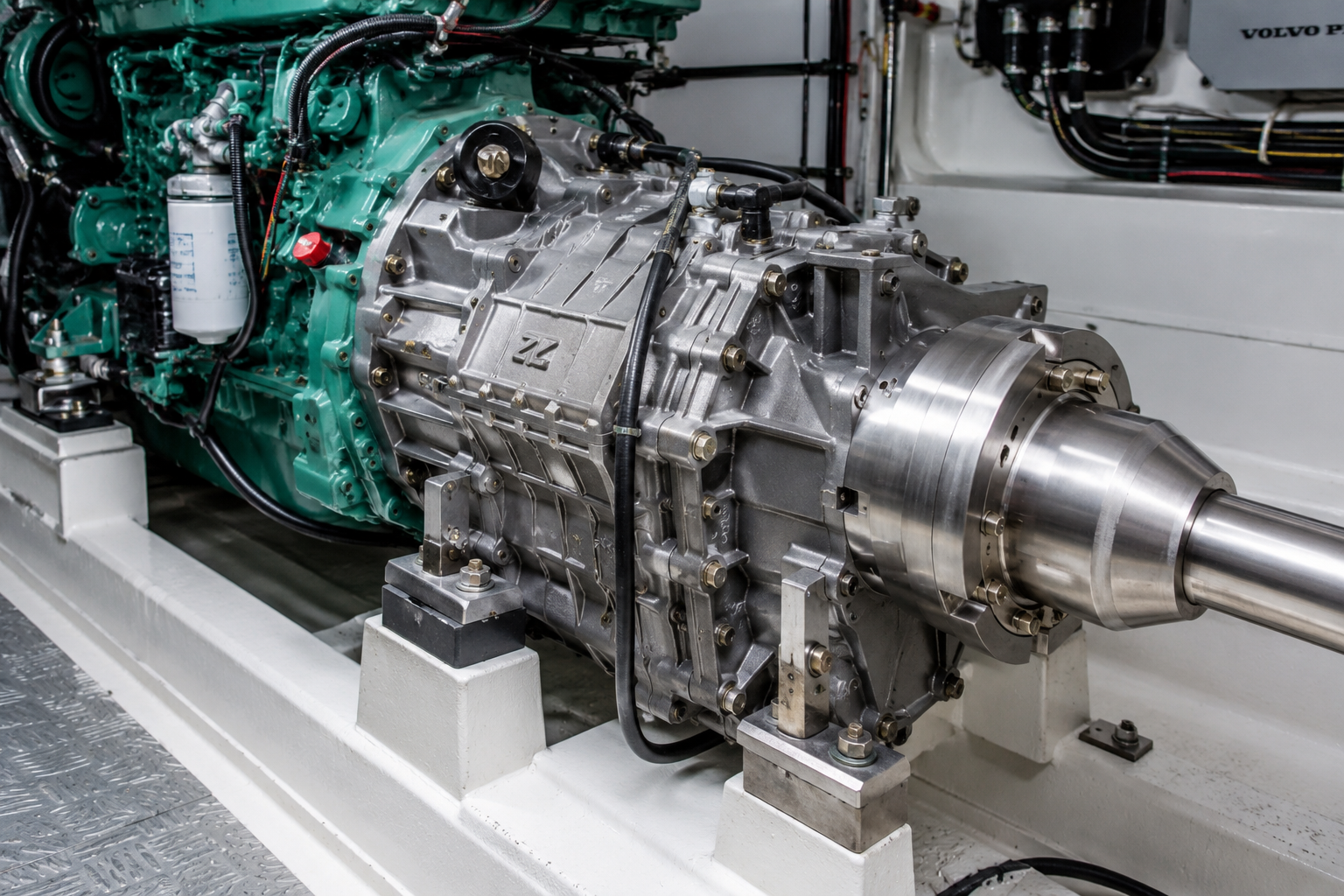
A marine transmission, commonly referred to as a marine gearbox, is a heavy-duty mechanical or hydraulic device positioned directly between a boat’s engine and its propulsion unit. Its primary purpose is to safely engage or disengage engine power, reverse the direction of propeller rotation, and match the high-speed output of the engine to the physical operational limits of the propeller.
How a Marine Transmission Works
Marine engines generate maximum horsepower at high revolutions per minute (RPM). However, spinning a propeller at several thousand RPM would cause extreme hydrodynamic cavitation, where bubbles form and collapse along the blades, destroying thrust and causing mechanical erosion.
The marine transmission uses internal reduction gears to reduce rotational speed while simultaneously multiplying torque. When a captain shifts into gear, hydraulic pumps or mechanical linkages clamp multi-disc clutch packs together. This smoothly transfers power from the engine’s flywheel to the output shaft, allowing the propeller to bite efficiently into the water in both forward and reverse.
Main Components
The entire marine drivetrain relies on a precisely synchronized network of heavy-duty components:
- Engine: The prime mover generating raw rotational power.
- Marine Gearbox: The core housing containing reduction gears, hydraulic pumps, oil coolers, and directional clutches.
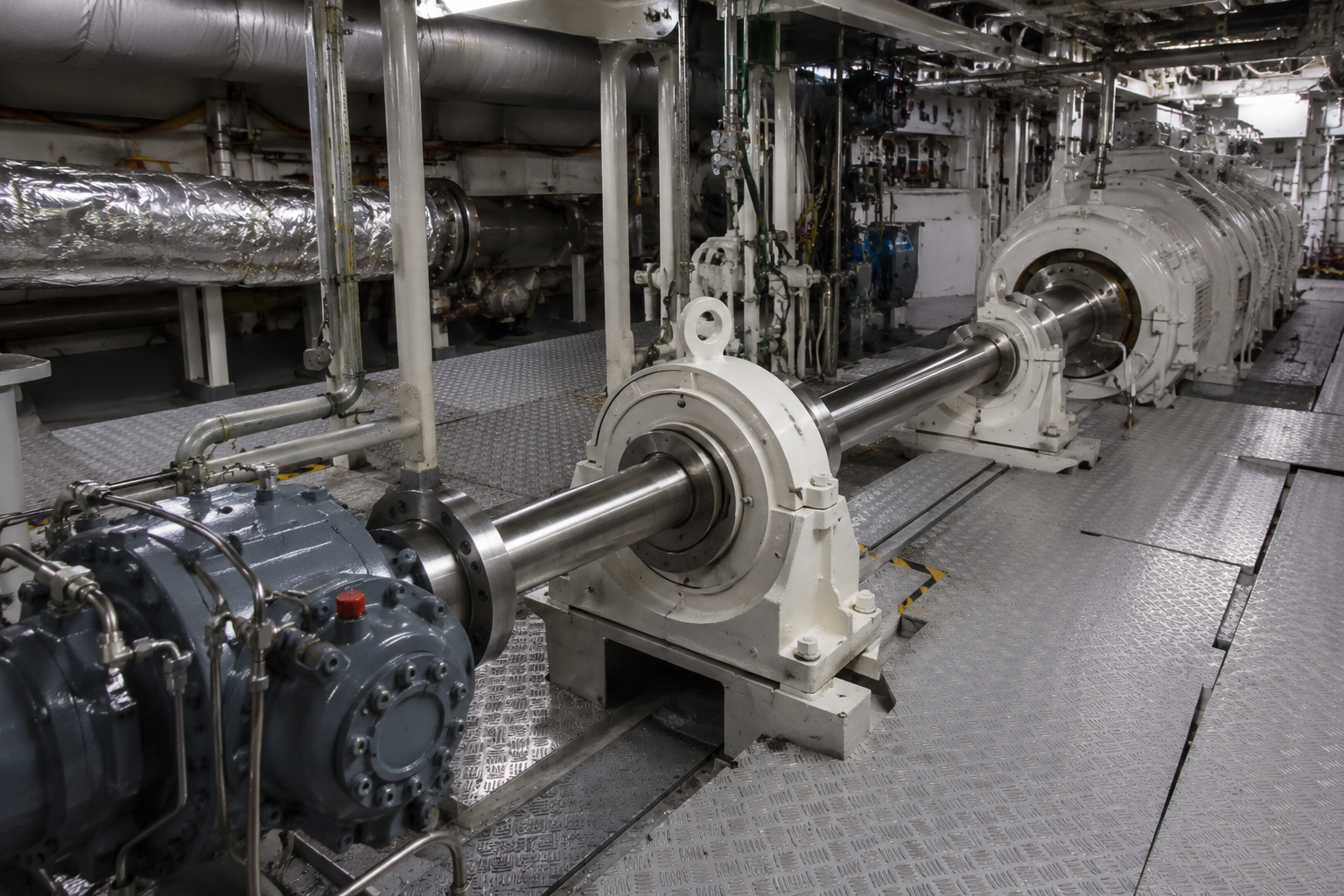
- Drive Shaft: A forged metal alloy rod that transmits rotational torque from the gearbox through the hull structure.
- Propeller: The final hydrodynamic unit that converts rotational shaft energy into linear physical thrust.
- Couplings: High-tolerance flanges that securely lock the transmission’s output flange to the drive shaft, ensuring true rotational alignment.
- Bearings: Essential thrust and support bearings, including the stuffing box and cutless bearing, that absorb the axial force of the propeller while preventing water from flooding the hull.
- Steering Components: Rudders, trim cylinders, or articulating gearcases that direct the thrust vector to navigate the vessel.
Why Are There Different Marine Transmission Types?
No single marine drivetrain is perfect for every vessel because different hull designs and operating environments demand completely unique mechanical properties. Naval architects choose and design marine transmission systems based on a balancing act of seven critical operational factors:
- Boat Size: A compact sailboat requires a lightweight, space-saving drive layout, whereas a commercial vessel needs a large structural footprint to support its heavy displacement hull.
- Engine Power: Transmission internals must scale to handle the torque output. High-horsepower diesels require heavy-duty hydraulic gearboxes, while smaller recreational boats can utilize lighter mechanical clutches.
- Draft Requirements: Vessels navigating shallow rivers or sandbars need low-profile stern drives or water jets to minimize draft and avoid underwater impacts, while deep-sea hulls favor deep-set traditional shafts.
- Fuel Efficiency: The mechanical path from the engine to the water dictates power loss. Systems that offer a direct, hydrodynamic alignment improve miles-per-gallon efficiency.
- Maneuverability: Docking a large vessel in a tight marina requires precision. Articulating pod drives offer vectoring for exceptional agility, whereas a traditional straight shaft relies entirely on rudder deflection.
- Maintenance: Some systems keep all mechanical parts safely inside the engine room, while others submerge complex gears in saltwater, requiring more frequent haul-outs, zinc anode changes, and seal inspections.
- Intended Use: The operational profile changes completely between a high-speed racing boat requiring high-rpm surface drives, a water-ski boat needing flat wakes, and a commercial tugboat requiring pure pulling power.
Main Types of Marine Transmissions
Shaft Drive (Straight Shaft)
A straight shaft drive connects an internal engine directly to a downward-sloping propeller shaft running through the hull. This simple, rugged configuration offers unmatched mechanical reliability and low maintenance costs but suffers from reduced steering agility at low speeds and requires a deeper draft. It is best applied in heavy-displacement trawlers, traditional sportsfishers, and commercial workboats.
Saildrive
A saildrive utilizes an internal engine mated to an integrated, aerodynamic lower gearcase that drops vertically through the hull bottom. This compact arrangement maximizes cabin space, eliminates shaft alignment issues, and delivers exceptional fuel efficiency under power. However, it exposes complex aluminum castings to underwater galvanic corrosion, making it the ideal choice for modern sailing catamarans and cruising monohulls.
Stern Drive (Z-Drive / I/O Drive)
Stern drives combine an inboard engine with an articulating exterior drive unit mounted directly to the transom. This setup provides excellent high-speed performance and precise vector thrust steering, though its complex external universal joints and hydraulic trim rams demand frequent maintenance. It is typically found on recreational bowriders, express cruisers, and sport boats.
Outboard Drive
Outboard systems house the entire engine, transmission, and propeller inside a self-contained unit clamped to the boat’s transom. Operating via a vertical driveshaft that transitions through a lower internal gearbox, outboards maximize interior cockpit space and tilt entirely clear of the water to prevent fouling. Their main limitations are weight capacity constraints on larger hulls, making them popular for center consoles, pontoons, and skiffs.
Water Jet Drive
Water jets draw water through an intake grate in the hull bottom and forcefully eject it through a steerable rear nozzle using an internal impeller. This design offers absolute safety for swimmers, shallow-draft operation, and incredible high-speed agility, but it suffers from low-speed steering drift and poor fuel efficiency at low RPMs. It is best suited for shallow-water riverboats, naval patrol craft, and personal watercraft.
Pod Drive
Pod drives employ independent, articulating gearcases mounted directly through the bottom of the hull. This advanced technology delivers car-like joystick maneuvering, superior hydrodynamic thrust efficiency, and up to a 30% reduction in fuel burn, though initial purchase costs and complex electronic interfaces remain high. It is the premier choice for modern luxury yachts and high-end sport yachts.
Hydraulic Marine Transmission
Hydraulic transmissions use pressurized fluid pumps rather than mechanical linkages to engage internal clutch packs and transfer engine torque. This fluid engagement delivers incredibly smooth shifting, flexible engine placement configurations, and built-in overload protection, but it introduces higher thermal management needs via external oil coolers. It is widely deployed in heavy-duty industrial tugs, commercial fishing vessels, and workboats.
Surface Drive
Surface drives utilize an articulated piercing propulsion shaft that extends straight out the transom, allowing the propeller blades to operate half-submerged at the water’s surface. By eliminating the hydrodynamic drag of underwater struts and shafts, this layout unlocks extreme top-end speeds but causes poor low-speed planing performance and complex trim handling. It is strictly reserved for high-performance racing boats and military interceptors.
Marine Transmission Comparison
The choice of a drivetrain directly influences your boat’s initial build cost, handling traits, and fuel consumption. The comparison table below highlights the performance, cost, and maintenance characteristics of the most common marine transmission setups.
| Transmission Type | Efficiency | Speed | Maneuverability | Maintenance | Cost | Best For |
| Shaft Drive | High | Moderate | Low | Low | Low | Trawlers, workboats, and long-range cruisers |
| Saildrive | High | Low | Moderate | Moderate | Moderate | Cruising sailboats and catamarans |
| Stern Drive (I/O) | Moderate | High | High | High | Moderate | Runabouts, bowriders, and express cruisers |
| Outboard Drive | Moderate | High | High | Moderate | Moderate | Center consoles, pontoons, and sport fishing boats |
| Water Jet Drive | Low (Low speed); High (High speed) | High | Very High | Low | High | Shallow-water riverboats and personal watercraft |
| Pod Drive | Very High | High | Outstanding (Joystick) | High | Very High | Modern luxury motor yachts |
| Hydraulic Drive | Moderate | Low | High | Low | High | Commercial tugs and heavy fishing vessels |
| Surface Drive | Very High (On plane) | Extreme | Low (Low speed) | High | High | High-performance racing boats and interceptors |
How to Choose the Right Marine Transmission
For Fishing Boats
Inshore anglers favor outboard drives for shallow water access and maximizing deck space. Offshore sportfishers prefer traditional straight shaft drives due to their rugged reliability when trolling and ability to handle heavy sea conditions.
For Sailboats
Sailboats benefit most from saildrives or small mechanical shaft drives. Saildrives are highly popular because their compact footprint fits perfectly under companionway steps, maximizing cabin living space while offering low hydrodynamic drag.
For Recreational Powerboats
Recreational bowriders and runabouts typically utilize stern drives or outboards. Outboards provide easy maintenance and can tilt completely clear of the water, while stern drives offer a clean swim platform and excellent towing power for watersports.
For High-Speed Boats
High-performance boats require surface drives or aggressive outboard configurations. Surface drives excel here by pushing the propeller blades to the water’s surface, eliminating underwater gearcase drag to unlock maximum velocity.
For Commercial Vessels
Tugs and workboats demand heavy-duty hydraulic shaft drives. These systems are engineered for continuous duty cycles, maximum torque multiplication, and smooth, frequent shifting under immense pulling loads.
For Luxury Yachts
Modern luxury yachts utilize advanced pod drives. This choice grants captains effortless joystick maneuvering in tight slips, space-saving engine placement, and highly optimized fuel efficiency at cruising speeds.
Key Factors to Consider
Initial Cost & Installation Complexity
Your upfront budget is heavily dictated by design intricacy. Traditional straight shaft installations require highly precise physical alignment but utilize simpler components, whereas advanced pod drives involve massive hull cutouts, complex fly-by-wire steering electronics, and premium initial purchase prices.
Operating Costs & Fuel Efficiency
Fuel efficiency directly impacts your long-term operating overhead. High-efficiency propulsion systems like pod drives or sleek saildrives maximize hydrodynamic thrust, reducing your seasonal fuel burn by up to 30% compared to drag-heavy or low-speed water jet configurations.
Reliability & Ease of Maintenance
Keeping a drivetrain reliable requires matching its maintenance demands to your lifestyle. Internal shaft transmissions keep critical moving parts safely inside the dry engine room. Conversely, stern drives submerge complex gear sets, rubber bellows, and hydraulic lines in harsh saltwater, requiring frequent haul-outs.
Parts Availability & Boat Performance
A transmission directly shapes your boat’s performance, from top-end speed to low-speed handling. Selecting a mainstream brand ensures widespread availability of replacement parts, preventing your vessel from sitting stranded at the dock during peak boating season due to backordered components.
Maintenance Tips for Marine Transmissions
Routine Inspections & Gear Oil Changes
Regularly pull the transmission dipstick to verify fluid levels and check for signs of trouble. Healthy gear oil should be clear; a milky appearance signals water intrusion, while a burnt smell or dark color indicates slipping clutch plates. Change the fluid and internal oil filters annually or every 100 to 200 operating hours.
Alignment & Bearing Checks
Engine vibrations can gradually shift your drivetrain out of alignment. Perform an alignment check at the shaft coupling using a feeler gauge to ensure true rotation. Regularly inspect the cutless bearing and shaft seals (or stuffing box) for leaks to prevent water from dripping into your bilge.
Corrosion Prevention & Propeller Inspection
Check your sacrificial zinc or aluminum anodes frequently, especially on aluminum gearcases like stern drives or saildrives, to neutralize galvanic corrosion. Simultaneously inspect your propeller for dings, bends, or missing balance weights, as an imbalanced prop causes severe structural stress on transmission bearings.
Winterization Tips
Before freezing winter temperatures set in, flush your transmission’s external oil cooler with fresh water and fill it with marine-grade antifreeze. This critical step prevents internal cooling lines from cracking due to trapped water freezing over the off-season.
Common Marine Transmission Problems
Oil Leaks & Gearbox Failure
Low fluid levels from degraded input or output shaft seals are a primary cause of catastrophic gearbox failure. Without adequate lubrication, internal friction spikes, causing hydraulic clutch packs to overheat, slip, and permanently weld themselves together under load.
Shaft Misalignment & Excessive Vibrations
A drivetrain shifted out of true alignment creates intense rotational imbalances. This misalignment transfers harsh kinetic energy through the system, resulting in severe hull vibrations, rattling couplings, and premature destruction of the transmission’s internal output gears.
Bearing Wear & Propeller Damage
Striking underwater debris can bend a propeller blade or distort the drive shaft. Operating with a compromised prop introduces an unbalance that wears down cutless bearings and seals, allowing seawater to breach the housing and contaminate the transmission oil.
Corrosion Damage
Galvanic corrosion poses a severe threat to submerged aluminum housings, such as those found on stern drives and saildrives. If sacrificial anodes are neglected, electrical currents in the water will rapidly pit the metal casing, compromising structural integrity and causing oil seals to fail.
Latest Innovations in Marine Transmission Technology
Electric Propulsion & Hybrid Marine Drives
The marine industry is undergoing a massive shift toward electrification. The introduction of fully integrated hybrid-electric systems—such as Volvo Penta’s landmark 2026 hybrid IPS package—combines traditional diesel gearboxes with compact electric motors.These parallel hybrids allow captains to switch effortlessly from fuel power to near-silent, zero-emission electric cruising during harbor maneuvering.
Smart Electronic Controls & IoT Digitalization
Modern gearboxes have evolved into highly intelligent components via Electronically Controlled Variable Transmissions (EVT).These smart systems utilize integrated IoT (Internet of Things) sensors and AI analytics to track transmission temperature, fluid pressure, and clutch slipping in real-time.By dynamically altering gear parameters based on operational loads, they maximize fuel economy and enable predictive maintenance alerts before a mechanical failure can occur.
Advanced Pods & Azimuth Thrusters
Hydrodynamic engineering has advanced significantly with vector-thrust technology. Next-generation pod drives and structural azimuth thrusters now feature counter-rotating propeller systems engineered from ultra-light, marine-grade alloys. These advanced systems optimize water flow to eliminate cavitation, providing unprecedented fuel efficiency and precision joystick docking capabilities for modern luxury vessels and commercial fleets alike.
Conclusion
No single marine transmission system fits every boat. Whether you prioritize the rugged simplicity of a traditional straight shaft, the agile maneuverability of modern pod drives, or the clean efficiency of emerging hybrid-electric systems, selecting the right drivetrain requires balancing your hull design, performance goals, and maintenance expectations. Tailor your choice to your specific boating lifestyle to ensure smooth, reliable operation on the water.
